Showing posts with label Intertubes. Show all posts

Thursday, 3 April 2014

Top 10 Rejected Buzzfeed Personality Quizzes

 
Is anybody else getting tired of these yet? What started out as a mildly amusing time-wasting activity on Facebook has now become a full-on obsession, with personality quizzes generated by Buzzfeed, Zimbio and other procration-enablers becoming stranger and more obscure by the day. Having pretty much torn through every pop culture reference available (from Which SuperMario character are you? to Which Disney prince is your true love?), it's now gone beserk, with quizzes like 'What vegetable are you?' and so on. It's like Kindergarten collided with a Barbara Walters interview!

There is, of course, a dark side to these seemingly harmless diversions. Marketplace tech writer Stacey Vanek Smith contends that quizzes such as these are little more than "free data mining tools for brands" in an era where privacy is becoming steadily eroded. As Smith notes, if you, for example, complete the 'How would you die in a Game of Thrones episode' quiz, HBO now not only knows you watch the show but also what your preferred alcoholic beverage, what your last meal was .and what your most crippling fear is. Depending on your perspective, it's either a brilliant market research strategy or yet another corporate invasion of privacy.

And what do we get in return? Generalized responses that fall within the ambit of the Barnum Effect, much akin to the blurry, ambiguous predictions dished out by so-called psychics that could potentially apply to any living, breathing human being. And when put to the test, they're reliably inaccurate. Back in February Gawker reported that Garbage frontwoman Shirley Manson took the 'Which 90's Alt-Rock Grrrl Are You?' quiz - and didn't get herself, even though she was clearly one of the available answers. I'm sure the James Randi Educational Foundation could have predicted this.

So why are we hooked on these things? Is it because we're all intolerably narcissistic? Far from it, says Wired writer Devon Maloney, who purports that it's a crippling sense of insecurity over our true identities that is fuelling this craze. He also argues that it's nothing new. "For the same reason that IQ tests or the Meyers-Briggs Type Indicator have been popularized well beyond their scientific origins, quizzes that tell us we really should be lawyers (or that if we were a Game of Thrones character we’d be Tyrion Lannister) help us to order our sense of self when faced with the gaping vortex of an unknown future," he explains.

That said, this meme seems to have reached the shark-hurdling point, with quiz titles becoming more and more of a stretch. Makes you wonder which online quizzes have been rejected as too obscure, too tasteless or just too damn weird for the denizens of Zuckerbergistan. Here are ten possibilities.

1) What blender setting are you?

Are you a quiet slow-blend type or a fast-moving, go-go-go purée type? Or a veritable ice-crusher of a personality not to be trifled with. There's potential here.

2) What type of insect sting are you?

Is your personality type more akin to the creeping, prickly pain of fire ants or the blinding agony of a pepsis wasp (aka tarantula hawk) sting? Either way, you probably don't have many friends.

3) What Central African despot are you?

Are you a fan of Napoleonic coronations and beating defenceless school children with wooden bats? Then you're probably Jean-Bédel Bokassa (aka Emperor Bokassa I) of the Central African Republic. That is unless your tastes run more towards leopard-skin hats and shopping trips to Paris on a chartered Concorde, which clearly makes you General Mobutu of the DRC (formerly Zaire). How about cowboy hats and cannibalism? You get the picture.

4) What telltale sign of human-induced climate change are you?

Are you the type who storms into a room like a Category 5 hurricane or one who simply slips away from parties like a collapsing icefloe? Or are you a counterintuitive type who likes to mess with people's minds à la polar vortex? I'm sure I've nailed you somewhere here.

5) What sexually transmitted infection are you?

Are you an outgoing person with whom people get to know quickly and thoroughly? Then you're probably syphillis. Or are you more of the subtle yet persistent personality, akin to crab lice. Whatever the answer, you're most likely not going to want to 'transmit' it to your friends.

6) What white supremacist group should you belong to?

Are you a bluff old traditionalist who likes parades and barbecues? The Ku Klux Klan is still inexplicably around and, I'm sure, eager for new members to shore up its long-dwindling ranks. But if you're a bad-ass entrepreneur who likes the rough-and-tumble life of narcotrafficking and doesn't mind collaborating with Mexicans, then the Aryan Brotherhood is probably more up your alley.

7) What famous historical assassin are you?

Are you a crazy spontaneous type who loves the outdoors? Then you're probably Gavrilo Princip, the plucky young Serbian nationalist who gunned down Archduke Franz Ferdinand of Austro-Hungary in 1914, thereby triggering the outbreak of World War I. Love the outdoors but more reticent and calculating than this? Then you'll probably get Lee Harvey Oswald. More of a culture lover? Then you'd be more of a John Wilkes Booth type.

8) What flu strain are you?

In your social life, do you prefer regular but brief visits with friends or do you prefer to keep yourself at a distance so as to make your appearances more memorable and longlasting? If the latter, you might just be the H1N5 bird flu. If the former, you might be asked if you like sangria and flamenco music, which would clearly gives you an affinity with all things Spanish, including H1N1.

9) Which Edmonton social media personality are you?

Does your gregarious personality and flair for witty repartée require that you be everywhere, all the time? If the answer is yes you're probably Kathleen Smith (aka Kikki Planet), forever stuck in a 1980s movie yeg-topia that veers wildly from cute animals and fashion tips to scorpionic venom unleashed on errant local officials. Or you might be a mild-mannered Mack Male (MasterMaq) type, forever patrolling the landscape looking for news like a saint bernard with a laptop. And if your overwhelming obsession is food and all things culinary arts-related, Linda Hoang (aka @lindork) is more up your alley.

10) What Buzzfeed personality quiz are you?

Sadly, this living definition of the prefix 'meta' has already been done. Sort of. Oh well.

Friday, 31 January 2014

4 Reasons Internet Forums Still Matter for Business Communicators

Last October, in the midst of a high-profile spat between Edmonton International Airport and Air Canada over the embattled Edmonton-London service, something interesting happened that changed my perspective on digital communications. I was contacted by an Edmonton lawyer and frequent flyer who is an active participant in the popular international frequent flyer chat forum FlyerTalk under the rather sassy handle "PunishedEdmontonian". He directed me to a lengthy and animated online conversation about the route in question, which appeared to be a pitched battle between EIA defenders and hidebound supporters of Air Canada.

He later asked me if I would be willing to organize an Edmonton meet-up for forum participants at the airport. I agreed, and some two months later I was playing host to a group of frequent flyers and aviation geeks in an event that included tours of EIA's ATC tower and centralized baggage system, presentations from EIA's gurus of operations, emergency, commercial development, air service development and parking/ground transportation, and some pints afterwards with a crowd that included journalists, municipal and provincial government staffers, lawyers, IT people and other assorted provocateurs and malcontents.

All this was an eye-opener for me because as a thirty-something social media obsessive, I had all but forgotten about Internet chat forums. While some part of my brain was cognizent of the fact that they still existed, I had incorrectly assumed that their once-enthusiastic denizens had for the most part, like me, moved onto Facebook, Twitter and other 2.0-vintage networking platforms. I could scarcely have been wronger. FlyerTalk, for example, has been around since 1998 (prehistoric in Internet terms) and has grown steadily, attracting anywhere between 27,000 and 52,000 daily unique visitors and has racked up over 20 million posts. Not bad for a communication tool widely perceived as having been eclipsed!

I bring this up because, as a professional communicator, there are very good reasons not to ignore Internet forums, particularly industry-relevant ones. In addition to it simply being bad business to ignore any group of stakeholders, chat forum participants are a very different breed from the majority of social media users in the following three regards:

1. They're a great source of information.

Web forums, particularly industry-specific ones, tend to attract very industry-savvy people. FlyerTalk participants, for example, are typically people who fly a great deal (certainly far more than I do) and therefore have a great deal of perspective on airports, airlines and other facets of the business I'm in and are therefore sources of information far too good to ignore.

2. They reach a very influential demographic.

While it's true that social media is no longer the exclusive domain of the young, the gap between social media users and non-users is still very much a generational one. (A recent survey shows the typical Twitter user is a 37-year-old woman.) Not surprisingly, the average age of an Internet chat forum, particularly one like FlyerTalk, is considerably older than the average Twitter or Facebook user - and indeed I was easily one of the youngest people among the 40-some people who attended my recent airport meet-up. It therefore goes without saying that if you want to reach our society's wealthiest and most influential demographic group online (i.e. Boomers), you're much more likely to find them on a forum like FlyerTalk than on, say, Twitter.

3. Their publics tend to care a lot.

Participants on forums like FlyerTalk aren't just highly informed. They also tend to be extremely passionate about whatever they're talking about. And unlike today's social networks, these people suffer from far less of the attention deficit disorder that comes with Facebook, Twitter and the like, with threads often continuing on for days and even weeks. From the standpoint of a professional communicators, web forums are a readymade arena for networking with potential intervening publics - people who will very enthusiastically transmit your key messages to the far reaches of the intertubes. Granted you'll have to fight off those who are dead-set against whatever you're doing, but it's a fight well worth fighting.

4. They're actively moderated - and therefore usually nice.

The other nice thing about web forums like FlyerTalk is they're actively monitored by moderators who do their best to ensure civility and respectfulness. So while discussions can often get heated (and they certainly did over the Air Canada-EIA snafu), it's still a stark departure from the sort of asinine commentary you typically see accompanying an online newspaper story or, for that matter, on the social networks. It's not always above the belt, but it tends to be. And the FlyerTalk folks who attended our event this week at EIA, while many of the differed in opinion about airport business and our airline partners, were respectful to a fault and all-around wonderful guests.

In the meantime I'm off to New Orleans next week for IABC's Leadership Institute conference, and from there returning home via Chicago for three days with my sister. And as I'll be using a total of four airports for the trip (and trusting United Airlines with my luggage), I'm definitely be checking in with my new BFFs at FlyerTalk. And for my fellow Gen-Y'ers out there, you'll be happy to know they're also on Twitter at @flyertalk. That should help me ease into it!

Wednesday, 24 July 2013

In honour of Anthony Weiner, I'm changing my name to Osvaldo Furtive

Source: wonkette.com
Whoops, he did it again! In case you haven't already heard, former New York congressman Anthony Weiner's much vaunted political comeback attempt has taken a turn for the, well, not that unexpected. Yesterday word got out that the New York City mayoral candidate has once again been engaging in lewd behaviour on the Internet, including sexually explicit messages and X-rated photos sent to various women.
 
Among the more amusing allegations by the gossip magazine The Dirty (which broke the story) is that Weiner used a Yahoo account with the sexting pseudonym “Carlos Danger” to email photos of his penis. While Weiner has yet to confirm or deny this particular allegation, the ever-cheeky folks at Slate have wasted no time in creating a "Carlos Danger Name Generator" in honour of NYC's naughtiest politico.
 
Looking for an appropriately pervy name for illicit online conversations and perhaps a bit of digital exhibitionism? Look no further!
 
 
Try it out; it's lots of fun. And in the meantime, from this day forth I will only answer to the name 'Osvaldo Furtive' - both at work and at play.

Saturday, 6 July 2013

Social Media and Profanity - Does anyone give a f*ck anymore?

Warning: This post contains language that some readers may find offensive. Reader discretion is advised.

https://skitch-img.s3.amazonaws.com/20090329-eby5k3dpdb988egktrdpe57x3w.png
Source: www.tisdelstirades.blogspot.ca
I've been meaning to write a post about social media and profanity for quite some time? Why has it taken me this long? To be honest, it's taken me a while to figure out what my views on the topic actually are. Even as I type here I'm not quite sure, but hopefully by the end I will have it figured out.

When it comes to dropping f-bombs and uttering other expletives online, I'm of two very different minds. On the one hand I'm very much a product of my generation in my views on freedom of speech. As a nineties kid who came of age on a diet of expletive-laden grunge rock, punk poets like Henry Rollins and potty-mouthed shock-masters like Marilyn Manson, Trent Reznor and Ministry's Al Jourgensen, swearing is in my DNA and I still find myself swerving into sailor talk when I'm either angry or past the three-pint mark at the pub. I can't help it. Nor do I particularly want to. It's in my bones, and when interjected at the right time, a well-placed "fuck" or even a "What the fucking fuck?" does wonders for getting a point across.

On the other hand, I still contend that there's a place for f-bombs and a place for cleaner, classier language and I tend to think that the 21st century commons that is social media is the latter. But even as I type these words I can easily recount expletive-laden Facebook posts with my name next to them. That said, I've always been discriminating in my use of profanity online. I will occasionally drop a four-letter word on Facebook, but I have never once done so on Twitter, and suffice it to say never on LinkedIn. For me it's a matter of business versus private life, and as Twitter very much overlaps the two worlds, I err on the side of business.

But what about this blog? Those of you inclined to comb through my back posts for colourful language (i.e. those with a lot more time on their hands than I have) will find the odd one here and there, but they're certainly the exception rather than the rule. But I don't eschew this vocabulary completely, and unlike in the title of this post, I don't asterisk it. If you're going to use the word "fuck" in a post, there's no point in pretending you're not using it. Moreover, the word "shit" has become so mainstream anymore that using an asterisk in the place of the 'i' just looks silly. Most other profanity I could use in this blog is either directly pertinent to sex (which isn't really the focus of this blog), or misogynistic (which I hope never to be), or within the context of a quote, which should be self-evident - and therefore totally inocuous.

http://userserve-ak.last.fm/serve/_/10630465/Nine+Inch+Nails+105.jpg
Like an animal? Really, Trent? Ahhh... the nineties!
Then there's the issue of abbreviated profanity. While it's safe to say that most of us would refrain from responding to an amusing cat video posted on Facebook with "I laughed my fucking ass off watching that!" but wouldn't think twice about tapping out the abbreviation LMFAO, which means exactly the same thing. Likewise, most of us avoid telling people to "Shut the fuck up" in any sort of public domain, but still wield the STFU abbreviation with reckless abandon. And while I find myself employing an at-the-ready arsenal of WTFs and LMFAOs on Facebook, part of me can't help but feel that this drains the colour from our more colourful epithets. Would the likes of George Carlin or Margaret Cho stoop so low as to reduce their colourful language to cute little abbreviations? I cheapens it for the real artists, IMHO.

In a recent article in the Huffington Post, columnist Ann Brenoff laments the mainstreaming of the f-word. As she eloquently puts it, "Saying "fuck" used to be like eating caviar -- a rare experience indulged in so infrequently that the occasion itself became memorable. Instead, "fuck" has become just another word, as in "Can you please change the fucking lightbulb?"" I couldn't agree more. I like my profanity, but I also like it to have an impact, and if you're wielding it all the fucking time, these wonderful words lose any sting they ever had. Furthermore, I would like to see an overall reduction in the faux-fanity represented by the aforementioned popular SM abbreviations. If you're going to swear, just swear. If not, you have access to a rich and wonderful language full of great words that can get the point across just as well as an WTF.

As for whether or not to use expletives in a public forum like a blog, it's entirely a matter of personal taste. It's about knowing yourself and your own comfort zone, with the knowledge that whatever you put out there becomes part of your brand persona. As Randy Brososky, Edmonton-based marketing a communications guru and founder of the Group of Rogues put it when I asked him, "If you want the world to know you're willing to swear in totally mixed company, then it can definitely work, but it will become a very noticeable, indelible part of your personal brand. Make the choice and be okay with it, 'cus it sticks. If you're not okay with that, or people you are aiming to connect with won't be okay with it, then steer the *%#¥ clear."

We live in a complicated era, where boundaries between business and personal lives have become more blurred than ever, and where any and all content we create and commit to the public sphere contributes to shaping our personal brands. This means we need to draw our own lines. For me that line exists somewhere between Facebook and Twitter, with my airport and freelance work (i.e. anything I get paid to do) unquestionably on the 'business' side, and Brush Talk straddling somewhere in between. This is where I get to test the water, give the gods of communication a little jostle, and drop the occasional f-bomb - but only occasionally enough for it to retain its sting. That aside, I prefer to stick to classy language.

Where is your line in the sand vis-à-vis profanity and social media? I'd love to hear your thoughts.

Sunday, 30 June 2013

How much social media is too much?

http://www.reconnections.net/exhaustion.jpg
Source: reconnections.net
Last week I posted a Facebook status in which I confessed to having a "social media problem." Which is a bit of an exaggeration, but not wholly untrue. I do have interests other than social media, including some which I consciously engage in on my own without any digital engagement with the outside world. Nevertheless, both my professional and social lives float on a sea of digital communication, and as anyone who reads this blog is doubtless aware, I have a deep abiding interest in social media and its influence on culture, human communication and psychology, as well as a knee-jerk desire to be 'ahead of the curve' with the stuff. In other words, I'm capable of dispensing with it but it seems I have to work at it.

Those of you familiar with my blog and what I do for a living might be surprised to find out I was not an early adopter of social media. I didn't even join Facebook until 2010, having resisted the dreaded F-word for many years. For the longest time I dismissed social media as communication for people too lazy to write an email or pick up the phone, as well as a sordid incubator for bad writing. I finally broke down, and in a sort of online Damascene conversion I took up social media with a vengeance. Today I'm subscribed to no less than nine social media platforms, and (to varying degrees) manage four Twitter accounts and three Facebook pages. In all, 14 accounts.

When I say I'm subscribed to nine different platforms, that's not to say I use them all on a regular basis. In fact some I simply signed up with to test-drive them, including for my post last week on new social media trends to watch for. But even at that it's a hell of a lot of digital media. (Come to think of it I should probably unsubscribe to some of this stuff, as it's still my name floating out there in cyberspace.) And much of the time I find that when I open my laptop and click on the browser, I instinctively go straight for Twitter or Facebook rather than something interesting to read, and thanks to the smartphone, it's easy to get into the habit of obsessively tapping on those SM apps. They're just so....there!

So how much social media is too much? There's really no straightforward answer to this. Evidently if you're regularly up until 4:30 in the morning arguing on Facebook over an obscure grammar point or 1980s film quotes, or regularly spending six consecutive hours on Twitter in any context other than post-tsunami crisis communications, you might have a social media problem. Most of us don't take it to such extremes, but at the same time it's worth taking the following realities to heart:

1) Unless you're on the clock, you don't have to be on social media.

A love of social media coupled with a gung-ho disposition and a lack of time management is a surefire recipe for burnout. Social media monitoring, especially for a major company or organization, is really a 24-7 job, which means that no single human being could ever possibly be expected to do it single-handedly. If your organization doesn't have the money or the inclination to hire more than one person to do the job, that's not your problem. And if your day job is social media coordinator, it's all the more important that your day include down time from the stuff.

2) It's OK to quit a tool that isn't working for you.

All too many SM nuts seem to take the mountaineer's adage "Because it's there" to heart when it comes to social media. But unlike Everest and Annapurna, social media is a capricious, constantly shifting landscape with only a nebulous concept of 'there'. When it comes to Pheed, Path or whatever other Flayvr of the month, by all means visit Base Camp but if the climb is proving more arduous than beneficial, nobody cares if you head back to Kathmandu.

3) Being an 'early adopter' isn't itself an accomplishment.

Many of us (myself included) have succumbed to the (imagined) pressure to be an early adopter of social media. And while there's nothing wrong with the desire to be ahead of the curve with digital innovations, not all such innovations are worth taking on board with full aplomb. In fact some are downright bad. Again, see Point #2 about it being OK to just visit and then say, "Meh, not for me."

4) It's OK to be an expert.

In his book The Cult of the Amateur, author and tech entrepreneur Andrew Keen upbraids Web 2.0 for undermining the authority of learned experts and the work of professionals by creating a culture of dilettantism. While I have my disagreements with his assertions, it is true that our current obsession with being on trend with every single online innovation is anathema to developing expertise. In a recent social media conference I attended, one SM 'guru' urged his audience to experiment, asserting "There's no shame in being a rookie." I agree, but I also believe there's a tremendous amount to be gained from being an expert at something, and this requires some focus.

5) It's OK to take a break from social media and blogging.

In February of this year I reached the end of my tether. I quit blogging for a couple of months and reduced my non-work-related social media output. And I'm glad I did. I'm now back at it, but without putting pressure on myself to produce X number of blog posts every month and whatnot. If for no other reason, social media without content to communicate is a complete waste of time (yours and other people's), and we all have a finite amount of content to disseminate before we need to step back and go into recharge mode, be that reading, making music or walking through the woods deep in thought. In the end you're only competing with yourself, so the best result you can ever expect is a draw.

6) Let your elves do their share of the work.

About a year ago I wrote a post on 'digital media rules as told by children's fables'. In this I referenced the tale of the poor shoemaker and the elves as an example of taking successful advantage of your networks, thereby relieving your own social media monitoring burden. If you've invested enough time building up your SM presence, it's hardly going to collapse in ruin if you take a week-long (or even a month-long) sabbatical. And if a question in left unanswered on a thread on your timeline, if you've got enough people you routinely engage with, someone else will fill in the blanks if you decide to call it a night.

On that note, I'm taking the rest of today off.

Sunday, 23 June 2013

Quitting Facebook? Here are 6 alternatives.

http://turbo.fortytwotimes.com/wp-content/uploads/2012/02/facebook-murder-tennessee.jpg
Source: fortytwotimes.com
Rumours of the death of Facebook, to paraphrase Mark Twain, have indeed been greatly exaggerated. While much has been made of statistics showing declines in Facebook use among youths in the Anglo-American world, the Coca Cola of social networking sites continues to grow precipitously across the globe, particularly in the developing world. By the end of the first quarter of 2013, Facebook's total population exceeded 1.1 billion, a population roughly on par with India and one out of seven human beings. And at its current rate of growth, it will exceed China's population sometime in 2014.

But while we're still a ways away from Peak Facebook, it is true that the world's largest social media network is in decline in certain quarters, most notably among adolescents and young people in the industrialized English-speaking world. This is not a new phenomenon, having been identified as early as mid-2011, but one that recently has become more pronounced. A recent Guardian article stated that  Facebook has lost 10 million visitors in the US and seen no growth in monthly visitors in the UK over the past year. While accurate data is hard to come by, anecdotal research suggests that the lion's share of this decline is among adolescents and twenty-somethings.

The reasons behind this decline amongst the youths isn't difficult to fathom. Facebook has long lost its coolness cachet, and now that most kids' parents are now on Facebook, it has now officially become the social networking equivalent of Dockers pants and minivans. Moreover, the past couple of years have seen a plethora of new social media compete for the kids' attention. The era of the big, all-encompassing social media networks like Myspace, Facebook and Twitter has given way to the era of niche tools like Pinterest, Vine and others - boutique tools that eschew the path of trying to be everything for everyone. Facebook already has that market cornered anyway.

So where are the kids going? According to Denise Rowden in her article in Empowering Parents, the under-15 crowd is migrating to photo-sharing networks like Instagram and Snapchat, as well as to Kik, a messaging app that offers greater anonymity than standard text messaging because there’s no specific number linked to the text. Meanwhile the young and hip are moving onto niche platforms like the monosyllabic trio Vine, Chirp and Pheed. At least they were last month. Who knows now?

Source: murraythenut.com
That said, there's a lot to be said for keeping at least a foothold in Facebookistan, at least if you're 30 or older and you care about being connected with people. From my own standpoint, Facebook, in spite of its imperfections, has gotten me back in touch with a hell of a lot of people I had previously fallen out of touch with. Many of these are old university pals I met in Tokyo who live in an assortment of non-English-speaking countries, including big fast-developing places like India and Indonesia where the almighty Book of Face continues to scale new heights. J'y suis, j'y reste....pour le moment.

But at the same time I still have an insatiable desire to be ahead of the curve (which is just grownup-speak for wanting to be cooler than thou). That and being a social media "guru" (as one person actually had the audacity to call me recently) at my place of business, it's my job to stay on top of this stuff. It's also my hobby, although at times I think I'd be better served taking up something more useful like knitting or carpentry. In the advent of the collapse of civilization as we know it, my LinkedIn endorsements for SEO copywriting and social media marketing will be worth less than a Zimbabwean banknote. Oh well, it's what I do.

Here are the most interesting alternatives to Facebook out there. As a caveat, I don't actually use all of these. That's why I don't like the 'guru' description - we're all just trying to figure this stuff out.

1. Pheed

Of all the new social media platforms on the block, none have generated as much online buzz as this one. Launched in October 2012, Pheed combines the basic microblogging format with a unified platform for sharing all forms of digital content, including photos, audio clips, voice notes, video, and live broadcasts. Users can subscribe to other users' channels and view their subscribed channels' content in real time and can can 'love' or 'heartache' specific pheeds, hashtags and 'pheedback' as well as 'remix' content in a fashion similar to a retweet. It also allows users to directly sell their creative work, making it a sort of amalgam of Twitter, Instagram, Tumblr and Etsy.

In less than a year of existence, Pheed is considered by many to be the 'next big thing' in social media. Described by Forbes as "Twitter with a business plan," Pheed was ranked the #1 app in the Apple Top Charts social category in February 2013, above both Twitter and Facebook. Thus far it has made inroads into a predominantly US youth market, boosted by celebrity endorsements by the likes of Chris Brown, David Guetta and Miley Cyrus and finding a huge following amongst the skateboarding community. Some commentators have expressed skepticism over this much-ballyhooed new tool, dismissing it as a copycat app with a lot of hype and little substance. But if coolness cred is what you're after, Pheed is the place to be.

2. Path
http://www.digitaltrends.com/wp-content/uploads/2011/11/path-1.png
Path is a photo sharing and messaging service for mobile devices touted by many as a potential Facebook-slayer. Launched in 2010 by Shawn Fanning and former Facebook executive Dave Morin, Path passed the 10 million user mark in May of this year. The network's sales pitch is a clever one, going for the jugular of its superpower rival. "Tired of managing 'friendships' with people you've never met?" its tagline asks. "Then come to us. You can only have 150 friends, making this the network you'll use to speak to people you actually like." An aesthetically pleasing app with a pithy focus, the site also functions well as a companion to Facebook and other social network platforms.

While Path's growth has been impressive, the now three-year-old platform has not been without controversy. In February 2012, the company landed in hot water for accessing and storing member phone contacts without their knowledge or permission, earning them an $800,000 fine from the US Federal Trade Commission. More controversy has followed this year when Path was caught spamming contacts without permission. (Guardian tech commentator Alex Hern quipped that CEO Morin, as an alum of both Apple and Facebook, has "inherited some of the worst traits of his old bosses.") But PR debacles aside, Path has an excellent project that continues to garner positive reviews. We'll see if it can stay out of trouble.

3. Medium and Branch

No it shouldn't.
The dynamic duo of Ev Williams and Biz Stone revolutionized the world of self-publishing with Blogger and were part of the team that recast the globe into 140-character Haiku format with Twitter. And now they've given us two new social networks, Medium and Branch. Launched in the summer of 2012, Medium is touted as a new approach to online publishing, described as an amalgam of the best elements of Pinterest, Twitter, Instagram and Tumblr. Branch, meanwhile, is touted as a sort of extension to Twitter, allowing Twitter users to have more in-depth topic-centred conversations than the usual 140 character format will permit similar to the format provided by Quora.

http://afblog.pl/wp-content/uploads/2012/08/medium.com_.pngUnlike Pheed or Path, these two platforms aim to complement existing systems rather than compete with them (not surprising considering that Williams and Stone are still Twitter directors). Medium remains an invitation-only platform whose calling card appears to be quality control (some might say exclusivity), while Branch is open to anyone with a Twitter account. But both appear to be positioning themselves as grown-up, intellectually-oriented alternatives to the social media mainstream, offering, in Stone's words, "high quality public discourse [in which] curated groups of people are invited to engage around issues in which they are knowledge[able]." Not exactly the universal sales pitch of Pheed or Path, but an intriguing alternative.

4. Yammer

https://ifttt.com/images/channels/yammer_lrg.pngThose of you who work for a large company or organization have doubtless at least heard of this one, if not used it. Touted as Twitter for internal corporate communications,  Yammer is an old fart in social media terms, having been established in 2008 and sold to Microsoft in 2012. By late-2010, the service was being used by more than three million users and 80,000 companies worldwide, including 80 percent of Fortune 500 companies, and it continues to grow. While mainly focused on internal communication for businesses, Yammer can, in theory, be used by any collective, although groups are limited to members with the same email domain name. But this could just as easily apply to an artists' collective as a multinational corporation.

In addition to serving as a creative convection space where people chime in on projects they're working on, Yammer also serves as a release valve for company employees, giving them  a sheltered space to gripe about annoying clients behind their back and start sub-groups on topics (or grievances) of interest to them. It's also a great way to solicit feedback and forge connections with collaborators on the other side of the globe, without all the noise barriers presented by Twitter. While limited in its scope, Yammer is arguably the best possible digital tool for the world's introverts - a quiet, non-intrusive way of sharing projects and building connections. But not the sort of thing you can simply 'join' on your own.

5. Flayvr

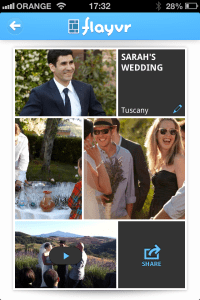
http://tctechcrunch2011.files.wordpress.com/2012/10/flayvr-player.png?w=200Do we really need another photo-sharing app - especially one with such a nauseatingly cutesy misspelled name as this? The reviewers of this new platform seem to think so. Launched in Israel in 2012, Flayvr takes a new and welcome approach to organizing and making sense of mobile device-based digital photo and video collections and sharing them among friends, something that many have identified as a shortcoming of both Instagram and Flickr. Co-founder and CEO Ron Levy explains that he was inspired to create Flayvr because it was something he needed himself. "I found myself trying to capture [family] moments with my iPhone but I found myself stuck in these endless camera rolls."

While not the first such application (Everpix, KeepsySnapjoy, and Batch have all attempted the same thing), Flayvr takes it a step further with a slick, user-friendly platform focused on grouping photos for the user's own benefit and ease-of-access. As an organizational tool, Flayvr has garnered rave reviews in the tech community, particularly for its ability to show videos playing in real-time in thumbnails along with your pictures. Still a newcomer on the scene, it remains to be seen whether this new mobile photo album-creating app will be able rise above its competition, but it appears to be gaining considerable momentum.

6. Create your own SM network

Phuck you Pheed! I'm starting a Wiki!
Say what? Remarkably not as far-fetched an idea as one might think thanks to DIY platforms like mixxt and Ning, which seek to do for social networking what Blogger and Wordpress did for online content. The results won't be as fancy as that offered elsewhere in the social media universe, but they're nothing of not authentic. Ning, relatively ancient at eight years old, offers customers the ability to create community websites with blogging, discussion forum and video functionality with its own 'like' function, although it's not free. mixxt, a DIY social media company founded in Germany in 2007 (with a foothold in Poland, Turkey and the UK), offers similar capacity on a 'freemium' basis.

And of course there's always the grand-daddy of them all: the wiki, a concept that dates back to the earliest days of the Internet. Want to create an open-source repository of information open to as many (or as few) people as you deem fit to, at no cost? The old-fashion low-tech wiki might be what you need. And thanks to the exploits of Julian Assange and others like it, there's something positively punk about the wiki, as it allows people with minimal SM expertise to swap information on everything from strategic planning to death metal lyrics to egregious violations of international law by governments who would rather not have said information made public. What's not to love about that?

Monday, 15 October 2012

On Bullying and Misogyny (In Memory of Amanda Todd)


The suicide of bullied Metro Vancouver teen Amanda Todd has generated yet another media frenzy over the epidemic of cyberbullying. In the case of Amanda, the 15-year-old from Port Coquitlam left behind a chilling YouTube PSA in which she recounts how her tormentors forced her to switch schools on multiple occasions (which did nothing to remedy the situation) and ultimately drove her to drugs, alcohol, seclusion and self-harming before ending it all. For those of you who haven't seen the video, you owe it to yourselves to see it.


The media's reaction to Amanda Todd's death has been depressingly predictable: outrage of the "How could this possibly happen?" followed by the predictable cacophony of proposed solutions to the epidemic of cyberbullying. As always, some called for increased policing of the web, others for greater bullying awareness campaigns in the school system. Some blamed parents and teachers for not doing more to stop it. Others callously opined that bullying is simply part of the natural order of things and that she got what she deserved. And as always, much of the focus remained on the need for teens to be careful while online lest they make themselves vulnerable to online tormentors.

The really depressing part, of course, is that Amanda Todd will soon be largely forgotten - apart of course from her grieving family and friends, who will never forget. And the frenzy of cyberbullying will quickly subside...until the next Amanda Todd pulls the plug on his or her life and the process begins again. And then of course there are the victims whose names and faces never make the pages of the National Post. Canada's youth suicide rate remains troublingly high. And while the rate is still higher for boys than for girls, the suicide rate for girls has jumped over the past few decades, while the rate for boys has decreased. There are thousands of Amandas out there. And far too many will leave this world unknown, with no YouTube account of their torment.

There can be no denying that the Internet, and social media in particular, has made the problem of adolescent bullying more insidious and difficult to combat. Not only does it allow perpetrators to remain anonymous, it also provides them with a far wider dominion over their victims. When I was a junior high schooler in the early 1990s, a change of school was generally a surefire tactic for curtailing bullying; while one still had to content with being friendless at a new school, at the very least it meant an escape from the devils of the old school. For modern-day teens like Amanda, changing schools offers no such escape. The web has even allowed her tormentors to target the girl's online memorials. Some sort of 21st century equivalent to the Greek Defixiones might be in order.

But while the 'cyber' element has made the problem of bullying scarier and more complicated, the root of the problem remains the same. Bullying is - and always has been - a societal means for maintaining a hierarchical status quo by punishing those who dare to overstep their bounds. It's also a means for placating the 'masses' with the occasional human sacrifice, playing into the dark side to our human nature. (Think Apocalypto in the schoolyard.) It's the 'mild' first-world tip of a very large and sinister iceberg that in other parts of the world manifests itself in the public lynching of gays and the spraying of schoolgirls with battery acid for having the audacity to seek out an education. And as always, those who fall outside of the default group (women, members of cultural, racial or sexual minorities, social misfits etc.) who bear the brunt of it.
"She flashed, felt repercussions, her own fault."
- Anonymous online commenter

The bullying of young girls like Amanda Todd is especially troubling inasmuch as it highlights the yawning gap between our society's post-feminist discourse and notions of equality and the harsh underbelly of misogyny that continues to contaminate our social relations. Granted, the Amanda Todds of the western world are no longer liable to be burned at the stake (as they might have been in Europe 500 years ago) or stoned to death (as she might well have been in modern-day Afghanistan or Somalia), but the horrible bullying to which she was subjected bears the same malevolent misogynist streak that motivated - and continues to motivate - such atrocities. The Amanda Todd story exemplifies the degree to which a great many men (and sadly many women) still view women within the passive virgin-whore dichotomy and consider those who lose their footing on that tightrope to be deserving of cruel censure.

So what are we to do about it? Sadly, there are no obvious cures. My own proposed radical solution for gender equality is not one that I'm expecting anybody to embrace anytime soon, namely a 50-year moratorium on male voting. Under such an edict, men would still be eligible to run for office but would have to be answerable to a female-only electorate (in a similar fashion to how chiefs and warlords within the Iroquois Confederacy were answerable to a council of women). A 50-year period would be long enough to produce profound change but short enough to remain within people's historical memory, a time period similar in length to the beginning and end of the Cold War, the rise of the Asian Tigers and the unfolding of the New Europe. And suffice it to say, 50 years of female rule would pale in comparison to 4,000 nearly uninterrupted years of patriarchy, but then again the goal is equality, not supremacy.

Getting back to the problem of cyberbullying, it bothers me that the onus is always placed on the victims to protect themselves against abusers while the abusers, and the complicit onlookers, invariably escape unpunished. While it is of course important for children and adolescents to be taught how to protect themselves online, it's about time more altruistic IT-savvy people stepped up to the plate and confronted this online terrorists head on. I was recently inspired by a story in the Guardian by Irish journalist Leo Traynor, in which he recounted his own tale of online abuse and how he enlisted a hacker colleague of his to track down his abuser - who turned out to be the son of a colleague with a head full of bad wiring. We need a Hackers Without Borders-type organization, a crack squad of angry nerds (who you would think would be natural allies in in this cause) to scare the crap out of would-be online tormentors.

At the same time, we need a 'coming out' campaign for former bullies seeking to make amends. In the aftermath of Amanda Todd's suicide, many commentors have come forward with their own stories of bullying and harrassment. For any sort of restorative justice to occur, those who are saddled with the burden of having been bullies or passive bystanders need to make themselves known, ask for forgiveness and then take part in combatting the problem. Just as the onus of gender equality cannot exclusively be placed on the backs of women, I don't see how anti-bullying campaign are to make any headway without the involvement of former perpetrators. At least one bully did just this in the aftermath of Amanda Todd's suicide. A good start, but far more of this is needed.

We should all be mad as hell about this - and about our society's ongoing contempt for women and girls who fail to meet mainstream culture's unspoken but understood expectations to be sexy-but-not-sexual, compliant to patriarchal strictures and vigilant in defence of their own purity. And for the sake of online freedom (and not ruining it for everybody else), we need to get tough on cyberbullies. Censoring the Internet will not curb bullying anymore than veiling and secluding women reducing instances of sexual assault, as conservatives in the Islamic world are fond of arguing. As a society we are capable of being better than this, but we won't get there without taking a long, hard look at the poisonous attitudes that persist within our supposedly progressive culture.

And for the love of god, please stop blaming social media for this! Yes, SM is a double-edged sword that makes the issue of bullying more complex, but it's not the crux of the problem. And besides, were it not for social media, none of us would be talking about Amanda Todd right now, as her excruciatingly eloquent YouTube statement could never have been made and disseminated around the world in the first place. Social media is not to blame for this. Misogyny and its never ending capacity to inflict unnecessary human misery is to blame.

In the meantime, my heart goes out to the girls family and friends, for what it's worth. Needless to say no words could ever even begin to take away the hurt.

Wednesday, 29 August 2012

'Because It's There' And Other Bad Reasons for Using Twitter


These days it seems like every time I go online I see a new communications person (usually a former communications staffer with some big organization) offering their services as a Twitter guru of some kind. Everywhere you go, somebody seems to be offering seminars like 'Twitter for non-profits' or 'How to maximize your marketing reach through Twitter'. Far be it for me to pooh-pooh anybody offering such services, it does lead me to wonder if the corporate and non-profit world's current obsession with Twitter is becoming a tad overkill.

Don't get me wrong - I like Twitter a lot and find it a very useful tool - one that I'm still learning. But the current Twitter craze is reminding me in many ways of the ESL/EFL obsession that took hold in East Asia in the late-1980s and 1990s. For a time it seems like just about everybody in Japan, Korea and Taiwan (and later in Mainland China) was convinced that mastery of the language of King James and Mickey Mouse was the solution to absolutely every problem and English conversation schools began to outnumber noodle stalls and karaoke bars in Tokyo, Seoul and Taipei. At the peak of this craze, advertising for language school chains like Japan's once-supreme but now largely eclipsed NOVA bordered on the insane (and borderline sexual), featuring handsome, impeccably groomed American men bestowing magical English fairy dust on grateful young Japanese women. Who knew English was such an aphrodisiac?

This wasn't a good reason in high school and it still isn't.
The current Twitter obsession - at least among North American businesses and organizations - is not far from this. Everyone seems to want to use it, and if they are using it they want to be using it better than anybody else - or at least better than their competitors. There are currently more social media monitoring tools out there than I can name and every self-styled communications blogger purports to have some kind of 'edge' on Twitter to share with the world. But when it comes down to it, Twitter, like the English language, is a tool, and like any other tool it's not going to suit every job or every organization. And like any type of tool - be it a saw, a chisel or a shotgun, it requires a need in order to be of any use.

For an organization considering adopting Twitter as a tool, there are three obvious (at least to me) questions that its communications staffers need to ask themselves, namely
  • Do I have a story to tell that lends itself to 140-character vignettes?
  • Do I have important information to disseminate?
  • Is there anybody else out there who is already disseminating this information effectively?
  • Do I have the time and the resources to devote to the upkeep of this tool? (See last week's post on the similarities between having a dog and having a social media tool.)


These are not easy questions to answer and require a great deal of thought and research. However, the following criteria are more straightforward, namely a list of wrong reasons to be on Twitter. If you're thinking about adopting Twitter as a tool - and any of the following rationales for adopting it apply - I think it would be wise to re-examine your priorities.


Useful tools in some professions but perhaps not yours

1) Because it's there.

This old mountaineering adage holds no water when it comes to social media tools. A lot of things are there. There's Twitter, yes. There's also Foursquare. There's Yammer. There's the now completely ubiquitous and unsexy Facebook. Hell, there's your frickin' telephone! Just because it's there to be used doesn't necessarily mean that you should be using it.

2) Because it's cool.

No, it really isn't. Even if this were a legitimate reason for using Twitter, this now six-year-old digital tool lost just about any claim to 'coolness' it ever had at least four years ago. In fact it was pretty much officially declared uncool in 2008 - and is now firmly into Facebookville.

3) Because everybody else is using it.

Now this actually is cool!
Actually, this isn't true. In my own research of airport social media best practices, I was surprised to learn that Montréal-Trudeau International Airport doesn't use Twitter at all. In fact they've sized up the tool on several different occasions and each time come to the conclusion that it didn't suit their needs, and in fact would be an unnecessary drain on their resources. Instead they invested in creating a mobile app which, since it's launch at the tail end of 2011, has proven to be very popular among Montrealers. This app, coupled with the airport's old-fashioned phone hotline, do pretty much anything a Twitter feed is designed to do - without the human resources required to be constantly manning a Twitter feed. Sometimes the old tools really are the best ones.

4) I'll look like a laggard if I'm not on Twitter.

Again, not true. Unless you're in a job like mine where you're actively involved in researching what tools different companies and organizations are using, nobody is out there sussing out whether or not you, personally, are tweeting or not. And if they are they've got WAY too much time on their hands. Truth be told, if your organization is communicating well with the tools it's using, nobody is going to fixate on the tools you're not using. Really, nobody cares!

5) I need it to establish myself as a source of first resort in my area.

This may or may not be a legitimate reason for being on Twitter, but it leads back to the original point about whether a) you really do have unrivalled access to certain information and can provide it better than other organizations, and b) you have the time and human resources to devote to the task. The latter point is the undoing of some organizations that leap into Twitterstan before thinking through what they hope to achieve with it. And the trouble with establishing yourself as a source of first resort on anything is that people come to expect this of you - and failing to deliver the goods in this regard will do far more damage to your organization's reputation than not being on Twitter in the first place ever could.

6) The board of directors wants me to.

Why?

7) I like the cute birdie symbol.

I've never actually heard this articulated as a rationale for using Twitter, but it's probably safe to say it's not a good reason for doing so. Perhaps you might consider a company mascot - and hiring an 18-year-old kid to stand outside the building in a bird costume. At least the kid can go home at 5 pm and leave the bird costume at the office.


P.S. Christina Rontynen, if you're reading this post, my whole business about Twitter educators was in no way directed at you. And if you are looking for a great social media consultant and educator - and you happen to be in the Calgary area, Christina, the President of CIPR Communications and currently a digital media advisor for the Canadian Association of Petroleum Producers, really knows her stuff. You can follow her on Twitter at @crontynen or check out her cheeky political blog (which she co-authors with her husband Peter Pilarski) at PCinYYC.com.

Thursday, 28 June 2012

8 Reasons Why People Love Numbered Blog Posts

the count

There's something about Top 10 Lists or Top Insert-Your-Own-Number Lists that seem to never fail to captivate. We all love lists, and from David Letterman's Top Tens to the never-ending music-related top tens in the famous 2000 music-geek dramatic comedy High Fidelity, Top-Whatever lists seem to be hardwired into our DNA.

In the blogging world, numbered posts are known as 'link bait' as they seem to unerringly draw traffic. It has become a universal format across the blogosphere, employed by blogs ranging from Foreign Policy Magazine online to Cracked.com. Unlike Letterman and John Cusack's melancholy vinyl peddler, numbered blogs more often than not don't stick to the Top Ten format (to me ten seems a bit contrived and inherently less credible), but any number in the Top X format seems to do the trick just fine. In my own experience, these posts always draw the most traffic.

Why is this? Here is my own highly speculative and unscientific explanation.

1) People like small tidbits of information.

The average netizen has the attention span of a goldfish. Moreover, as people read twice as slow on a screen as they do on a printed page, this small chunk-like paragraph format works very well. Dive into the page, gobble up a few tidbits, and then head off somewhere else - that's how the Internet rolls.

2) People don't like to commit to reading an entire article.

Did I mention that people on the Internet are decidedly lacking in attention span? Reading an article with a daunting title like 'After The Wave - The Communications Lessons of 3.11' seems like a tall order after a long day at the office, and with an essayistic piece like that you feel committed to reading it in its entirety. With a list, you feel free to read a few and then leave - or keep reading if you're feeling sufficiently intrigued.

3) Lists are inherently suspenseful.

While the opt-out option of a Top-Whatever list is a definitely psychological draw, human beings tend to want to know how things end. If it's a well-written list, chances are your reader is in fact going to stick around to the end - unless they have to run off somewhere.

4) The list format is hardwired into our culture.

Thanks to Letterman, Cracked, High Fidelity and pop culture in general, lists are an integral part of how we interpret the world. And this is not new - this format dates back at least as far as Moses, who really owned the Top Ten format like nobody else in history, and the US Constitution, which modernized the format in the Enlightenment era.

5) It's appealingly irreverent.

Taking a serious topic and distilling it through the Top-Whatever format is appealingly disarming. Former Discovery magazine editor Stephen Petranek exemplifies this in his 2002 TED talk on 'the 10 most likely ways that life on the Earth could end'. It's a disarming way of tackling a serious topic that grabs your attention - and then holds on to it.

6) It's a natural lightning rod for debate.

If it's an interesting topic, people are bound to have their own opinions on what should be on said list, and people are going to want to compare and contrast with their own Top-Whatever. And people love to fill you in on all your egregious omissions.

7) It's a friendly and approachable format.

We all make lists. We've been making lists since the dawn of time. And blog posts in the form of a list feel real, genuine, not-at-all haughty. Had Fyodor Dostoyevsky rewritten Crime and Punishment as 'Top 20 Occasions When Cold-Blooded Murder Is Probably Beneficial to Society', he invariably would have had a far greater readership.

8) I guess people just like to count.

And we can all thank own favourite arithmomaniacal ex-pat Transylvanian muppet for that.

Thursday, 21 June 2012

Yahwehpedia - The Bible as Precursor to Wikipedia

One of my most memorable undergrad courses was an introductory Old Testament/Hebrew Bible course I took as an extra credit course. The instructor - who introduced himself as a 'recovered fundamentalist' - introduced the topic thusly. He entered the classroom with a tape recorder, placed it on his desk and asked for a show of hands from the students assembled.

"How many of you believe in the Bible literally?" he asked. There was a peppering of hands. He then responded, "Okay, here it is." He pressed play and on came Genesis, Chapter One, Verse One - in the original Ancient Hebrew. He let it play for approximately 30 seconds and then paused the tape. "How many of you understood that?" he inquired. Not surprisingly nobody raised their hand. "Well, in that case I guess you can't take the Bible literally. And that's why you're in my class."

For those reading this post who do not adhere to literalist views of the Old and New Testament (and I'm guessing that's most of you), your response to this anecdote is probably one of "Duh, no kidding!" But it does beg the question of how one is supposed to grapple with what is indisputably the single most influential written work in the history of humanity. If not as literal truth, which it could not possibly be, how is one to approach the Bible? As a heavily sensationalized and politically biased history tome? As a work of historical fiction centred on a capricious, volatile-tempered supreme being? A chaotic amalgam of texts assembled by committee? None of these approaches seems quite satisfying.

A better analogy for the Bible, in my opinion, is the modern-day Wiki. In my previous post on children's fable, I refer to Jonathan Salem Baskin's wonderful book Histories of Social Media: 2,000 Years of Do's and Don'ts, in which he likens Wikis to premodern oral narratives, created by way of layer upon layer of input on the part of the storyteller. I would further argue that the Wiki concept applies perfectly to the creation of the Bible. This is particularly true of the oldest books in the Old Testament, which comprise the Jewish Torah, which are comprised of four distinct narrative layers - the Yahwist, the Elohist, the Deutoronomist and the Priestly strands - which together span three centuries of user contribution.

The Bible is of course not alone in this format. Most if not all major religious doctrines were created in this manner, through a layering of narratives over the course of centuries. But the Bible, as a result of its size and magnitude, must be considered the mother of all premodern Wikis - and therefore the Wikipedia of the ancient world. Consider that the Old and New Testament were created by multiple authors for the purpose of creating a one-stop compendium of everything these authors knew and believed to be true at that time. It covers a vast swath of topic areas, from law and order to farming techniques to poetry to pure adventure stories, centred of course on the primary focal point of the civilization in question - belief in Yahweh.

The New Testament retains the same format, focusing instead on one very big topic - the persona of Jesus of Nazareth. By this point, you basically only have four contributors left, although each may have been a committee of writers and editors under a single name. But still, there seems to be no shortage of competing views? Was Jesus actually the Son of God, as the Gospel of John clearly states, or is the Son of Man - whatever that means - a more accurate characterization, as the Gospel of Mark states. Was he the stern lawgiver as portrayed by Matthew or the gentle healer of Luke - or a combination of both? Unfortunately we have no real way of knowing because, unlike with Wikipedia, Christ's disciples weren't required to provide footnotes.

And then it all came to an end. Fearing that disputes within the new Christian faith would undermine the stability of the Roman Empire, the Christianized Roman Emperor Constantine summoned the Council of Nicea in 325 C.E. for the purpose of nailing down the Biblical canon once and for all. A decision was finally reached in 397 in Carthage, a full sixty years after Constantine's death. This brought to an end the open-source nature of the Bible in what would be the modern-day equivalent of shutting down Wikipedia from any further constribution and treating it as an online authority not to be tampered with.

Of course not everybody went along with this, and four centuries later Yahwehpedia 2.0 (also known as the Qur'an) was launched. While the Qur'an itself was not open-source, the innumerable Hadiths and other religious texts followed that very same Wiki-type format for several centuries thereafter and in a different form persists to this day in the form of the various fatwas issued by Islamic scholars throughout the Muslim world.

What does this mean? The Wikipedia model is, to my mind, a useful lens for examining the world's most important and controversial tome. Written over the course of centuries by a plethora of authors, each with their own particular slant but all striving for what they perceived to be accurate, the Bible is exactly what an ancient Middle Eastern version of Wikipedia would have looked like, grounded in contemporary understandings of how the world worked. Yes, much of it seems ridiculous to 21st century secular readers, but then again much of our present-day Wikipedia content will invariably look hopelessly ill-informed two millenia from now - should our species still be around at that time.

As for whether any or all of it was 'divinely inspired', I'll leave that hornet's nest alone. I will say, though, that if I were of a more religious disposition, I would be the first to champion the creation of a true open-source, democratic holy book for the 21st century built along the lines of Wikipedia. In sum, a true non-prophet organization.

Friday, 13 April 2012

Facebook: Helping People Feel Inadequate Since 2004

I like having Facebook in my life - for the most part. It's a useful tool for a lot of things and I would say that, on the whole, my life is better with it than without it. Nevertheless, there are days where I'm forced to wonder if Zuckerberg and Co. are deliberately trying to undermine humanity's sense of self-worth.
In particular, I wonder sometimes if Facebook app designers specifically set out to find new and ingenious ways to make us feel inadequate.

Consider, if you will, the 'My Friends Map' app. For those of you who don't know it, this is an app that allows you to produce a map of where all your Facebook friends live, which you're expected to then post to your wall. For the sake of reference, here's what mine came out looking like:


This is meant as an example, not to make me look cool. Trust me, the 'international-ness' of my friends is the least interesting thing about me.

As a geography geek, I can appreciate this sort of thing, and it's certainly an interesting visualization. Nevertheless, it bothers me that the intended purpose of this app is to publish such maps on your wall to show off to your friends not only how many friends you have but also how international your group of friends. It's easy to say "Who frickin' cares if Jessica has three friends in Istanbul and five dots in what looks like Belarus?", but in the end we all care how we look to our friends - and apps like this are pretty much guaranteed to make us feel less cool, less sophisticated, less worldly and, well, simply less than.

(Note: this tool could have potential unintended consequences. For example, if the lion's share of your overseas friends are located in Yemen, Sudan and northern Pakistan, you probably want to avoid advertising that fact on your wall - unless you want to have CIA operatives with binoculars crouching behind your rose bushes.)

But My Friends Map isn't the worst of the self-esteem-undermining tools that the Book of Face has to offer. Consider this lovely app. This takes international one-upmanship a step further, whereby you get to advertise to everyone in your Facebook network how awesome you are based on the number of countries you've visited.

Oh yeah? Betcha you haven't been to Antarctica and Andorra!

There you have it. Now not only can you take that whirlwind European tour you went on when you were 21 and make yourself out to be a globetrotter comparable to Kofi Annan or Hillary Clinton, but you can also turn that four-hour layover you once had in Addis Ababa into a bona-fide travel experience that you can brag about to your friends. Does anyone really care? Of course they do - it's on Facebook!

What is this app trying to say? From the standpoint of this app, the six years I spent living and working in Japan, learning the language and absorbing the culture is no different from the seven hours I once spent in the terminal building in Kuwait City. It's a country. It goes on the list. This is to say nothing of the fact that some of the most worldly and globally aware people I've met are not particularly well travelled and that a great many self-proclaimed globetrotters that I've met are, frankly, closed-minded and blinkered by their own cultural conditioning. It's all about the points you rack up in life. That is all.

Numerous studies have pointed to Facebook and other social networks having a negative effect on people's self-esteem. Furthermore, the great paradox of Facebook is that the more friends you have, the greater the negative impact on your sense of self worth you're likely to suffer. A recent article in Men's Health on the subject notes that the more 'friends' a person has, the more likely they are to be spending their day enviously reading about someone else’s paradise vacation, new girlfriend or job promotion.

Given the fact that FB already puts us in a precarious position vis-à-vis our own self-esteem, is it really necessary for app designers to keep coming up with new ways for us to feel inferior? I would like to issue a challenge to whoever the people are who design these things to actually create something that will foster people's sense of self-worth rather than perpetuating this endless cycle of social media one-upmanship.

In the meantime, I'm keeping my Friends Map hidden. Whoops, I just posted it. Guess I'm just as guilty as the rest of y'all.

Thursday, 5 April 2012

Twung Fu: Why Microblogs Work Better in Asian Languages


I confess to being a relative latecomer to the world of Twitter, having joined it less than a year ago. Nevertheless, I am now a full-fledged convert, or Twaddict, as such people are known in the Twitter universe. As a fan of punchy, concise text, I find the 140-character format absolutely brilliant. Not only is it a great way to disseminate and find information, by the microblogging format saves you the trouble of sifting through irrelevant and excessively wordy text on your way to the information you're looking for.

My embrace of the Twittersphere has also more or less coincided with my return to studying Japanese. My search for good, east-to-digest and relevant reading material in Japanese not surprisingly led me to Twitter, and I currently follow a number of Japanese tweeters of various descriptions. Whereas Facebook was slow to gain currency in Japan, Twitter took the country by storm very early on. Today roughly 30 million Japanese are on Twitter, putting the country in third place in the Twittersphere behind the United States and Brazil.

The prevalence of Twitter use in Japan was graphically illustrated in the aftermath of the 3.11 earthquake and tsunami. As Twitter was one of the few reliable communication tools still working in the affected areas, it proved to be instrumental in disaster monitoring and delivering rescue operations, as well as in the government's own communications efforts. Then Cabinet Secretary and government spokesman Yukio Edano became something of a Twitter celebrity in the weeks following the disaster through his ceaseless stream of tweets and the now-legendary hashtag #edano_nero (Edano, go to sleep).

After a while of following and reading Japanese tweets, I began to realize why this tool had become so popular in Japan - and how Japanese and other Asian languages have a systematic advantage over the likes of English in this digital domain. It's simple arithmetic. Spell out 'Shanghai' or 'Guangzhou' like this and that's eight or nine characters respectively, as opposed to two Chinese characters (上海 and 广州). In Japanese, the word niwatori (chicken) is eight characters in Roman script, as opposed to a single kanji (鶏). Even Korean, which uses a phonetic rather than a pictographic writing system, enjoys the same compactness. Type 'Pyongyang' in English and you've used nine characters. In hangul it takes two (평양).

The upshot of this, of course, is that in Asian languages, tweets often amount ot full-fledged blog posts. Consider the following tweet, which was translated by an anonymous tweeter in the aftermath of the Fukushima meltdown. Compare and contrast the original Japanese with the English translation:

基準の16倍って凄そうにいってるわりには、まだPET/CTスキャン1回分程度じゃ…と原発入口正面に立ちっぱなしは止めましょうって程度じゃん??近づくのを止めればいいだけでは?

And in English....

The media is making a fuss about the radiation level, loudly saying it's 16 times the standard, but you would be exposed to the same level from a single PET/CT scan at a hospital. Isn't it enough to tell us not to stand for long periods in front of nuclear power plants? Just staying away from them is enough to be safe, isn't it?
The original tweet runs 87 characters, including punctuation, well below the 140 character cutoff. That same tweet translated into English, including spaces (of which Japanese conveniently has none), consumes 330 characters, more than twice the limit for a tweet. In terms of Twitter-ficiency, there's no contest between the two languages - it's Japanese hands down. And in a country long synonymous with pithy, compact wordcraft as best exemplified by haiku poetry, it's not hard to see why Twitter is the social media vehicle of choice.

And it's not just Japan that's embracing microblogging with aplomb in East Asia. Since the launch of the Korean language version of Twitter in early 2010, Twitter use in South Korea has grown to 3.34 million users, with the country tweeting at twice the global rate. While South Korea's embrace of Twitter has not been without controversy, as seen in criminal cases involving allegedly pro-DPRK tweets, officials in Asia's fourth largest economy appear to be adopting a more relaxed attitude to the tool, as the recent overturning of a ban on Twitter use during national elections demonstrates.

Meanwhile, Twitter launched a Chinese language interface in September 2011. Although the service has been blocked in the People's Republic of China since 2009, Twitter is hoping to increase usership in Taiwan and Hong Kong (which have no such restrictions) as well as among overseas Chinese in Southest Asia and in the western world. Meanwhile, China's Twitter ban has resulted in a proliferation of homegrown microblogging services. Of these, by far the most popular is Sina Weibo (新浪微博, literally 'Sina Microblog'), a service whose prevalence in both Hong Kong and Taiwan presents a formidable challenge to Twitter.

The People's Republic vs. the Weibo Dynasty

In spite of the popularity of Sina Weibo and other microblogs, life for China's tweeters remains uneasy. China recently launched its toughest censorship move since the rise of social media, with Sina Corp and fellow microblogging platform Tencent temporarily barring users from commenting on other posts. The move came after an announcement that six people had been detained and 16 websites closed for spreading rumours about a military coup in Beijing, rumours allegedly circulated via China's domestic microblogs.

Web censorship in the PRC is, of course, nothing new. The Chinese Communist Party has long censored Internet content that it deems to be too politically sensitive, namely anything to do with the Tiananmen Massacre, Tibetan or Uygur independence movements, Taiwanese independence and political protests in general. Beijing officials also apply pressure on SM providers like Sina Weibo to do their own censorship. While the Chinese government doesn't make its blocked words public, Sina does - and currently has a list of 378 banned words. Here are a few examples:

  • 丹增嘉措 (Tenzig Gyatso, the 7th and current Dalai Lama)
  • 藏独 (Tibetan separatist)
  • 东突 (East Turkestan, the ethnic Uygur name for their homeland in Xinjiang province)
  • 一党专制 (One-party dictatorship)
  • 台湾独立 (Taiwan independence)
  • 天安门 (Tiananmen Square)
  • 法輪 (Falun (Gong))
  • 快闪党 (Flash mob)
  • 大麻 (Marijuana)
  • 维基揭密 (Wikileaks)
  • GFW (Great Firewall)
  • 做爱 (Sex)

In spite of the Chinese government's best efforts, however, censoring the microblogosphere is easier said that done - even in China. Moreover, here too Asian languages like Chinese present a distinct advantage (or disadvantage, depending on which side you're on) when it comes to communicating via Twitter and other Twitter-like tools - and skirting the censors while doing it. Chinese phonetics are such that many characters may share the same sound with a different tone (and a different character), making it relatively easy to disguise politically sensitive language. The censors eventually catch on, but the nature of the language makes it easier for dissidents to stay ahead of the authorities.

Finally, enforcement of the 'Great Firewall of China' has never been entirely consistent. Cracks in the wall  occasionally appear (followed by heightened suppression), during which time dissidents and ordinary Chinese netizens have been able to gain access to Twitter and other platforms for brief periods, and armed with a language crammed with pithy meaning-laden phrases that can fit within the character count of LMFAO, a flurry of well-crafted tweets can pack quite a punch before the fissure in the wall is sealed shut once again. Others, like famous dissident artist Ai Weiwei (@aiww), have parlayed their overseas renown into steady Twitter presences housed outside the country.

Currently, the crackdown against Sina Weibo and other microblogging platforms is at a fever pitch. All evidence points to a Chinese government in a state of panic over its perceived loss of control over its citizens' online communication.

Twitter and Kanji - A Return to Beautiful Language?

While Chinese government officials may be bemoaning the proliferation of microblogging in their country, in Japan, one group of people that is surely applauding it is language arts instructors. Since the advent of text messaging a decade ago, older Japanese, and language arts teachers in particular, have complained about its perceived detrimental effect on the younger generation's use of kanji characters. The youth, they argue, have become increasingly sloppy in their writing, opting for trendy hiragana or katakana (phonetic) spellings of words rather than proper characters.

Twitter stands to reverse this trend - at least potentially. Consider a word like samazama ('various'), which in modern Japanese is typically written phonetically as さまざま. By writing it in the traditional kanji as 様々, you save yourself two characters. I have yet to speak to any Japanese language instructors about Twitter as an incentive for using well-crafted language, but I would be curious to know if Twitter's new-found ubiquity in Japan has had, from their perspective, a beneficial effect on the Japanese language. I suspect it's good news for the language of haiku.

Incidentally, a good number of contemporary haiku poets are now on Twitter. Among them is renowned haijin and Tenrikyo priest Kuniharu Shimizu, who composes poetry (and tweets) in both Japanese and English. You can follow him at @seehaikuhere.