Showing posts with label United States. Show all posts

Thursday, 6 March 2014

6 Reasons To Re-Watch The Original RoboCop Before Watching The Reboot

Source: IMDB.com
For the record, I have yet to see the brand-new remake of the 1987 action classic RoboCop. Moreover, until a few days ago, I felt no particular need to go out and see it. These days the price of movie tickets coupled with the existence of Netflix means I hardly ever go out to see movies, especially Hollywood blockbusters. But after having re-watched the original RoboCop for the first time since I was a kid, I'm now quite curious to see it. Although in all honesty I'm probably going to wait until it comes out on Netflix. I'm cheap that way.

I was around 10 years old when I first saw the original film, which means a) I was definitely too young to be legally watching it without a parent or guardian (sorry mom, sorry dad); and b) a lot of its content went completely over my head at the time. Seeing it now made me think there's more to movie age restrictions than simply sex and violence, of which there was none of the former but a great deal of the latter. The graphic shoot-em-up scenes in the movie certainly made a big impression on my young mind, but the subtler aspect of the film, like its socio-economic critique and liberal use of Biblical symbolism, were beyond what I was able to process at the time. If anything, the "inappropriate content" was the stuff I wasn't intellectually ready to grapple with.

The original RoboCop was, in many ways, ahead of its time. While critical reception of the film was on the whole positive in 1987, it received considerable flak for both the quality and quantity of gory on-screen violence as well as its liberal use of profanity. While still most definitely stomach-churning at points, the film's violence pales in comparison to much that was to come within a decade thanks to movies like Reservoir Dogs and Natural Born Killers, which in turn pale in comparison to the likes of the Saw and Hostel franchises - which make the original RoboCop look like My Dinner With Andre by comparison. As for the profanity, it certainly shocked my 10-year-old sensibilities at the time but in an era when F-bombs are a dime a dozen on primetime TV, there's no shock value there.

That said, I definitely wasn't ready to appreciate RoboCop at age 10, and as a result dismissed it for the next 20-plus years as simply one of the many gratuitous big-biceps shoot-em-up extravaganzas that defined much of 1980s Hollywood. It wasn't until this Monday that I rediscovered the film and completely changed my mind about it. Granted, I still hate the way the film ends, with the villainous Omni Consumer Products CEO Dick Jones (brilliantly played by Ronnie Cox) being blown out of a glass window atop the company's skyscraper, in one of the worst cliche movie deaths ever. That said, it's still an excellent film, and one that definitely needs to be re-watched before going anywhere near the re-boot. Here's why.

1) Peter Weller's performance

Source: robotsinmasquerade.blogspot.com
One of the most interesting aspects of the original RoboCop film is director Paul Verhoeven's very counterintuitive casting choices. For the titular role, Verhoeven initially considered A-list action stars Arnold Schwarzenegger and fellow Dutchman Rutger Hauer for the role, but ultimately settled on the smaller and highly cerebral Peter Weller, a guy whose other most memorable roles have been Dr. Buckaroo Banzai in the cult sci-fi classic The Adventures of Buckaroo Banzai Across the 8th Dimension and William S. Burroughs in David Cronenberg's twisted 1991 rendering of The Naked Lunch.

The decision was made in large part because the diminutive Weller had an easier time moving in the RoboCop suit than the aforementioned big guys, but it ended up being a brilliant move. Weller's portrayal of both the mild-mannered Detroit cop Alex Murphy and the brooding titular cyborg gives the film an intense humanity that Arnie would have been hard-pressed to deliver. Hauer, on the other hand, would have been an interesting choice given his own track record for playing emotionally disturbed androids. But Weller's acting combined with his delicate features makes the original RoboCop really stand out in the predominantly brawny and brainless domain that is '80s action heroes.

2) Two iconic '80s movie villains for the price of one

Source: whatculture.com
If there's one thing 1980s action movies did right, it was creating awesome over-the-top bad guys. While the action heroes of this era tended to be bland and one-dimensional, Hollywood directors made up for it by delivering the likes of Hans Gruber (Alan Rickman) in Die Hard, The Kurgan (Clancy Brown) in The Highlander, Koji Sato (Yusaku Masuda) in Black Rain, Johnny Lawrence (Billy Zabka) in The Karate Kid and, of course, Jack Nicholson as the Joker in the 1989 Batman. The 1987 RoboCop goes one step further by delivering two of the decade's most memorable bad dudes in a single film.

As with the main character, Verhoeven made a point of making counterintuitive casting choices for the film's two antagonists, CEO Dick Jones and 'Old Detroit' crime lord Clarence Boddicker. For Jones he went with Ronny Cox, an actor and singer-songwriter best known for playing genteel fatherly figures in series like Apple's Way and St. Elsewhere. In a similar vein, Verhoeven cast Kurtwood Smith, an actor best known for playing uptight squares in That Seventies Show and movies like Dead Poets Society as probably the only ever movie supervillain named 'Clarence'. Both men clearly embraced their anti-typecasting roles and threw themselves into their respective evil characters will full aplomb.

(As an interesting side note, Clarence Boddicker's trademark rimless glasses were a key element in Kurtwood Smith landing the role, as Verhoeven thought they made him resemble Nazi SS commander Heinrich Himmler.)

3) A great female action hero

Source: imfdb.org
In her seminal critique of post-second-wave culture Backlash, feminist author Susan Faludi dismisses RoboCop as simply one of "an endless stream of war and action movies" in which "women are reduced to mute and incidental characters or banished altogether." While I have the deepest respect for Faludi and Backlash and I have to agree with her overall characterization of 1980s action movies, I think she is dead wrong about this one. Aside from the titular character, the strongest character in the movie is without doubt Murphy's stoic and determined partner, Officer Anne Lewis (played by Nancy Allen) - one of Hollywood's toughest and most memorable female cops.

While her character is clearly secondary to Murphy/RoboCop, Officer Lewis is the type of female character you still rarely see in Hollywood films - a shrewd, independent, non-objectified woman in a typically male role. Most strikingly, the relationship between Lewis and her ill-fated partner is very much in the classic buddy-cop mode and is refreshingly un-sexualized. (RoboCop is a lot of things, but it's about the least 'sexy' film I can think of.) Depressingly, I fear Hollywood has gone downhill in this category since the 1980s. In the 2014 reboot, Officer Lewis is gone, replaced by Officer Jack Lewis (played by Michael K. Williams), and the only female character in sight is Murphy's wife, played by Abbie Cornish. So much for that.

4) Symbolism galore

Source: screened.com
An interesting (and little-known) fact about Paul Verhoeven - a man best known for sci-fi blockbusters RoboCop, Total Recall and Starship Troopers and then-scandalous 1992 suspense thriller Basic Instinct - is that he is also a dedicated Biblical scholar and a onetime member of now defunct Jesus Seminar, an scholarly association dedicated to shedding light on the historical Jesus of Nazareth. Of all his output, RoboCop is without doubt the most overtly 'Christian' in theme. Indeed, Verhoeven asserts in the documentary Flesh and Steel: The Making of RoboCop that he intended the main character to be a 'Christ figure'. Christian symbolism abounds throughout the film, from Officer Murphy torturous death at the hands of a mocking rabble to RoboCop walking ankle-deep in water during the climactic showdown at the abandoned steel mill.

Biblical allegories aside, the most obvious literary parallel is, of course, Mary Shelley's Frankenstein. Indeed, there is a certain Boris Karloff-type quality to Peter Weller's performance in this film, while the amoral and singularly driven Bob Morton (Miguel Ferrer), RoboCop's creator, is clearly a modern-day stand-in for Dr. Frankenstein. In this sense, RoboCop fits more within the classic horror cannon than within the annals of science fiction, as does Verhoeven's later ultra-violent riff on the Book of Revelations, Starship Troopers. Interesting stuff at the very least.

5) An eerie caricature of Reagan-era America

Source: empireonline.com
While socioeconomic and cultural caricature are not hard to find in the 1980s Hollywood action movie cannon, in many if not most cases directors felt the need to critique American culture within a 'foreign' context. In Die Hard, the protagonists are American but the villain is, of course, German and the corporate context in question belongs to the then Leviathan presence of Bubble Economy-era Japan, a context that reappears in Ridley Scott's Blade Runner (ostensibly LA in 2019 but clearly 1980s-vintage Tokyo with flying cars) and Black Rain. Meanwhile, the Rambo saga starts on the terra firma of the United States but then heads off to the safe refuge of Commie-ruled Vietnam.

RoboCop, by contrast, focuses unflinchingly on a decaying (and increasingly crime-ridden) post-industrial US, centred, appropriately enough, on the city most frequently held up as a poster child by both the left and the right for everything wrong about the country. While the exact epoch of the movie is left intentionally ambiguous (set at "some point" in the near future), the cultural setting, from the over-the-top corporate greed to the cowboyish gangsters, is unquestionably the 1980s America of Gordon Gekko and company - complete with a severe case of the military industrial complex. In that sense RoboCop can be seen in a similar light to Heart of Darkness, where, like with Verhoeven's film, it took a foreigner (the Polish-born Joseph Conrad) to shine a light into the skeleton closet of British/Belgian colonialism.

6) Future echoes

Source: blackagendareport.com
In an ironic development, the character of RoboCop has become an iconic figure in the beleaguered city of Detroit where the film was set. In 2011, following then Detroit mayor Dave Bing's announcement of the building of a 'New Detroit', the mayor was asked (as a joke) if he planned to erect a statue of the iconic movie cyborg, and his rejection of such plans led to an Internet campaign aimed at raising money for a RoboCop statue. Today it looks increasingly likely that the statue will indeed happen.

In a very real sense, the nightmarish, dystopian Detroit dreamed up by Verhoeven did become reality. Between 2000 and 2010 the city lost 25 percent of its population, dropping to just over 700,000 (down from a peak population of 1.8 million in 1950), and in July of last year the city filed for bankruptcy in the largest municipal bankruptcy case in US history. This ongoing decline has resulted in notorious urban blight, with the abandoned industrial structures of RoboCop eerily reminiscent of the city of today, while the city continues to grapple with stubbornly high rates of violent crime.

In spite of its deeply entrenched problems, Detroit remains a city with intense civic pride, and since the city's bankruptcy filing in mid-2013 there's been an upsurge in social and economic activism in the city aimed at bringing the city back to health, by groups such as Revival in Detroit and World Hope. In that sense, the character of RoboCop himself can be seen as an allegory for Detroit itself - agonizingly shot to death but still managing to cling onto life and re-emerging stronger than ever. At least that's the hope of Motor City's stubbornly proud residents. Perhaps a RoboCop statue isn't that far-fetched an idea after all.

So, in sum, before you go pay however much tickets for the 2014 Jose Padilha reboot of RoboCop, I strongly suggest sitting down to watch the old one. If for no other reason, by what I've read of the reviews of the new film, the old one is definitely better. But I should really go see the new one before I say that.

Friday, 21 February 2014

EIA New Destination Showdown - Dallas vs Reykjavik!

 
After many months of anticipation, Edmonton International Airport will finally inaugurate the city's most highly anticipated new air route in ages, Icelandair's Edmonton-Reykjavik non-stop. While our marketing and communications team here at EIA expected excitement around this new connection, the Iceland-Mania that has consumed the city of Edmonton over the past few months is beyond anything we could have imagined, and advanced ticket sales to Reykjavik and beyond have been such that the airline not only advanced their original start date from the end of March to the beginning of the month, but also added a fifth weekly non-stop. Flights haven't even started yet and already Icelandair is looking like Edmonton's de-facto official airline.

But with all the buzz surrounding Icelandair's Edmonton debut, EIA's other new route, American Airlines' forthcoming daily non-stop to Dallas/Fort Worth International Airport, has received less attention than it merits. While Dallas might strike one as a less "exotic" destination than Reykjavik, this new US route is a huge coup for the Edmonton region. After all, DFW is the fourth busiest airport in the world by aircraft movements and the ninth busiest in the world by passenger traffic. It is also the primary hub for American Airlines, which, following its merger last year with US Airways, became the world's largest air carrier. And with AA's unparalleled network across the Americas, this new non-stop is a huge deal for central and northern Alberta.

But enough about air connections. What about Dallas and Reykjavik? Which destination is cooler? On the surface Iceland seems to score over Texas in the hipness department, what with its midnight sun, its deceptively temperate climate in spite of its arctic latitude, its haunting volcanic landscape, its ancient language little changed from Old Norse and its über-hip contemporary culture. But the great state of Texas is not to be underestimated, and not just because of its heavily armed citizenry. This is, after all, the state that gave the world gunslinger movies, tailgate barbecues, Tex-Mex, Davy Crockett, Janis Joplin, the Dixie Chicks, Tommy Lee Jones' glare, Beyoncé's legs, Matt McConaughey's pects, Nolan Ryan's arm, Chuck Norris' beard and a band that calls themselves the Butthole Surfers and expects us to keep a straight face. Indeed not a place you mess with.

So how do these two places stack up against one another? See for yourselves courtesy of this highly scientific study.

1) Cowboys vs Vikings
Source: comicvine.com

No, we're not talking NFL here. We're talking a pitched battle between actual cowboys and actual Vikings. Who would win? In long-range combat, Texas' iconic gunslingers would definitely have the edge thanks to their firepower, but at close quarters it's hard to imagine Billy the Kid besting the battle axe-wielding death horde of Erik the Red. As for pure coolness factor, cowboys have plenty of cachet thanks to the movies of John Wayne et al, but the sheer terror that the Norsemen of old inspired back in their heydey has lasted to the present, with Vikings remaining an enduring symbol of the Scandinavian lands - even in the era of Ikea, ABBA and socialized medicine. We give the Vikings the edge.

Edge: Reykjavik

2) Endless Sky vs Midnight Sun

"The stars at night are big and bright - deep in the heart of Texas" go the lyrics to the Lone Star State's unofficial 'national' anthem. When it comes to spectacular skies, few places can match Texas - particularly when coupled with the awe-inspiring mix of canyons, desert and forest that characterize the state's landscape. But while few places can match Texas in this regard, Iceland, with its spectacular aurora borealis in winter and 24-hour sunshine in summer - juxtaposed with its haunting lunar landscapes, is one of them. And in a land of poets like this one, we're sure there are plenty of songs written about these things too. We just can't understand the lyrics. It's a split.

Edge: Tie

3) Cacti vs Juniper Bushes

Not much of a contest here. When it comes to vegetation, Iceland's starkly beautiful but largely barren landscape is no match for the Lone Star State. Even Texas' desert terrain has more impressive flora than most of Iceland's interior, and its eastern forests and hypnotic fields of native wildflowers blow anything Iceland has out of the water. Texas by a landslide.

Edge: Dallas

4) Sam Houston vs Erik the Red
Source: biography.com

The founding father of the modern state of Texas was a petulant Ulster Scot who, in spite of his famous hairtrigger temper, was a devoted peacemaker who sought to avoid war with Mexico and famously fought for justice for Native American tribes. Iceland's most famous son, by contrast, was a murderous thug who founded the ill-fated Norse colony in southern Greenland (the first bona-fide European colony in the Americas) and whose relationship with the native Inuit was, shall we say, less than friendly. In this contest between a flawed by ultimately principled statesman and a convicted felon who, by all we've heard, was basically a total bastard, we're going to go with Ol' Sam on this one.

Edge: Dallas

5) Canyons and Deserts vs Geysers and Volcanoes

In geological terms it's a battle of the titans between these two. Texas' spectacular deserts and canyons are the stuff of western romanticism, and it's hard to imagine a more breathtaking landscape. But while the Texas landscape most definitely inspires, Iceland's not only captivates visitors but also positively keeps them on their toes. Situated smack-dab on top of the Mid-Atlantic Ridge, Iceland is a land of awesome volcanic and geothermic power - a lunar landscape with land that's always liable to explode below your feet. For sheer geological shock and awe, we're forced to give Iceland the nod here.

Edge: Reykjavik

6) Texas Blues vs Nordic Post-Rock

Source: deviantart.net
On the musical front, there's great depth on both benches. Iceland of course is best known for whimsical electropop princess Björk and the glacier-paced symphonic post-rock of Sigur Rós, as well as electronic music acts like Yagya and Gusgus and death metal bands like Níðhöggur. But as much of a musical overachiever as Iceland is, its global impact still doesn't match that of Texas, home of blues legends Stevie Ray Vaughan, T-Bone Walker and Lightnin' Hopkins, sixties counterculture goddess Janis Joplin (and her good friend and collaborator Kris Kristofferson), country legends Willie Nelson, George Strait and Steve Earle, classic hillbilly rockers ZZ Top, R&B stars Beyoncé and Erykah Badu and badass noise merchants Al Jourgensen (Ministry), Dimebag Darrell (Pantera) and Gibby Haynes (Butthole Surfers). Add to that a heap of great music festivals, most notably Austin's South by Southwest (SXSW) film and music festival, and you have a veritable music leviathan.  Sorry Iceland, but for overall musical impact, it's Texas hands down.

Edge: Dallas

7) Dixie Chicks vs Björk

When it comes to edgy female pop stars, it's a heated contest between C&W's most controversial trio and pop music's most outlandish diva. Both have achieved international stardom and fanbases well beyond their genre, and both have courted controversy with their uncompromising social and political stances. But in this bracket, Björk Guðmundsdóttir stands out with both her prodigious musical output, both with her original band the Sugarcubes and under her own name, and her experimental nature - to the point of becoming her country's most famous export. With respect to Natalie, Martie and Emily, they can't match this.

Edge: Reykjavik

6) Chili Con Carne vs Hákarl
Source: zazzle.com

Here, alas, we fear poor Iceland is out of its depth. From Tex-Mex to tailgate barbecues, Texas cuisine kicks serious ass on every level. And with no disrespect to Iceland's minke whale kebabs and whatnot, Icelandic cuisine appears to consist mostly of dishes invented on a dare - or at least concocted out of desperation by Erik the Red's starving descendents, most notoriously kæstur hákarl (fermented shark meat), a food considered by many to be the most horrifying thing ever to be voluntarily eaten by human beings. Mind you, this alone will attract a niche group of thrill-seeking gastronomic tourists, but most will probably be wishing they'd chosen Dallas instead once the putrefied shark is sitting on a plate in front of them.

Edge: Dallas

7) Margaritas vs Brennivín

Two decades ago Texas would have run away with this category, but the picture is very different today. For decades Iceland was home to the western world's strictest liquor laws, with beer being outlawed until 1989 and other tipples, including Brennivín, the country's signature unsweetened Schnapps, severely restricted. But today Icelanders count among the world's most devoted party animals, even celebrating National Beer Day every March 1 (the anniversary of the overturning of the hated beer prohibition) with an all-night pub crawl in Reykjavik. While Texas is justifiably well known for its excellent margaritas and its respectable microbrews, the Icelanders' hard-won status as 24-hour party people gives them the edge here.

Edge: Reykjavik

8) Caribbean Beaches vs Geothermal Spas
Source: icelandhousing.com

Texas generally isn't thought of as a beach destination, but with over 600 miles of shoreline along the Gulf of Mexico, it really ought to be. Places like Matagorda and Padre Island have sandy beaches to compare with Maui or Cancun but without the huge tourist crowds, and the reef diving and surfing options make it a legit alternative to Southern California or Queensland. Still, Texas is far from unique in this regard, with Mexico only a sombrero's toss away and Florida and the Caribbean islands also enticingly close. Iceland, by contrast, is without rival in the hot springs category, putting even Japan to shame. Point goes to Iceland.

Edge: Reykjavik

9) Football vs Ice Hockey

There's no question that Iceland is a sports-mad country. Iceland's national men's football (soccer) team made an inspiring run in the European qualifiers for the 2014 FIFA World Cup only to suffer a heartbreaking defeat to Croatia, while its national ice hockey team (probably the country's most popular team sport) has made impressive gains in international standings in recent years. But while Icelanders have excelled at numerous sports, nothing in the country can compare to the hysteria surrounding college and NFL football in the Lone Star State. Dallas' beloved Cowboys are more than a team; they're a cultural institution, and for that we give Texas the nod here.

Edge: Dallas

10) Gun Ranges vs Rifle Shooting
Source: texas-city-tx.org

It may come as a surprise to many given the Nordic lands' reputation for being socialistic 'nanny states', but Iceland - and indeed Scandinavia as a whole - has a decidedly Red State streak to it when it comes to firearms. Roughly one third of all Icelanders are gun-owners and marksmanship was once actively encouraged by the country's leaders as a means of asserting Iceland's national independence. (Sound familiar?) Texans of course are famously fond of their firearms, but Icelanders' abiding love of hunting and target shooting makes it an equally enticing destination for gun enthusiasts, and while guns are more heavily regulated there than in Texas, hunting licences and tour packages are available for international visitors. Both destinations hit the proverbial mark on this one.

Edge: Tie

11) Texas Hold 'Em vs Grandmaster Chess

There's nothing like dark, bleak winters when it comes to producing high-level chess players, and Iceland is no slouch in this category. Chess is serious business in Iceland and the country has easily the highest number of titled players per capita with over three per 100,000 residents and a substantial number of grandmasters, most notably Friðrik Ólafsson, Jóhann Hjartarson, Margeir Pétursson and Jón Loftur Árnason. Texans, by contrast, are better known as card sharks than chess mavens, and their signature version of poker, which was born in the southeastern town of Robstown in the early 1900s, is a Vegas staple today. But while Texas Hold 'Em is well known to the North American card-playing public, it scarcely has the global ubiquity of chess. And while Hungarian-born prodigy Susan Polgar now calls the state home, it's still a far cry from Iceland in this department. Check mate, y'all!

Edge: Reykjavik

12) Chuck Norris vs Magnús Ver Magnússon

Source: thinkingmansportsblog.blogspot.com
Several states lay claim to martial arts expert, action star and alleged master of the universe Chuck Norris, but it's in Texas where his star shines brightest thanks to his memorable stint as Cordell Walker in wonderfully camp cop action drama Walker, Texas Ranger - a show so beloved by current Texas governor Rick Perry that he had Norris made an honourary Texas ranger in 2010. But while there's no denying the impressiveness of Norris' martial arts exploits, which include six consecutive years as Professional Middleweight Karate champion and being the first westerner to receive the rank of 8th Degree Black Belt Grand Master in taekwondo, he has stiff competition in the tough guy category in the form of Icelandic powerlifter and four-time World's Strongest Man (and appropriately named) Magnús Ver Magnússon, a man easily capable of lifting multiple Chuck Norrises at once and tossing them across a room. One breaks bricks (and skulls) with his hands and feet; the other lifts tractor wheels and pulls trucks with his arms. Who is tougher? We can't decide.

Edge: Tie

13) Drag Racing vs Formula Off-Road

Thanks to their respective rugged, expansive landscapes and cultural propensity for macho stunts (see the section on the consumption of fermented shark meat in #6), Texas and Iceland share a love of extreme motorsports. For some, Iceland's lunar landscape is synonymous with the Formula Off-Roading, a gravity-defying extravaganza of souped-up exhaust-belching V8 dragsters leaping off cliff sides and embankments, which tourists can now experience for themselves thanks to Iceland's ever-outside-the-box tourism marketing machine. But as impressive as Iceland's off-road antics may be, it hardly compares to the ubiquity of Texas' drag racing culture. A statewide obsession almost on par with gridiron, drag racing is everywhere in Texas and the vehicles are a sight to behold. Iceland may get there someday, but they're not there yet.

Edge: Dallas

14) Dallas vs Næturvaktin
Source: fanpop.com

When it comes to television, Icelanders are at a distinct disadvantage to their Texan counterparts inasmuch as their language is only understood by some 330,000 people - virtually all of whom reside in Iceland. Still, some credit is due to the creators of Iceland's most popular recent TV hit, Næturvaktin ('Night Shift'), a sitcom set in a suburban Reykjavik gas station that has been likened to a blue-collar Icelandic equivalent to The Office, which co-starred popular comedian and future Reykjavik mayor Jón Gnarr. But while talk of a US remake of the popular show is ongoing, it is scarcely in a position to compete with Texas' most famous primetime export and its beloved anti-hero J.R. Ewing. This was never a fair fight.

Edge: Dallas

15) Austin Weird vs Icelandic Avant-Garde

Texas gets a bad rap when it comes to arts and culture. Far from a backward state full of uncouth rednecks, Texas' cities are replete with art galleries, symphony orchestras and an architectural and design aesthetic all its own. And nowhere is this more apparent than in the state capital Austin, a city whose unofficial slogan "Keep Austin Weird" accurately sums up its famously iconoclastic music, theatre and film scene. But while Ballet Austin, the SXSW festival and the Sixth Street music hub are all tourist draws for the city and the state, Iceland's outsized presence on the art, fashion design, modern dance and avant-garde film scene are hard to beat. Austin may be weird, but nobody owns their weird like the land of Björk, Jón Gnarr and the highway engineers that factor elf habitats into their designs.

Edge: Reykjavik

16) The Alamo vs Njáls Saga

When it comes to identity-forging battle narratives, Texans have the Battle of the Alamo and Icelanders have Njáls Saga. Thanks in no small part to Disney's Davy Crockett miniseries and John Wayne's 1960 film The Alamo, this notorious 1836 battle in which the Mexican army's massacre of the Texan revolutionaries turned the population against the future US state's then-colonial overlords and culminated in their overthrow has become a cornerstone of Texan nationalism. But this short-lived nasty business pales in comparison to the Icelandic equivalent to the Arthurian legends, a 13th century recounting of the murderous blood feuds that consumed early Iceland and nearly wiped out the fragile Norse colony. The 19th century Mexicans may have been brutal, but the blood and gore of 10th and 11th century Iceland beggars belief.

Edge: Reykjavik

17) Valero Texas Open vs Arctic Open

Source: arcticopen.is
Golf enthusiasts forced to decide between Texas and Iceland have a very tough choice on their hand. On the one hand, Texas is home to some of North America's finest courses - amid some truly spectacular scenery - and has a climate perfectly suited to all-year-round golfing. On the other hand, Iceland is a nation of golf fanatics (roughly one in eight Icelanders play) and the country's hilly, grassy landscape makes it perfectly suited to the sport. And while Iceland lacks the warm climate of San Antonio, home of the nearly century-old Valero Texas Cup, it makes up for it by hosting one of the golf world's most unique tournaments, the Arctic Open - an all-night contest held at the world's northernmost 18-hole course in the northern town of Akureyri. Midnight sun or all-year play? Can't really go wrong with either.
 
Edge: Tie
 
18) 20+ Destinations in Latin America vs 20+ Destinations in Europe

Depends entirely on where you want to go. American Airlines' shortly forthcoming EIA-DFW route gives Edmontonians easy connections to destinations across Mexico, Central America, the Caribbean and South America, while Icelandair's new route does the same to the European continent via their award-winning hub at Keflavik International Airport in Reykjavik. So whether you're bound for Munich or Mexico City, Barcelona or Buenos Aires, or Stockholm or São Paulo, your choices of air connections are about to get a whole lot better. We call it a draw here too.

Edge: Tie

Result?

For those of you counting, the final score is Reykjavik 12, Dallas 11. Granted, Reykjavik's narrow victory has much to do with this particular study's North American bias to view Texas as less exotic than Iceland. Still, Iceland wins in the coolness department, but not without a fierce fought contest with the Lone Star State.

Are you from Texas (or Iceland for that matter) and disagree with the results here? We're expecting a response from Rick Perry's office any moment now disputing the results, so if you feel strongly one way or another, we'd love to hear from you. In the meantime we'll be booking our own ticket to Reykjavik. Or Dallas. We still can't decide.

Saturday, 15 February 2014

(Poem) New Orleans Is Clawing At My Bones


I used to dream of New Orleans
the birthplace of jazz
the humid, sinewy underarm of America
that place where the tide rolled in
corralling with it all the Devil's rejects
the flotsam of continents
each wave rolling over the previous
that place where the soft syllabary of the Natchez
learned sharpness in the wind
and still claws through the cold blasts from the Mississippi
still angry, still bitter as hell
dragging its nails through the delta
from its rusted chains in abandoned Haitian slave forts

I used to dream of New Orleans all the time
that place where Morton jellyrolled and Fats stacked dominoes
and Bonham beat down the buttresses till they busted open
that place where sea wall shadowmaps and Sazerac swizzle sticks
tell you what time it is, and when it's time to go home
or not
and leave you on the same barstool the following morning
paralytic, trying to remember
where you left your bike
and what ward you live in
and why the delta conspired to make the air so sticky
and the ghosts so damn persistent
Don't they know it's past closing time?

Yeah, that's the place I used to dream of
that is, of course, until the day it all got washed away
For ever, we all thought
No more Frenchmen Street
No more Preservation Hall
No more seductively mangled français
The Saints, we assumed, would not be coming back
not this time
in spite of the assurances of Irish rock stars and preprogrammed politicos
Is it not true that nothing is forever
even in this town?

But then the river receded
and the night watch came
not saints, just sinners with spray paint cans
mapping the city as they swarmed through the streets
tattooing the town
with the defiXiones
the X mark
haunted crosses everywhere that spoke with a thousand voices
We're watching you.
We may be dispersed but we're watching you.
We're not done here.

Tonight New Orleans is clawing at my bones
she's there in every neon-lit puddle
every misspelled word
every unapologetic wrong note in a pentatonic scale
she's there in every empty glass
at the end of the long night
and she's there in every X mark
no, nothing wrong, nothing incorrect
just a seething mass of humanity
wheezing like a Louisiana freighter
dragging us all back to life
even as we kick and scream for a safer, more logical abode

Yes, this is the place I used to dream of
the refuge of the reckless
the fortress of fools
where the city sees and the water saws
and Moldovan cabbies careen through Napoleonic alleyways
like they were somehow theirs to begin with
You're not done with me yet, are you?
Sousaphones playing Pink Floyd - you're not done with me yet
Scarlet corsets and scandalous bike rides - you're not done with me yet
Tearful tunes percussed by distant freight trains - you're definitely not done with me yet
Boys who fell asleep in the army only to wake up on a streetcorner with placards round their necks
selling jello shots and shitty advice - you're not done with me yet either, are you?
Nope, the city with too many exes and not enough whys
haunts my dreams now more than ever.

And I have no reason to think she'll stop
so I might as well get comfortable
Nouvelle Orléans, Bayou Sauvage
prends ce que tu veux de moi.
For unlike you
I truly am defenceless.

Wednesday, 24 July 2013

In honour of Anthony Weiner, I'm changing my name to Osvaldo Furtive

Source: wonkette.com
Whoops, he did it again! In case you haven't already heard, former New York congressman Anthony Weiner's much vaunted political comeback attempt has taken a turn for the, well, not that unexpected. Yesterday word got out that the New York City mayoral candidate has once again been engaging in lewd behaviour on the Internet, including sexually explicit messages and X-rated photos sent to various women.
 
Among the more amusing allegations by the gossip magazine The Dirty (which broke the story) is that Weiner used a Yahoo account with the sexting pseudonym “Carlos Danger” to email photos of his penis. While Weiner has yet to confirm or deny this particular allegation, the ever-cheeky folks at Slate have wasted no time in creating a "Carlos Danger Name Generator" in honour of NYC's naughtiest politico.
 
Looking for an appropriately pervy name for illicit online conversations and perhaps a bit of digital exhibitionism? Look no further!
 
 
Try it out; it's lots of fun. And in the meantime, from this day forth I will only answer to the name 'Osvaldo Furtive' - both at work and at play.

Thursday, 10 January 2013

10 Sexiest World Leaders of 2013 (File Under Shameless Fluff)


Hottie meets hottie at Government House in Bangkok in November 2012 (Source: www.gawker.com)
Happy New Year! Just about every blogger out there has at least one new year's resolution. Mine is to have more fun here on Brush Talk and to write more 'fun' posts. Yes, there are still a myriad 'serious' issues pertaining to writing and communications that I intend to dig into in the coming months, but when it comes down to it I get the best responses from posts that are lightweight, funny, irreverent and fun to read. December's 'How To Drive Like An Edmontonian' was easily my most popular post of all time. And here I was expecting a barrage of angry rebuttals from Edmonton motorists convinced that they and their fellow citizens don't drive like complete lunatics. How wrong I was!

In keeping with the spirit of fun, my first post of 2013 is dedicated to all the world leaders out there who have raised the bar for politicos everywhere in the sex appeal department. Back in November 2011 I wrote a post entitled 'Gross National Sexy' in which I outlined ten ways in which Canada could boost its international sex appeal. One of the steps I suggested was simply "Do something about Stephen Harper," in which I insinuated that our current prime minister, while he has his admirable qualities, is sadly among the last world leaders any of us would like to see sprawled out on a tiger rug in our living room with champagne and strawberries at the ready and an Isaac Hayes album throbbing away on the stereo. Sorry.

It's not that Stephen Harper is a physically unattractive man. Sex appeal is more than this. The late Québec premier René Lévesque was hardly an Adonis, but he had more sex appeal in his perpetually cigarette-clutching middle and index fingers than Harpo has in his entire body. By contrast, recent US presidential contestant Mitt Romney, while a superficially decent looking man, makes Harper look like a suave Casanova. Sometimes politicos get sexier in their autumn years, as Hillary Clinton's smoky foreign policy-cured mezzo voice and new-found party girl persona clearly show. Other leaders lose their sex appeal over time. Vladimir Putin's Slavic Chuck Norris schtick has grown ever more tiresome as his Stalinist tendencies have become harder to overlook. Similarly, Binyamin Netanyahu's once appealing Zionist boy scout image has taken a hit by his new-found friendship with Israel's far-right.

Sex appeal is like good writing: it's undefinable and subjective, but you know it when you see it. So who are the dreamiest among today's world leaders? Here are my top ten candidates, in no particular order.

1) Jigme Khesar Namgyel Wangchuck

Jigme Khesar Namgyel Wangchuck and Jetsun Pema (AP)During his 34-year reign as King of Bhutan, Jigme Singye Wangchuck oversaw the transition of his remote Himalayan kingdom from a medieval backwater to a fast developing South Asian economy with an increasingly democratic political culture. In 2006 he abdicated in favour of his then 26-year-old son, Jigme Khesar Namgyel Wangchuck, the fifth and current Dragon King (Druk Gyalpo) of Bhutan. The young king has continued in his father's footsteps, strengthening the country's democratic institutions, promoting public works projects and forging tighter trade relations with neighbouring India. And with his teen idol looks and charming demeanour, the 'People's King' has been a PR godsend to the Bhutanese people, with his 2011 marriage to his radiant commoner bride Jetsun Pema breaking hearts from Bangkok to Tokyo.

2) Yingluck Shinawatra

Between 2008 and 2010, Thailand was rocked by political and social upheval driven by a West Side Story-like rift between rival Red Shirt and Yellow Shirt factions, which threatened to roll back the country's previously impressive economic gains. Then in 2011, the Thai people elected Yingluck Shinawatra, the younger sister of controversial exiled former PM Thaksin Shinawatra, unseating the dashing but ineffectual Abhisit Vejjajiva and ushering in a new era of uneasy reconciliation and renewed economic growth. While Yingluck's first two years at the helm of Thai politics have hardly been faultless, the US-educated former telecommunications executive has thus far proven an adept economic steward and a canny reconciliator in spite of her divisive family ties. And at the very least the Reds and Yellows can agree that their current prime minister, with her Catherine Zeta-Jones-meets-Michelle Yeoh looks, is easy on the eyes.

3) Jens Stoltenberg

Prior to the horrific shooting spree on Utøya Island in Norway in July 2011 and the concurrent bomb blast in Oslo, few people outside Scandinavia had heard of Jens Stoltenberg. The Norwegian Prime Minister's tearful address to the nation following the massacre and his inspiring exhaltation to his people to respond with 'more openness' and 'more democracy' put his chiselled profile and charismatic demeanour firmly in the public eye and solidified his country's international reputation as a place that, while disgustingly successful, is definitely too nice to inspire hatred. It certainly helps when you have a leader like Stoltenberg, a former left-wing radical turned pragmatic socialist father figure with dreamy eyes and Nordic Hugh Jackman looks. It's hard to hate a country with a leader this handsome!

4) Helle Thorning-Schmidt

In the same year that Jens Stoltenberg rose to public prominence with his plea to his fellow countrymen not to abandon their social democratic principles, another left-leaning Scandinavian hottie made waves of her own. Elected in October 2011, Danish Prime Minister Helle Thorning-Schmidt got straight to work reversing the conservative course set by her neoliberal predecessor Anders Fogh Rasmussen, relaxing restrictions on immigrants and asylum seekers and increasing welfare funding while pledging to increase Denmark's level of renewable energy to 45 percent of the nation's total by 2025. The former Danish representative to the European Parliament has also positioned herself as a staunch supporter of European integration and stronger economic ties with now-autonomous Greenland. One could do far worse than this feisty blonde Marcia Cross lookalike at the helm.

5) Enrique Peña Nieto

While the jury is still out on Mexico's newly elected president, it can at least be said that Enrique Peña Nieto has the option of becoming a telenovela star should his political career bite the dust. Inaugurated in 2012, the boyishly handsome leader of the centre-left PRI played an instrumental role in reviving the fortunes of Mexico's longstanding 'government party' and ridding it of its reputation as being corrupt, authoritarian and out of touch. Peña Nieto has made big promises to the Mexican people, which include government-sponsored life insurance for single mothers, a universal pension program for seniors over 70 and the creation of a national paramilitary police force aimed at combatting the country's vicious drug cartels. How well he does at fulfilling any of these promises remains to be seen, but at the very least he'll look guapo trying. 

6) Julia Gillard

There's something about those Aussie chicks - an intoxicating combination of convict-blooded sunburnt sex appeal and zero bullshit tolerance forged over centuries of putting up with their insufferably macho male counterparts. And after two years of a 'Sheila' in power in Canberra, Julia Gillard's fellow Aussie womenfolk have had much to celebrate. After usurping former ally Kevin Rudd in a palace coup, she has since galvanized her reputation as a man-slayer by publicly upbraiding her opponents for sexism and injecting a heavy dose of feminismo into Australia's frat-boy parliamentary culture. Her record has been uneven, receiving criticism from LGBT groups criticizing her for her unresponsiveness on same-sex marriage while being applauded by environmentalists for her Green Energy Bill. Love her or hate her, the flaming redhead with the acid tongue has certainly kept life interesting Down Under.

7) Goodluck Jonathan

When Goodluck Jonathan was sworn in as President of Nigeria following the death of his predecessor Umaru Yar'Adua in early 2010, his given name sounded more foreboding than fortuitous. He was after all taking the helm of one of the world's most chaotic countries - an oil-rich but strife-torn poster child for the term 'resource curse'. Three years later he's still there, having won a contentious but internationally recognized election in 2011, and with the national economy growing at a steady clip he looks like he might be around a while. What does it take to be the successful leader of a hard-boiled West African petrostate with difficult ethno-religious relations and endemic corruption? This mild-mannered former marine biologist does it with a winsome smile, a seductive Niger Delta accent and a wardrobe reminiscent of Miles Davis circa 1979. In this land of '419' scammers and Afrobeat bad boys, being able to rock the fedora is definitely a plus!

8) Andry Rajoelina 

Madagascar's Andry Rajoelina caused regional consternation by reappointing the prime minister. Reuters. (All rights reseved-TheAfricaReport.com)In 2009, a confusing sequence of events in Madagascar saw Andry Rajoelina, a babyfaced former DJ, event organizer, mayor of the capital city of Antananarivo and Ralph Macchio impersonator, oust the unpopular conservative president Marc Ravalomanana with a crane kick to the head in a coup d'état, thus becoming the world's youngest president the age of 34. At the outset few in the international community took him seriously, and his early move to ratify the country's constitution so as to lower the minimum age for presidential candidates from 40 to 35 did little to inspire international confidence. Nevertheless, the teen heartthrob president enjoys widespread support, particularly among the urban poor in the capital city who helped vault him to power, and the past few years have seen the international community warm up to him. Still, one can only assume he still gets asked for ID at NYC nightspots when he visits the UN.

9) Laura Chinchilla

PhotobucketWith its stunning beaches, lush rainforests, pacifistic tree-hugging people and sensuous lilting dialect, Costa Rica was already one of the world's sexiest countries when it elected the glamourous Laura Chinchilla as its first female president in 2010. Blessed with a style that's half Condi Rice, half Eva Longoria, the socially conservative but fiercely environmentalist Chinchilla has had a rough ride since becoming president, facing a crisis on the Nicaraguan border and drafting an unpopular fiscal reform plan that aims to reduce the country's $997 million deficit while faced with growing economic disparity and rising crime. Environmentalists love her for her government's moratorium on oil exploration and emphasis on ecotourism while social progressives and many women hate her staunch opposition to abortion and the Morning After Pill. But all agree she looks great as head of state.

10) Barack Obama

Sigh. America's current commander-in-chief has received brickbats from conservatives on a multitude of fronts since assuming the presidency in 2008, but nobody has ever faulted him for lack of sex appeal. He's even managed (as far as is known) to be a poster boy for marital fidelity, something which the sexy presidents of yesteryear have had some difficulty with. It's little wonder that a commanding 55 percent of American women voted for Obama in the 2012 election, with unmarried women backing the president by a remarkable 38 percentage-point margin over Mitt Romney. Granted, the fact that the GOP's leading Neanderthals could barely last a week without making some boneheaded remark about rape and women's anatomy was an important factor in this outcome. But the contest between the Tin Man from the Wizard of Oz and the sinewy, hoop-shootin', honey-and-Bourbon-voiced hunk with the beautiful family was, in the end, no contest. Sexy won. Hands down.

Saturday, 15 December 2012

What Nobody's Talking About In The Newtown Aftermath


Considering the astounding volume of online commentary dedicated to yesterday's horrific school shooting in Newtown Connecticut, I don't care to further clog cyberspace with my own views. I simply want to point out an aspect of this shooting which nobody seems to be talking about, which is hardly surprising given that it is pretty much guaranteed to go unmentioned every time something horrible like this happened.

Every time you have a horrific incident like this, media coverage always seems to follow the same old script: outpouring of grief followed by outrage, whereupon public opinion is predictably divided into ideological camps, with left-leaning gun control advocates on one side and right-wing law-and-order types on the other, with a sprinkling of religious nutjobs who blame atheism and lack of school prayer for the incident. Then as more information comes to light you get the blaming of parents, teachers and other authority figures as well as video games, death metal and fatty foods. And then it subsides, the NRA digs in its heels and nothing changes - until the next horrible incident takes place. Wash, rinse, repeat.

The left-wing argument typically goes something like this: that incidents like this take place because assault rifles are more accessible than mental health care (not that I disagree with this assertion). The right-wing rebuttal typically asserts that guns are not the problem, the people are the problem, and that if the killer in question didn't have access to a gun they would just choose another weapon. This argument of course shoots itself in the foot because, as the school stabbing spree in China's Henan province that took place on the same day indicates, psychotic individuals with an intent to kill are rather less likely to success when they aren't armed with an M-16 assault rifle. The 22 Chinese children attacked are, while doubtless deeply traumatized, still alive.

But aside from this rather obvious (to my mind) point, there's another issue here - and one that's scarcely been addressed. School shootings have been so frequent over the course of US history that they have their own dedicated Wikipedia page. And in every single instance, without any exception I've found (although I didn't read every single entry in detail), the killer or would-be killer was male. Consider virtually every other massacre that springs to mind: 9/11, Oklahoma City, Virginia Tech, Jonestown, Nanjing. Men. And yet nobody sees fit to point out this rather obvious common thread. Many observers made a big deal of the fact that 15 of the 19 9/11 hijackers were Saudi citizens. Nobody that I can recall bothered to point out that 19 out of 19 were male.

It seems like too obvious a point to make, except for the fact that nobody seems to be making it. Why do we accept the fact that it is almost invariably men who carry out acts of violence? Why have we somehow politely accepted this as an invariable fact of life. Even if it's true that men are somehow biologically hardwired for violence, why are we not looking for ways to genetically engineer this violent streak out of our gene pool? Why is male violence not placed on equal par with other afflictions such as HIV and cancer, with vast sums of money dedicated to its eradication? Truth is, male violence remains to varying degrees across the globe socially accepted and even celebrated - until it reaches its logical conclusion, as it graphically did yesterday in Newtown.

I don't have any answers to this problem. I really don't. But I think it's high time we started questioning our society's passive, accepting attitude towards male violence. We ask tough questions about the role religions (especially Islam), cultural institutions, parenting styles and the structure of our economies and societies. Why are we not asking serious questions about the one common thread in 99.9 percent of killing sprees and outbreaks of violence?

In the meantime, my heart goes out to the victims of the Newtown shootings and their families, whose grief I cannot even begin to fathom. Peace be with every single one of them.

Monday, 3 December 2012

Before Gangnam Style - 10 Great Foreign Language Hits From Across History


We've all heard it a bazillion times now and seen the video nearly as many times. The English-speaking world is now thoroughly in love, or at least fascinated, by Park Jae-sang, the South Korean rapper-pop star better known to the world as PSY, thanks to his ridiculously infectious hit song about life in the South Korean capital's most chi-chi suburb. It's still early to say but 'Gangnam Style' is showing signs of being an epoch-defining pop icon to compare with Michael Jackson's 'Thriller' three decades previous, with PSY's patented equestrian-themed dance move emerging as the 'moonwalk' of the 2010s. As of November 24, Gangnam Style had achieved 806.3 million views, making it the single most watched video in YouTube history.

The global phenomenon of Gangnam Style is all the more remarkable given that the song in question is in Korean. Granted, K-Pop is far from an unknown phenomenon throughout East Asia, where the past decade has seen this mighty-mouse republic emerge as a veritable pop culture powerhouse, in the western world the Republic of Korea, while well respected for its high-tech gadgetry and formidable industrial economy, is hardly seen as a country on the cutting edge of cool. Or at least until PSY showed up. However, it's doubtful that the Gangnam Style craze will lead to the K-Wave spreading beyond Korea's backyard, as foreign-language hits in the Anglosphere have overwhelmingly been one-hit wonders - briefly beloved and then quickly forgotten.


The cruelty of this, of course, is that non-Anglophone popular music acts have long been forced to produce English-language material if they're to have any hope of branching far beyond their homelands. (This is notably not the case for Spanish-language acts, for whom a wide-ranging audience from Madrid to Miami to Montevideo is primed for their material.) Bands from non-English-speaking countries have ranged from pop acts like Roxette and t.A.T.u. to metal bands like Sepultura and the Scorpions, whose only commonality is the fact that they've all adopted the language of Shakespeare and Elvis Presley with the hopes of branching beyond their native lands.

Baku Style: Eurovision winners Eldar and Nigar
What is the consequence of this? Ever tune into the Eurovision song contest before? This cultural institution is a fascinating study of what happens when you take the cream of the entertainment industry in an ill-defined region stretching from Scandinavia to the Caucasus and make them all sing in the lingua franca of contemporary pop music. And while many of the results of this are actually quite impressive, as was the Eldar & Nigar hit 'Running Scared' which won the Republic of Azerbaijan its first Eurovision title in 2011, it still manages to feel somewhat disconnected with reality, like a cross between MTV and Berlitz. Imagine, for the sake of comparison, if Michael Jackson had been forced to deliver his entire act in, say, Danish. Actually, that would be pretty cool.

But there's more reason for the English-speaking work to embrace foreign-language music than it simply being just deserts. By effectively excluding non-English-language songs, English speakers are missing out on a vast amount of great music as well as lyrics which, with the aid of liner notes, can be appreciated almost as deeply as lyrics in one's own language. Singer-songwriters like Caetano Veloso, Salman Ahmad and Shokichi Kina are poets comparable to Bob Dylan and Leonard Cohen, and yet are virtually unknown to Anglo audiences - much to their loss. The bittersweet love songs of Charles Aznavour pack a punch even without translation, as do the haunting vocals of Mercedes Sosa and the rapturous glory of Nusrat Fateh Ali Khan. Granted you can't necessarily understand the songs, but the continued popularity of mumbling rockers like Dylan and Dave Matthews must mean that incomprehensibility isn't necessarily a barrier to popular appeal.

Of course there have indeed been foreign-language crossover hits over the years. The curious thing about them, though, is they seem to have become less frequent over the decades. As our world has become more globalized, popular music tastes in the Anglo-American world seem to have gone in the opposite direction, Gangnam Style notwithstanding. There was once a time when the songs of Édith Piaf and Yves Montand were standard fare on English radio, and iconic Latin American songs like La Bamba and Guantanamera were beloved in the US at a time of anti-Latino bigotry was far fiercer and more overt than that it is today. Why is it now that now, when our society is arguably more tolerant and more diverse than it's ever been, there seems to be more resistance than ever to foreign language songs? Resistance to an ever-encroaching outside world? I don't get it.

My feeling, however, is that this will shift soon, probably within the next decade. While English remains the de facto language of globalization, the Anglo-American world no longer maintains an undisputed monopoly over the diffusion of popular culture. PSY's homeland is a perfect case in point - a country that 50 years ago was a war-ravaged basket case but is now one of the leading forces not only in global commerce but also in popular culture, in everything from RPG gaming culture to melodramatic soaps with a following stretching from Japan to Indonesia. Brazil's homegrown pop music scene has long had a following in the Lusophone world; look for this emerging world power to flex its creative muscle. And as los Estados Unidos becomes an increasingly bilingual country, the presence of Spanish-language music can only grow.

In the meantime, here are 10 classic foreign-language songs that, for whatever reason, beat the odds and took the English-speaking world by storm.

1) Édith Piaf, 'La Vie en rose' (1947)

An oldie among foreign language crossover fans, Édith Piaf's iconic 1947 hit about seeing the world through rose-coloured glasses is probably the most quintessentially French song after 'La Marseillaise' (which Serge Gainsbourg famously profaned with his reggae cover of it on Aux Armes Et Caetera). With a melody by composer Louis Guglielmi and lyrics by Piaf herself, the song sold over a million copies in the United States (Imagine what Fox News would have had to say about it had they been around at the time?), while reaching #1 status in Italy in 1948 and #9 in Brazil the following year. It has also shown tremendous lasting power, having since been covered by everyone from Liza Minelli to Cyndi Lauper to, curiously enough, Iggy Pop. La vie est toujours en rose.

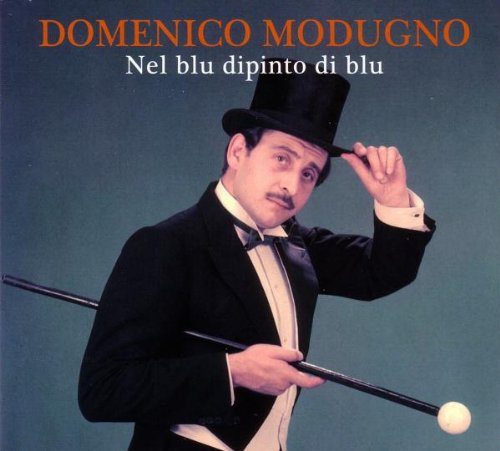
2) Domenico Modugno, 'Nel blu dipinto di blu (Volare)' (1958)

http://ecx.images-amazon.com/images/I/51gDDUVox8L.jpgA curious thing often happens to foreign language songs that catch on in the English-speaking world - they change titles. Such was the case with Italian crooner Domenico Modugno's 1958 hit 'Nel blu dipinto di blu' ('In the Blue, Painted Blue'), a song that became known outside Italy as 'Volare' ('To Fly'), after the song's famous refrain. Inspired by a pair of paintings by Marc Chagall, the song won third place at the 1958 the Eurovision Song Contest and then spent five weeks atop the Billboard Hot 100. It has since been covered by Dean Martin, Al Martino, David Bowie, Gipsy Kings and Barry White, and also made a memorable appearance in the movie A Fish Called Wanda as part of Kevin Kline's mock-Italian bedroom talk.

3) Ritchie Valens, 'La Bamba' (1958)

The song that put Latin America on the rock 'n' roll map, this classic folk song from Veracruz was immortalized by teenage Chicano rock legend Richard Valenzuela, better known as Ritchie Valens, otherwise best known for his death at age 17 in the 1959 plane crash that also took the lives of Buddy Holly and J.P. 'The Big Bopper' Richardson. The song reached #22 on the US Billboard Pop Singles, an unprecedented feat for a Spanish-language song, and finally reached #1 in 1987 thanks to LA Chicano rock band Los Lobos' cover of it for the eponymous Luis Valdez biopic starring Lou Diamond Phillips. It remains the only non-English-language song on Rolling Stone Magazine's 500 Greatest Songs of All Time list.

4) Kyu Sakamoto, 'Ue o Muite Arukō' aka 'Sukiyaki' (1961)

In 1963, British record executive Louis Benjamin travelled to Japan where he fell under the spell of young crooner Kyu Sakamoto and his sweetly sentimental ballad 'Ue o Muite Arukō' ('Walking While Looking Up'). The song became an overnight sensation in the west under the name 'Sukiyaki' in spite of the exactly zero references to simmered beef in the song. (Benjamin presumably figured it was the only non-militaristic Japanese word his audience knew.) The song sold over one million copies in the US and reached #1 status in June of 1963, and to this day remains the only Japanese song to reach #1 on the US Billboard charts. In an interesting parallel to Valens, 'Kyu-chan' was also killed in a plane crash - in the infamous crash of JAL Flight 123 in 1985 - and was also posthumously immortalized in a motion picture named after his greatest known hit.
 

5) João & Astrud Gilberto, 'Garota de Ipanema (The Girl from Ipanema)' (1964) 

When Brazilian composer Antônio Carlos Jobim and renowned diplomat-poet Vinicius de Moraes sat down to write their now-famous voyeuristic paean about beauty and heartache in Rio de Janeiro's ritziest beachfront neighbourhood (think Gangnam Style on valium), they must have felt fairly assured of a hit. Nothing, however, could have presaged the phenomenal success of 'The Girl from Ipanema', a song that almost singlehandedly popularized bossa nova beyond Brazil thanks the Grammy Award-winning 1965 recording of it starring João and Astrud Gilberto together with American tenor saxophonist Stan Getz. Nearly a half-century old now, it is believed to be the second-most recorded pop song in history after the Beatles' 'Yesterday' and one that, like 'La Vie en rose', has become an unofficial anthem of the country that gave life to it.

6) Serge Gainsbourg & Jane Birkin, 'Je t'aime… moi non plus' (1969)

In addition to being one of the most famous foreign language crossover hits of all time, French bad-boy chansonnier Serge Gainsbourg's ode to...well, fucking holds the distinction of being one of the world's most widely banned songs. Originally written for and sung with actress Brigitte Bardot in 1967 (whose husband refused to allow it to be released), it was re-recorded by Gainsbourg and his then-lover Jane Birkin two years later on the appropriately titled album '69 Année érotique. Chiefly remembered for Birkin's heavy breathing and simulated climaxing, the song was banned in a swath of European countries, with the Vatican allegedly excommunicating the Italian record executive who oversaw its release in Italy. Suffice it to say, the Papal PR campaign on behalf of the song did wonders for it, helping it top the UK charts and sell over 4 million copies by 1986.

7) Falco, 'Rock Me Amadeus' (1985)
 

http://upload.wikimedia.org/wikipedia/en/thumb/e/e9/Amadeus_.jpg/220px-Amadeus_.jpgIf there's one song that truly presaged the arrival of Gangnam Style, it's Johann 'Falco' Hölzel's 1985 rap homage to his country's best-known musical export. Originally a bass player with the late-1970s-early 1980s Austrian hard rock-punk outfit Drahdiwaberl, Falco established himself as a solo artist in 1982 with the rock-rap hit 'Der Kommissar' ('The Inspector') before rocketing to worldwide renown with his campy Mozart-themed hit, accompanied by an over-the-top video that gives PSY a run for his money. Boosted by the success of the 1984 biopic Amadeus, 'Rock Me Amadeus' reached #1 in Canada, the UK and the US, where he was the first German-speaking artist to reach such heights. Largely disappearing from the scene thereafter, Falco died in a car crash in 1998 - supposedly as he was mounting a comeback.

8) Mitsou, 'Bye Bye Mon Cowboy' (1988)
 

http://www.beijingboyce.com/wp-content/uploads/2010/07/mitsou-bye-bye-mon-cowboy--300x296.jpgThe divide between Canada's 'Two Solitudes' is nowhere more pronounced than in popular music. French and English-Canadian music typically occupy very separate spheres and Francophone artists such as Céline Dion and Roch Voisine have had to switch languages to get any success outside Québec. One of the few Québécois artists to breach the language firewall was teen pop star Mitsou Annie Marie Gélinas, the granddaughter of renowned playwright Gratien Gélinas, whose breakthrough hit 'Bye Bye Mon Cowboy' became a rare smash hit across Canada, selling over 100,000 copies. (The fact that the only French word in the title is 'mon' may have helped.) Like Falco, Mitsou had a difficult time replicating her early success, although she continues to be a prominent media personality in La Belle Province.

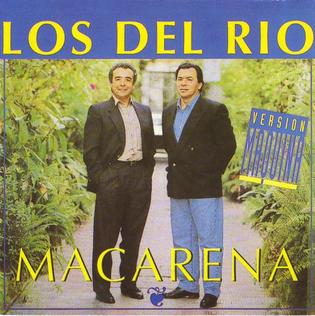
9) Los del Río, 'Macarena' (1995)
 

File:MacarenaLosDelRio.jpgSigh. Anyone who came of age in the 1990s had to endure dance parties wherein, apparently under the spell of some malevolent spirit of the airwaves, otherwise normal people would cease whatever they were doing and perform a mime-dance that could only be likened to a cross between the YMCA and a border-patrol body search. And yet, the song that inflicted this craze on the world really wasn't that bad - at least at the outset. Originally written and recorded by the Seville-based Latin pop duo Los del Río, the original acoustic guitar-based dance number didn't become a craze until the Bayside Boys turned it into a club mix in 1995. The single spent 14 weeks at number one on the U.S. Billboard Hot 100 singles chart, one of the longest runs atop the Hot 100 chart in history, was was ranked the '#1 Greatest One-Hit Wonder of all Time' by VH1 in 2002. And still nobody knows why.

10) Rammstein, 'Du hast' (1997)

http://991.com/newGallery/Rammstein-Du-Hast-115946.jpgThere's something about the German language that seems to lend itself to industrial rock, as exemplied by veteran sonic terrorists like Die Krupps, KMFDM and Einstürzende Neubauten. While little of this has had any mainstream exposure, industrial rock experienced a brief surge in popularity in the mid-1990s thanks to the success of Ministry, Nine Inch Nails and Marilyn Manson, which also opened the door to Berlin-based industrial metalheads Rammstein. The group's 1997 hit 'Du hast' (a play on words meaning both 'You Have' and 'You Hate') gained international prominence thanks to its inclusion on the soundtrack for The Matrix, briefly reaching #2 status on Canada's Alternative Rock charts. At yet we still make fun of the Germans.

Is there anything important I've missed here? I'd love to hear about it.