Showing posts with label Philosophy. Show all posts

Thursday, 6 March 2014

6 Reasons To Re-Watch The Original RoboCop Before Watching The Reboot

Source: IMDB.com
For the record, I have yet to see the brand-new remake of the 1987 action classic RoboCop. Moreover, until a few days ago, I felt no particular need to go out and see it. These days the price of movie tickets coupled with the existence of Netflix means I hardly ever go out to see movies, especially Hollywood blockbusters. But after having re-watched the original RoboCop for the first time since I was a kid, I'm now quite curious to see it. Although in all honesty I'm probably going to wait until it comes out on Netflix. I'm cheap that way.

I was around 10 years old when I first saw the original film, which means a) I was definitely too young to be legally watching it without a parent or guardian (sorry mom, sorry dad); and b) a lot of its content went completely over my head at the time. Seeing it now made me think there's more to movie age restrictions than simply sex and violence, of which there was none of the former but a great deal of the latter. The graphic shoot-em-up scenes in the movie certainly made a big impression on my young mind, but the subtler aspect of the film, like its socio-economic critique and liberal use of Biblical symbolism, were beyond what I was able to process at the time. If anything, the "inappropriate content" was the stuff I wasn't intellectually ready to grapple with.

The original RoboCop was, in many ways, ahead of its time. While critical reception of the film was on the whole positive in 1987, it received considerable flak for both the quality and quantity of gory on-screen violence as well as its liberal use of profanity. While still most definitely stomach-churning at points, the film's violence pales in comparison to much that was to come within a decade thanks to movies like Reservoir Dogs and Natural Born Killers, which in turn pale in comparison to the likes of the Saw and Hostel franchises - which make the original RoboCop look like My Dinner With Andre by comparison. As for the profanity, it certainly shocked my 10-year-old sensibilities at the time but in an era when F-bombs are a dime a dozen on primetime TV, there's no shock value there.

That said, I definitely wasn't ready to appreciate RoboCop at age 10, and as a result dismissed it for the next 20-plus years as simply one of the many gratuitous big-biceps shoot-em-up extravaganzas that defined much of 1980s Hollywood. It wasn't until this Monday that I rediscovered the film and completely changed my mind about it. Granted, I still hate the way the film ends, with the villainous Omni Consumer Products CEO Dick Jones (brilliantly played by Ronnie Cox) being blown out of a glass window atop the company's skyscraper, in one of the worst cliche movie deaths ever. That said, it's still an excellent film, and one that definitely needs to be re-watched before going anywhere near the re-boot. Here's why.

1) Peter Weller's performance

Source: robotsinmasquerade.blogspot.com
One of the most interesting aspects of the original RoboCop film is director Paul Verhoeven's very counterintuitive casting choices. For the titular role, Verhoeven initially considered A-list action stars Arnold Schwarzenegger and fellow Dutchman Rutger Hauer for the role, but ultimately settled on the smaller and highly cerebral Peter Weller, a guy whose other most memorable roles have been Dr. Buckaroo Banzai in the cult sci-fi classic The Adventures of Buckaroo Banzai Across the 8th Dimension and William S. Burroughs in David Cronenberg's twisted 1991 rendering of The Naked Lunch.

The decision was made in large part because the diminutive Weller had an easier time moving in the RoboCop suit than the aforementioned big guys, but it ended up being a brilliant move. Weller's portrayal of both the mild-mannered Detroit cop Alex Murphy and the brooding titular cyborg gives the film an intense humanity that Arnie would have been hard-pressed to deliver. Hauer, on the other hand, would have been an interesting choice given his own track record for playing emotionally disturbed androids. But Weller's acting combined with his delicate features makes the original RoboCop really stand out in the predominantly brawny and brainless domain that is '80s action heroes.

2) Two iconic '80s movie villains for the price of one

Source: whatculture.com
If there's one thing 1980s action movies did right, it was creating awesome over-the-top bad guys. While the action heroes of this era tended to be bland and one-dimensional, Hollywood directors made up for it by delivering the likes of Hans Gruber (Alan Rickman) in Die Hard, The Kurgan (Clancy Brown) in The Highlander, Koji Sato (Yusaku Masuda) in Black Rain, Johnny Lawrence (Billy Zabka) in The Karate Kid and, of course, Jack Nicholson as the Joker in the 1989 Batman. The 1987 RoboCop goes one step further by delivering two of the decade's most memorable bad dudes in a single film.

As with the main character, Verhoeven made a point of making counterintuitive casting choices for the film's two antagonists, CEO Dick Jones and 'Old Detroit' crime lord Clarence Boddicker. For Jones he went with Ronny Cox, an actor and singer-songwriter best known for playing genteel fatherly figures in series like Apple's Way and St. Elsewhere. In a similar vein, Verhoeven cast Kurtwood Smith, an actor best known for playing uptight squares in That Seventies Show and movies like Dead Poets Society as probably the only ever movie supervillain named 'Clarence'. Both men clearly embraced their anti-typecasting roles and threw themselves into their respective evil characters will full aplomb.

(As an interesting side note, Clarence Boddicker's trademark rimless glasses were a key element in Kurtwood Smith landing the role, as Verhoeven thought they made him resemble Nazi SS commander Heinrich Himmler.)

3) A great female action hero

Source: imfdb.org
In her seminal critique of post-second-wave culture Backlash, feminist author Susan Faludi dismisses RoboCop as simply one of "an endless stream of war and action movies" in which "women are reduced to mute and incidental characters or banished altogether." While I have the deepest respect for Faludi and Backlash and I have to agree with her overall characterization of 1980s action movies, I think she is dead wrong about this one. Aside from the titular character, the strongest character in the movie is without doubt Murphy's stoic and determined partner, Officer Anne Lewis (played by Nancy Allen) - one of Hollywood's toughest and most memorable female cops.

While her character is clearly secondary to Murphy/RoboCop, Officer Lewis is the type of female character you still rarely see in Hollywood films - a shrewd, independent, non-objectified woman in a typically male role. Most strikingly, the relationship between Lewis and her ill-fated partner is very much in the classic buddy-cop mode and is refreshingly un-sexualized. (RoboCop is a lot of things, but it's about the least 'sexy' film I can think of.) Depressingly, I fear Hollywood has gone downhill in this category since the 1980s. In the 2014 reboot, Officer Lewis is gone, replaced by Officer Jack Lewis (played by Michael K. Williams), and the only female character in sight is Murphy's wife, played by Abbie Cornish. So much for that.

4) Symbolism galore

Source: screened.com
An interesting (and little-known) fact about Paul Verhoeven - a man best known for sci-fi blockbusters RoboCop, Total Recall and Starship Troopers and then-scandalous 1992 suspense thriller Basic Instinct - is that he is also a dedicated Biblical scholar and a onetime member of now defunct Jesus Seminar, an scholarly association dedicated to shedding light on the historical Jesus of Nazareth. Of all his output, RoboCop is without doubt the most overtly 'Christian' in theme. Indeed, Verhoeven asserts in the documentary Flesh and Steel: The Making of RoboCop that he intended the main character to be a 'Christ figure'. Christian symbolism abounds throughout the film, from Officer Murphy torturous death at the hands of a mocking rabble to RoboCop walking ankle-deep in water during the climactic showdown at the abandoned steel mill.

Biblical allegories aside, the most obvious literary parallel is, of course, Mary Shelley's Frankenstein. Indeed, there is a certain Boris Karloff-type quality to Peter Weller's performance in this film, while the amoral and singularly driven Bob Morton (Miguel Ferrer), RoboCop's creator, is clearly a modern-day stand-in for Dr. Frankenstein. In this sense, RoboCop fits more within the classic horror cannon than within the annals of science fiction, as does Verhoeven's later ultra-violent riff on the Book of Revelations, Starship Troopers. Interesting stuff at the very least.

5) An eerie caricature of Reagan-era America

Source: empireonline.com
While socioeconomic and cultural caricature are not hard to find in the 1980s Hollywood action movie cannon, in many if not most cases directors felt the need to critique American culture within a 'foreign' context. In Die Hard, the protagonists are American but the villain is, of course, German and the corporate context in question belongs to the then Leviathan presence of Bubble Economy-era Japan, a context that reappears in Ridley Scott's Blade Runner (ostensibly LA in 2019 but clearly 1980s-vintage Tokyo with flying cars) and Black Rain. Meanwhile, the Rambo saga starts on the terra firma of the United States but then heads off to the safe refuge of Commie-ruled Vietnam.

RoboCop, by contrast, focuses unflinchingly on a decaying (and increasingly crime-ridden) post-industrial US, centred, appropriately enough, on the city most frequently held up as a poster child by both the left and the right for everything wrong about the country. While the exact epoch of the movie is left intentionally ambiguous (set at "some point" in the near future), the cultural setting, from the over-the-top corporate greed to the cowboyish gangsters, is unquestionably the 1980s America of Gordon Gekko and company - complete with a severe case of the military industrial complex. In that sense RoboCop can be seen in a similar light to Heart of Darkness, where, like with Verhoeven's film, it took a foreigner (the Polish-born Joseph Conrad) to shine a light into the skeleton closet of British/Belgian colonialism.

6) Future echoes

Source: blackagendareport.com
In an ironic development, the character of RoboCop has become an iconic figure in the beleaguered city of Detroit where the film was set. In 2011, following then Detroit mayor Dave Bing's announcement of the building of a 'New Detroit', the mayor was asked (as a joke) if he planned to erect a statue of the iconic movie cyborg, and his rejection of such plans led to an Internet campaign aimed at raising money for a RoboCop statue. Today it looks increasingly likely that the statue will indeed happen.

In a very real sense, the nightmarish, dystopian Detroit dreamed up by Verhoeven did become reality. Between 2000 and 2010 the city lost 25 percent of its population, dropping to just over 700,000 (down from a peak population of 1.8 million in 1950), and in July of last year the city filed for bankruptcy in the largest municipal bankruptcy case in US history. This ongoing decline has resulted in notorious urban blight, with the abandoned industrial structures of RoboCop eerily reminiscent of the city of today, while the city continues to grapple with stubbornly high rates of violent crime.

In spite of its deeply entrenched problems, Detroit remains a city with intense civic pride, and since the city's bankruptcy filing in mid-2013 there's been an upsurge in social and economic activism in the city aimed at bringing the city back to health, by groups such as Revival in Detroit and World Hope. In that sense, the character of RoboCop himself can be seen as an allegory for Detroit itself - agonizingly shot to death but still managing to cling onto life and re-emerging stronger than ever. At least that's the hope of Motor City's stubbornly proud residents. Perhaps a RoboCop statue isn't that far-fetched an idea after all.

So, in sum, before you go pay however much tickets for the 2014 Jose Padilha reboot of RoboCop, I strongly suggest sitting down to watch the old one. If for no other reason, by what I've read of the reviews of the new film, the old one is definitely better. But I should really go see the new one before I say that.

Tuesday, 14 January 2014

8 Ways Male Musicians Can Fight Misogyny in Music


Poster for feminist concert series in Leeds, UK (source: lippymag.co.uk)
It's a world I love dearly and thus it pains me to say it, but in my experience the music world is one of the most profoundly sexist professional domains out there. I say this partly as an occasional musician myself, but mostly as the spouse of a professional musician who has spent a great deal of time immersed in musical settings. Particularly in recent years I've developed strong friendships with a number of female musicians, and have seen first-hand how much unadulterated sexism and misogyny they have to face on a regular basis.

For those outside the music business this might well come as a shock. After all, surely professional domains such as engineering and construction are more rife with sexism than music. While I've spent less time in these worlds (aside from a year working closely with the construction industry at Merit Contractors Association), I would maintain that it's worse in the music world. While engineering and construction are still overwhelmingly male-dominated professions, there is at the very least a widespread recognition of the ingrained sexism in these domains and, in this country at least, most of the leading construction firms and engineering departments make a point of at least being seen to promote gender equality. Music, by contrast, is perceived by outsiders as a "progressive" field, which ironically has allowed it to endure as a bastion of unreconstructed misogyny.

Of course, anybody with half a brain will tell you that gender theatre is everywhere to be seen at the upper echelons of popular music, a fact that was thrown into sharp relief in 2013 thanks to Miley Cyrus' tongue and Robin Thicke's rapey lyrics on 'Blurred Lines'. But the problem is much bigger than most people not closely associated with professional music making realize. Case in point: how many female symphony conductors can you name, or composers who aren't named Schumann? How many female jazz instrumentalists? How many rock 'n' roll drummers or guitar players, or record producers for that matter? Here's another one: how many male covers of iconic female hits can you think of? Of the top the only one I can think of is Faith No More frontman Mike Patton's cover of Lady Gaga's 'Poker Face', and and while Faith No More retains a loyal following among overgrown nineties indie kids like me, they're hardly mainstream.

Nothing blurred about these lines (source: The Guardian)
For female musicians, the overwhelming maleness of the music business in all roles other than vocals and early childhood education takes its toll in the form of 'microaggressions'. Just about every female musicians who's been in the business for any length of time has their own laundry list of small but tangible slights, from being overlooked for ensemble positions in favour of male instrumentalists and not being treated with disdain by male music store clerks while shopping for gear to enduring condescending 'man-splaining' of music technology to flat-out sexual objectification as lead singers, concertmasters etc. Even classical music is rife with it, a fact that the director of the Conservatoire de Paris made clear recently when he asserted that women "lack the physical strength" to be symphony conductors.

This is not, however, to say that all men in the music business are sexist pigs. Far from it; I have a great many male musician friends who are as appalled by the stubborn misogyny of the music world as their female colleagues are. However, as in any domain with entrenched cultural norms, acknowledging a problem is easier than fixing it. This is why I decided to articulate my thoughts on how to fight it in the proverbial trenches - that is to say in the practice rooms, in the concert halls, in the clubs, in the recording studios etc. This post is primarily aimed at my male musician colleagues, but also to women in the biz who may, unconsciously, buy into many of the gender cliches trotted out by instructors, producers and male colleagues' expectations.

There have been several great polemics on the many and varied microaggressions that female musicians face. Montreal-based synthpop icon Claire "Grimes" Boucher famously tore a strip out of the social neanderthals in her industry in a recent blog post while Finnish composer Kaija Saariaho did the same in a recent speech at McGill University. But while many female voices have spoken out against the entrenched sexism and misogyny in the music industry, disappointingly few men have. This post is my small attempt at helping male feminist allies in the musical world combat gender double standards at the grassroots level, starting with checking their own privilege. Here are my eight tips.

1. Stop assuming every female musician you meet is a singer.

This ought to be a given, but sadly it's not. Virtually every female instrumentalist will recount tales of male counterparts who were incredulous to the fact that they played (gasp!) an instrument. And while we're on this topic, there are far too many male musicians who treat female vocalists like some sort of pseudo-musician. And those who actually feel that way should be locked in a room with Diamanda Galás for at least three solid hours.

Would you mansplain gear to her?
(source: synthtopia.com)
2. Don't assume you know more about gear and music tech than your female peers.

The aforementioned Grimes is, as those familiar with her music know, is a sampling and programming wizard. So are Andrea Parker, Ikue Mori, Yolandi Visser, Maryanne Amacher, Sachiko M. (and Gaga for that matter) and the countless other female samplers, turntablists, programmers and all-around techies. And yet just about every female musician armed with a laptop and Garage Band has had to contend with condescending men purporting to explain how to use tech. Seriously, if your natural impulse upon seeing a woman fuss with music software (and most likely drop a parade of F-bombs when things aren't working quite right) is to give her unsolicited advice on how to 'improve' her handiwork, you're being sexist.

3. Actively seek out female musicians/composers and female-driven acts in your listening.

As I mentioned before, men who cover women are few and far between in the music biz, whereas women covering men, whether it's Tori Amos doing Kurt Cobain or Eva Cassidy doing Bill Withers, are everywhere. This can only mean two things: there's little if any worthwhile music written by women, or there's an enduring but unspoken stigma against men paying tribute to the female greats. Why not be part of proving the latter? That of course starts at the listening stage, and the fact is most guys don't listen to much female-driven music. Which is a pity because there's so much phenomenal female-driven music out there.

4. Take care not to talk over your female peers during rehearsals and gigs.

Unless you're a completely unmitigated douchebag, you don't do this deliberately. But so many guys do. And even if you don't we're all conditioned to give male voices more credibility. Celebrity speech coach Christine Jahnke, whose clients have included Hillary Clinton and Michelle Obama, attests to how much more work women have to do to gain the same degree of public credibility as their male counterparts. Even if you're not guilty of gratuitous man-splaining, chances are you have to work less hard to convince people you know what you're talking about. So when it doubt it's worth dialing it back a little.

5. If you're a student, make a point of choosing a female musician/composer/musical movement as an essay topic.

This phenomenon, sadly, goes far beyond the realm of music. If you're a guy, as yourself this question: as a high school or university student, when you were asked to write a paper about a historical figure/famous author/great composer etc., did you ever pick a woman? If not, why not? I first became aware of this phenomenon as a history TA, and have since encountered it everywhere - women are more than happy to write about male subjects, but not vice versa. And this extends far beyond the undergraduate years. When is the last time you read an article on the Riot Grrrl movement or the Blue Stockings Society written by a man? Belief in cooties seems to extend far beyond age four. Why not buck social convention and pick Meredith Monk or Violet Archer for your next term paper on a modern composer?

6. Be critical of your music 'gods'.

Yes, you're still allowed to like these guys. Or at least their music.
(Source: Last.fm)
As a self-identified male feminist, I have a complicated relationship with some of my favourite male artists. I can't stop loving Led Zeppelin, even though Jimmy Page was infamously guilty of the confinement and statutory rape of 14-year-old fan Lori Maddox. I still have a soft spot for the music of multiple wife-beater Miles Davis, and The Prodigy's Fat of the Land album is still a workout favourite of mine in spite of the presence of the problematically named song 'Smack My Bitch Up'. But while I still like these artists, I have the perspective to not elevate them to the godlike stature that so many male musicophiles do. The deification of music history's great men is one of the more nauseating aspects of male musical culture. By all means admire Jimmy Page and Miles Davis for their musical accomplishments, but let's be honest about their less-than-admirable characters - and don't take offence when they get deservedly knocked off their pedestals.

It should be noted, however, that not all the 'great men' of rock, jazz and other sexist cesspools are misogynist pigs. Kurt Cobain was a great ally who famously helped promote the Riot Grrrl scene of the early-to-mid-nineties. Hardcore punk legends Henry Rollins and Ian MacKaye (author of Fugazi's epic anti-rape anthem 'Suggestion') are both passionate feminists. And R&B star John Legend recently came out as a feminist, arguing that "if men care about women's rights the world will be a better place." There are indeed great examples of men actively combatting misogyny in the music world, and their exploits ought to be celebrated. It also helps when it's combined with kick-ass music!

7. Confront misogyny head on when you see it.

For young guys immersed in 'bro' culture, this is probably the hardest thing of all to do. But it gets easier. A lot of men, especially men in their teens and early twenties, are understandably fearful of social censure when it comes to calling out their own when they engage in blatantly misogynistic behaviour. But there are three reasons for doing it. Firstly, it's the right thing to do. Secondly, you'll gain a whole lot more respect from your female peers (as well as your more enlightened male colleagues). And thirdly, the more you do it, the better at it you'll get - and the more benefits from reasons one and two you'll reap. And besides, many of the guys who engage in douchebag behaviour don't realize they're doing it - and never will unless they're called out on it by voices they respect (i.e. male ones). And for the rest of the male populace that really don't care, their respect - or lack thereof - isn't worth fretting over.

8. Quit taking feminist rants personally.

No, L7 doesn't hate you. They just hate it when you're a dick.
(source: ckuttimecapsule.wordpress.com)
Here's the thing about feminism: it's not about you. In fact it's never about you specifically, unless you're the d-bag making brazenly misogynistic remarks - and if that's you, you probably haven't made it this far into this post. Feminism is not anti-male, nor is it about making individual men feel bad about themselves. It's about deconstructing social grammar that's been inculcated over 6,000 years of human history. It's this basic misunderstanding that turns so many otherwise thoughtful and open-minded men off feminism, with some turning to the mean-spirited and logically bankrupt polemics of the Men's Rights Movement. No, feminists don't hate you - they just hate it when you're a dick.
 
So that's my rant-du-jour. In sum, my message to men in music is that music is far too important a thing to be left to the social neanderthals of this world. I suspect a big part of the problem is that being a musician (at least a professional one) is such an all-consuming process, and what with the demands of practicing, composing, rehearsing, gigging and gig-hunting, there's not a lot of time left over to read the works of Simone de Beauvoir or debate gender politics with your counterparts in the political science department. But thanks to digital media we have unprecedented access to both information and mind-improving conversations with a wide cross-section of people. And thanks to blogs like this one, you can get your information in a pithy, attention deficit-friendly fashion.
 
Start by reading. Read as much as you can. A full list of feminist blogs and news forums would run into the thousands, but sites like Jezebel and Skepchick are good places to start. For a double-dose of feminism and music, check out the appropriately named Feminist Music Geek blog. And then start a conversation. Those of you living in the Edmonton area might want to investigate the Facebook group Feminist Edmonton, a group which I've found to be very welcoming of male perspectives and questions. The world needs more guys reading, writing and engaging in open, frank conversation about this stuff. And the music biz, in particular, is in dire need of a fresh shot of feminism. Help make it happen!
 
(This post was inspired by (and is dedicated to) my amazingly talented better half Allison Nichols and her fellow take-no-crap female musical troopers, as well as their male allies - you all know who you are. You guys are the best!!)

Wednesday, 12 September 2012

Yes We Can ≠ We Built It - Two Slogans Poles Apart


The terms 'liberal' and 'conservative' are bandied about with such gleeful abandon in US political life that they've largely been gutted of meaning. On the political right, the term 'liberal' has since the Clinton administration been employed as a slur, often prefaced by adjectives ranging from 'godless' to 'tax-and-spent' to 'freedom-hating'. Meanwhile, on the leftward end of the spectrum, many erstwhile 'liberals' now eschew the term in favour of 'progressive', while deploying the term 'conservative' in adjectival form accompanied by nouns such as 'theocrat', 'windbag', 'nutjob' and so on.

Given the ubiquitous nature of these terms (and their seemingly arbitrary use), it's worth consulting a dictionary. The term 'conservative' derives from the Latin conservare, which means 'to retain'. Wikipedia defines conservatism as "a political and social philosophy that promotes retaining traditional social institutions" whose advocates tend  to either emphasize stability and continuity or oppose modernism and seek a return to 'the way things were'. Liberalism, on the other hand, is defined as "a political ideology or worldview founded on the ideas of liberty and equality" while progressivism is defined as "a political philosophy advocating or favouring social, political and economic reform."

This guy would have loved the
Romney/Ryan slogan.
While it's debatable how accurately these views characterize the leaders of the US Republican and Democratic Parties respectively, there's no denying than from a branding perspective, these characterizations are bang on. At last week's Republican National Convention in Tampa, the Romney/Ryan team unveiled its official campaign slogan, 'We Built It'. The open-endedness and punchy trisyllabic format of this now-viral catchphrase invariably draws comparisons to Obama's 2008 campaign slogan, 'Yes We Can'. While on the surface these catchphrases are essentially meaningless, these superficially similar campaign slogans both speak volumes to promises espoused by their respective candidates - and the political ideologies they represent.

While the Obama presidency's 'liberalism' or 'progressivism' remains a matter for debate, there's no denying that his 2008 election campaign was rooted in the dictionary definition of progressivism. Not liberalism, but progressivism. (Obama's stance on social issues, particularly LGBT rights, does however fit perfectly with the aforementioned definition of 'liberalism'.) The Obama campaign was all about change, and the catchphrase 'Yes We Can' is perhaps the perfect linguistic distillation of the progressive ethos. It's positive (yes); it's inclusive (we) and it highlights potential (can). It's a slogan that appealed to a belief in a positive future, a future alive with possibility. Nothing short of a call-to-arms for progressives.

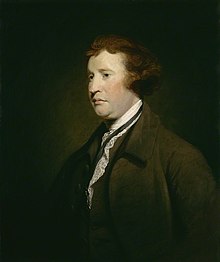
The Romney/Ryan slogan, by contrast, is tautologically, even classically conservative. Not conservative in the modern-day neo-conservative sense or even really in a socially conservative or Tea Party sense. Conservative in the original sense as espoused by the likes of Edmund Burke in the aftermath of the French Revolution. Like the Obama slogan, it the inclusive 'We'. But thereon in it immediately hearkens to the past with the past-tense 'Built'. The nebulous 'It' is the word that has caused much consternation in cyberspace. While Romney and Ryan's business-fixated rhetoric makes the slogan's intended meaning clear (Yes, you the average American voter built this country, not that nasty narcissistic big government that wants to steal your lunch money and take credit for your homework!), some have also suggested that 'it' could refer to a national debt that looks to hit the $16.4 trillion borrowing limit by the end of this year.

Photo: Fellow word geeks: I invite you to deconstruct the slogan in the background. Not only does the 'did' in "We did build it!" seem really awkward, but they've underlined it for what appears to be a strange extra emphasis. With one word and a line they've rendered a meaningless slogan even more meaningless. Your thoughts?
Is that the Nike swoosh under the 'did'?
Ambiguity notwithstanding, though, the 'We Built It' slogan is arguably the most perfect conservative slogan ever devised. It's a slogan that says, "We've built these institutions, and we should keep them in place." Whether true-blue Burkean conservatism will register with the American voting public remains to be seen, but if nothing else it makes for a refreshing departure from the amphetamine-crazed neo-Conservatism of Dick Cheney and Donald Rumsfeld or the cartoonish Tea Party conservatism espoused by the likes of Donald Trump and Sarah Palin - neither of which fit with the encyclopedic definition of the term. As for the Obama team, progressivism continues to define Democratic sloganeering with the party adopting one-word catchphrase 'Forward' for 2012. 'Forward' is a tad more muscular and perhaps even militant sounding than 'Yes We Can', but it's still textbook progressivism.

Which ideology will win the day? While it's still too early to say, the recent appearance of a campaign banner with the curiously overemphatic 'We Did Build It' (with the 'did' underlined no less) suggests that the Romney team is feeling a tad desperate. "No really, we DID build it!! Honest!" I guess we'll see on November 6.

And then there's the issue of the band Jefferson Starship. While the veteran San Francisco psychedelic rock group has yet to weigh in on the issue of the Romney/Ryan campaign slogan, one can't help but wonder if they lifted it from the group's iconic 1985 hit. Then again, at the time when We Built This City hit the airwaves, the group existed only in the form of the Mickey Thomas-led spinoff simply called 'Starship'. Which is fitting given that the current crop of Republicans are not particularly, er, Jeffersonian (sorry).

Wednesday, 15 August 2012

Aboriginal Science - Pseudoscience Or Valid Paradigm?


These days, skepticism seems to be all the rage. Thanks to the onslaught of the 'nu-atheism' over the past decade as exemplified by Christopher Hitchens, Dan Dennett, Richard Dawkins, Sam Harris and Ayaan Hirsi Ali as well as the exploits of celebrity debunkers like James Randi and Michael Shermer, mainstream intellectual culture appears to have taken a much-needed turn away from lukewarm political correctness to the point where skepticism and secular humanism is the new new-age spirituality. While 'atheist' remains a loaded term, 'skeptic' anymore is tantamount to 'intelligent' - at least in the less benighted corners of the developed world.

The Webster-Merriam Dictionary defines skepticism first and foremost as "an attitude of doubt or a disposition to incredulity either in general or toward a particular object," while also noting the term's frequent use within the context of religious faith. These days, skepticism is largely synonymous not only with the world's major religions but also with new-age beliefs, alternative healing modalities, traditional worldviews and anything else deemed pseudoscientific. And in the hard-edged world of the nu-atheists, this means a no-quarter attitude to many of the cultural sensitivities that we've learned to take to heart. After all, how can we criticize Southern Baptist faith healing without applying the same standard to Inuit shamanism or Ibo animism. To do so would be cultural relativism, which, the skeptical argument goes, is far more racist and orientalist than applying an even standard to all of the world's cultures and creeds.

The trouble with the skeptic movement - if you can call it that - is that there does exist a fine line between skeptical inquiry and cultural imperialism. And while I agree with Sam Harris and others that entire groups of people can indeed be wrong on scientific as well as moralistic fronts (the Taliban being a textbook case), I also take the view that as skeptical inquirers we need to be careful when stepping onto unfamiliar cultural terrain and indeed 'skeptical' of our own intellectual grounding. Such is the case of so-called 'Aboriginal science', a term that has gained considerable traction in Canada as well as in Australia over the past decade. A growing chorus of indigenous intellectuals, together with their non-Aboriginal supporters, have taken the position that indigenous knowledge has historically been written out of the mainstream (i.e. Euro-American) scientific narrative and that 'Aboriginal science' should be elevated to a position equal to that of 'western science'.

Important learning....but does that make it science?
There are several obvious problems with this argument from a skeptical standpoint. For one, it implies that 'science' is a cultural construct - and that this construct is intrinsically western. It also implies, much the same way that religions do, that there are multiple truths and that all points of view should be given equal weight regardless of how well they stand up to objective 'scientific' scrutiny. At first glance, this argument sounds disturbingly similar to the argument put forth by advocates of 'Intelligent Design' creationism, who routinely cast the mainstream scientific community as a sort of intellectual cartel dead-set on silencing theories that don't mesh with its ideological (read Darwinist) axioms.

At first glance, the Aboriginal science argument indeed sounds a lot like the intelligent design argument. Aboriginal science advocates such as George Hobson argue that western scientists "have a tendency to reject the traditional knowledge of native peoples as anecdotal, non-quantitative, without method and unscientific." A 2005 article in the University of Victoria newspaper The Ring makes similar claims, namely that 'western science' has effectively written out an equally valid scientific viewpoint. In this article, Gloria Snively, an associate professor of science, environmental and marine education, asserts that:

"The big, central questions here are what is science, and is aboriginal knowledge science. We're saying it is science, and that every culture has its own science. Right now, there's a complete blank—traditional knowledge is not only devalued, for most teachers it doesn't exist."

Is this simply pseudoscience along the lines of intelligent design creationism? To my mind, the answer is yes and no. Given that the generally accepted definition of science the world over is that of a quantitative, non-anecdotal approach to studying the universe, it is probably fair to say that the traditional oral transmission of knowledge does not constitute a separate 'science'. Science requires universal applicability in order to be of any consequence, which makes the notion of separate sciences abjectly non-scientific. On the other hand, it's an indisputable truth that North America's indigenous people possess vast knowledge of the lands they have inhabited for millennia, and that this knowledge has been systematically overlooked by Euro-American scholars. In this sense, the advocates of 'Aboriginal science' have a very strong case indeed.

While it's easy for western scientists to reject the notion of an 'Aboriginal science' on the grounds that science is simply science and belongs to no specific culture, such arguments do little to curry favour with ethnic and cultural groups that have for centuries been consigned to the margins of our society. Science may indeed be simply science, but the cultures that have dominated its language, its institutions and its practice have for centuries been white westerners (as well as, of course, men, which remains a significant problem in our culture). Moreover, traditional knowledge indeed has a colossal amount to offer to scientific knowledge, particularly in regards to its practical applications in terms of sustainable living.

It's still a bunch of white dudes.

To mind, the crux of the problem is linguistic and cultural rather than scientific. While few - if any - of my scientist friends would deny the importance of learning from all available sources and maintaining an open mind, most would invariably balk at the notion of separate 'sciences' based on cultural delineations. Science is indeed science - an ever-expanding body of knowledge that has benefited from wave after wave of discovery and innovation, much of which (especially over the past couple of centuries) has come out of the 'western' world. On the other hand, the word 'science' has, thanks to Euro-American parochialism and patriarchy, become synonymous with grey-haired white men in lab coats (in other words people who look and sound like Richard Dawkins). No amount of 'skepticism' can erase this fact, and to those who have been excluded for centuries, this matters a lot.

The word 'science' is a loaded word, a word which to many is - wrongly or not - synonymous with Eurocentric intellectual elitism. This, to my mind, is the main shortfall of the nu-atheism movement heralded by Dawkins and others. While Dawkins is a canny communicator, a phenomenal wordsmith and arguably the best PR man ever thrown up by science, he and his fellow travellers fail to adequately acknowledge their own inherent privilege - and how that privilege is perceived by people from other socioeconomic and cultural background who might otherwise embrace their worldview. If I were a scientist eager to encourage all of humanity to climb aboard Spaceship Science, I would be making it my mission to demonstrate how all cultures throughout history have contributed to the betterment of scientific knowledge and address this all-important issue of privilege. Call it political correctness if you like. I just call it good communication.

We need a lot more of these.
From Aboriginal standpoint, this means not only greater collaboration between scientists and Aboriginal elders but also improved science education in reserve schools, for which increased funding is needed. It means more Aboriginal science teachers and conferences like TEDx Hobbema and TEDx Six Nations. (If we can have a TEDx Mogadishu, surely we can have one of these!) It means a cultural reframing of what science is with a view to making the scientific world friendlier and more inclusive.

It might even behoove the scientific community to follow the example of Canada's Christian churches and embark on its own healing and reconciliation campaign and atone for past indiscretions against indigenous groups, which have included plundering gravesites, trespassing on traditional territories and generally treating indigenous people like lab subjects rather than as equal partners in the pursuit of knowledge.

And as for the Aboriginal worldview, I would argue that it constitutes a school of philosophy rather than a separate stream of science. But then again, who's to say that philosophy is a less important academic discipline than biology or physics? It is, after all, a 'social science'.

Saturday, 4 August 2012

Drinking Games for Skeptics - 20 Logical Fallacies You Hear Everywhere

Infographic poster example

If there's one trait that applies to virtually every public relations professional I've ever met, it's a well developed sense of skepticism - and heightened bullshit radar. As PR pros, our job is to sniff out bad information and replace it with good, cogently worded information, thereby leaving one's stakeholders a little better informed and less confused than they were before. At least that the idea. While PR people are human beings with their own unique political and social baggage and inclinations, I've found people in the field to be remarkably centrist, relatively decoupled from ideological anchors and, above all, deeply skeptical of what they hear. I would further argue that you have to be in order to do your job properly.

As an undergraduate one of my most memorable classes was a philosophy course on rudimentary logic, which outlined all the typical logical fallacies that people commit. Anyone considering a career in public relations would, I think, be well advised to take a class in rudimentary logical analysis, or at least to read up on the subject. Logical fallacies are to a PR pro what turbulence is to airline pilots - something you have to learn how to negotiate.as smoothly and serenely as possible.

While some classic fallacies are easy to debunk, others are less obvious and can easily go undetected until it's too late. The latest issue of Skeptical Inquirer ran a wonderful article by Jesse Richardson on the Top 20 Logical Fallacies. The author also created a website complete with downloadable posters on the subject, which make for a great educational tool.

It also makes for a great drinking game. Choose 20 different poisons, assign each a number, and then turn the TV to Fox News. Take a shot for each logical fallacy committed. Trust me, you'll be horizontal and unconscious in no time.


1) Straw Man - Misrepresenting someone's argument to make it easier to attack.


Industry want to alleviate labour shortages by easing restrictions on temporary foreign workers. Union leaders respond by asking their industry counterparts why they hate Canadian workers so much that they don't want to invest in apprenticeship programs. Environmental activists express concern about a proposed pipeline project, to which the government to accuse them of trying to actively sabotage the country's economic growth. In the absence of a good argument, deliberately misinterpret the other guy's argument and go to town on it.


2) False Cause - Presuming that a real or perceived relationship between things means that one is the cause of the other.

Religious conservatives are particularly fond of this one. In the aftermath of Hurricane Katrina, Pastor John Hagee claimed that the disaster was divine intervention directly linked to the Gay Pride event that was scheduled to take place in New Orleans on the day the hurricane hit. While it would be technically impossible to disprove this assertion, the fact that the French Quarter (the 'den of sin' where the parade was scheduled to take place) was one of the few parts of the city relatively unscathed by Katrina makes this argument more than a bit suspect.


3) Slippery Slope - Asserting that if we allow A to happen, then Z will consequently happen too.

Another favourite of the religious right, particularly when it comes to same-sex marriage, which, as well all know, will lead to rampant polygamy, incest, bestiality, drug-fueled orgies and the wholesale collapse of our society's moral equilibrium. Somehow we've managed to stave this fate off in the eight years since same-sex marriage was legalized in Canada, but it's probably only a matter of time. Likewise, the National Rifle Association would have you believe that any attempt to place restrictions on individual ownership of firearms will herald the arrival of a North Korea-style absolutist state. Again, we appear to have slipped the gauntlet here - at least for now.


4) Ad Hominem - Attacking your opponent's character or personal traits instead of engaging with their argument.

We all have plenty of first-hand experience with this one. From childhood disputes that ultimately culminated in "Yeah, well....you're a poopy-head!" to supposedly sophisticated political debates that devolve into name-calling and occasional profanity. (Yes, Justin Trudeau, I'm talking about you!) But more often than not it's more subtle than this. In the absence of a solid argument, organizations with an axe to grind will go after their adversary's track record for... whatever's handy, be it a reputation for opposing unions, a past association with socialist organizations, a few years in an Islamic school in Indonesia.... or whatever else serves as a convenient blunt verbal cudgel.


5) Appeal to Emotion - Manipulating an emotional response in place of a valid or compelling argument.

The so-called 'pro-life' movement lives and breathes this fallacy. Lacking in concrete arguments, pro-lifers tend to resort to "Bbbbbut the bayyybeeeessss!!! You're killing bayyybeeeessss!!! It's a life! Why do you hate baayybeeesss?!?" The same approach is also employed by groups ranging from PETA ("Look at how cute these seals are - and how hot the models holding the placards of the cute seals are!") to Alberta's Wildrose Party ("Remember the Alamo New Energy Policy, when Alberta was betrayed way back when! Build up that firewall!"). Just stick to the facts and bear it out - that's about all you can do.


6) The Fallacy Fallacy - Presuming that because a claim has been poorly argued, or a fallacy has been made, that the claim is necessarily wrong.

This is another one much loved by religious conservatives, and opponents of the theory of evolution in particular. 'Intelligent design' advocates are often quick to point to the infamous Piltdown Man hoax as evidence against evolution. Yes, it was a colossal embarrassment within certain quarters of the scientific community, but it did absolutely nothing to detract from the overwhelming body of evidence in favour of evolution by natural selection. Finding a bad apple in an orchard does not mean that you leave the entire harvest to rot.


7) Tu Quoque - Avoiding having to engage with criticism by turning the accusation back on the accuser.

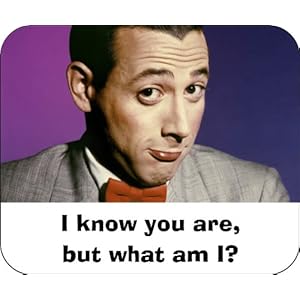
Also known as the Pee-wee Herman defence, this logical fallacy has defined Israel-Palestine peace negotiations since the creation of the State of Israel in 1948, as well as India-Pakistan conflicts over Kashmir and any number of other intractable geopolitical conflicts.


8) Personal Incredulity - Saying that because one finds something difficult to understand it therefore must not be true.
 
This is another favourite of the anti-evolution lobby. "If evolution is true, why are we not seeing animals transform into other animals? I just simply can't fathom how one species could change into another." And so on and so forth. This faulty line of argument closely parallels the notorious "I'm confused" commercials produced in 2009 by the National Organization for Marriage (NOM) in opposition to same-sex marriage, which essentially takes the view that "It seems weird, therefore it must be wrong." The fact that something seems 'odd' or 'confusing' does constitute grounds for it being wrong. If anything, it's simply an argument for better education so that said phenomenon becomes better understood.


9) Special Pleading - Moving the goalposts or making up exceptions when a claim is shown to be false.

This is a particular favourite of professional 'psychics' whose abilities have been thrown into doubt. Alleged clairvoyant and TV psychic Sylvia Browne pleaded for public sympathy following an incident where she falsely claimed that an 11-year-old boy had been abducted and killed - only to be found alive four years later - that "I think it's cruel to jump on this one case in which I was wrong." (This was but one of several well-publicized 'mistakes' made by the multimillionaire celebrity psychic.) She also famously rebuffed the James Randi Foundation's invitation to prove her abilities empirically in exchange for a million-dollar prize, alleging that the conjurer-turned-debunker was an 'ungodly' man. In other words, you have to believe it to see it.


10) Loaded Question - Asking a question that has an assumption built into it so that one cannot answer it without appearing guilty.

Any PR practitioner with media relations training knows all about this trap. An oil company spokesperson is facing a panel of bloodthirsty journalists following an oil spill and one of them broaches a question along the lines of "Does Dweebcor make a policy of cutting corners on safety inspections of its ships or was this simply the result of negligence and poor oversight?" Take a deep breath, count to ten and stick to your messaging and your information. And if you need to drop an F-bomb, make sure you do it under your breath.


11) Bandwagon - Appealing to popularity or the fact that many people do something as an attempted form of validation.

The phrase "1 billion Chinese people can't be wrong" is as dangerous as it is false. A billion people can easily be wrong, as were the many millions of Chinese people who fell under the sway of Mao Zedong's seductive but disastrously misguided economic policies. (The country's population had yet to reach 1 billion at the time of the Great Leap Forward.) People are wrong about countless things, things which do not become any less wrong when similarly misguided individual band together in large numbers.


12) Appeal to Authority - Using the opinion or position of an authority figure, or institution of authority, in place of an actual argument.

Remember the old Camel cigarettes commercials (I certainly don't but I've seen the archival footage) that proudly boasted that "More doctors smoke Camels than any other cigarette"? That's an appeal to authority - if doctors like it, it must be good. Likewise, the extraordinary success of that great mid-2000s pseudoscientific blockbuster The Secret rested on its highly publicized blessing by Oprah Winfrey, Montel Williams and various dubious self-help gurus with impressive sounding job descriptions like 'philosopher' and 'metaphysicist' etc. Unbridled quote-mining from the likes of Gandhi, Einstein and Mother Teresa also helps.


13) Genetic - Judging something good or bad on the basis of where it comes from or from whom it comes.

This is a favourite of authoritarian leaders the world over, particularly in places like Iran, Venezuela, Cuba and other countries with an antagonistic relationship with the US and its allies. Any allegations of corruption, brutality and electoral manipulation from western media are quickly shot down on the basis that the Yankee pig-dogs hate us, ergo the allegations are lies.


14) Begging the Question - A circular argument in which the conclusion is included in the premise.

How do we know that homosexuality is wrong? It says so in the Bible. And the Bible is Holy Scripture and infallible. End of argument.


15) Appeal to Nature - Making the argument that because something is natural it is therefore valid, justified, inevitable or ideal.

Echinacea is a genus of herbaceous flowering plants in the daisy family, Asteraceae. It gives you dark urine - and that's about it. So why is the public in love with it? It's 'natural', don't you know, unlike those nasty chemical pharmaceuticals. By that same argument, black mamba venom is also good for you. In actual fact, black mamba venom is probably more effective than echinacea in curing, say, the common cold - inasmuch as death has been shown to fix all known cold symptoms. And that has been demonstrated emperically.


16) Anecdotal - Using personal experience or an isolated example instead of a valid argument, especially to dismiss statistics.

Last month on Brush Talk I took Jerry Agar to task for a particularly odious article in the Toronto Sun in which he essentially accused all poor people of being lazy bums who expect to be taken care of by the system. While most of the responses I received were positive, a few individuals took the opportunity to point out instances in which people successfully raised themselves out of abject poverty through sheer determination, hard work and a modicum of luck. While I don't deny that this occasionally happens, I also don't deny that there have been people who smoked heavily their whole life and still lived into their nineties.


17) Burden of Proof - Saying that the burden of proof lies not with the person making the claim but with those who deny the claim.

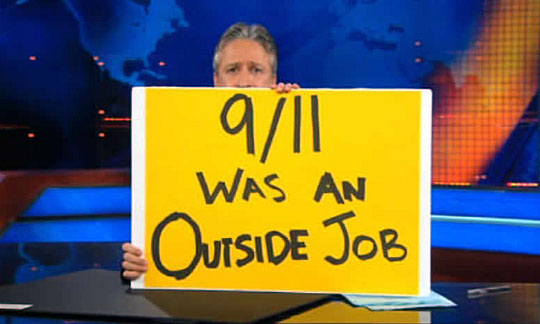
There is a profoundly good reason why suspects in criminal cases are considered innocent until proven guilty, namely that it's effectively impossible to 'prove a negative'. Moreover, if the evidence simply isn't conclusive, the accused walks. While few would question the wisdom of this logic within the context of jurisprudence, this logical truism seems to go out the window. It's all fine and good for you to allege that global warming is a conspiracy of climate scientists or that the 9/11 attacks were an inside job, but it's your job to explain why - not everybody else's job to explain why not. And no, a lack of response to your allegation does not constitute support for your side. Chances are nobody thinks it's an argument worthy of a response.


18) Ambiguity - Using double meanings or ambiguities of language to mislead or misrepresent the truth.

Also known as the "I'm A Frayed Knot" argument. Opponents of the theory of evolution love to attack 'Darwinism' on the grounds that a society defined by Darwinism (i.e. 'Social Darwinism' along the lines of Nazi-style eugenics) would be a horrible society in which to live. Aside from the obvious failure to discern 'truth' from 'that which I would wish to be true' (e.g. "It can't be raining because I wouldn't want it to be raining."), anyone who makes this argument is making the error of using two very different usages of the term 'Darwinism' interchangeably. Similarly problematic arguments have been used by opponents of doctor-assisted suicide by arguing that Hitler engaged in mass campaigns of 'euthanasia'. This is also known as 'guilt by association', of which Hitler was also a fan.


19) 'No True Scotsman' - Making what could be called an appeal to purity as a way to dismiss relevant criticisms or flaws of an argument.

Angus declares that Scotsmen don't put sugar in their porridge, to which Lachlan points out that he is Scottish and he puts sugar in his porridge. Angus then angrily accuses Lachlan of not being a 'true Scotsman'. Alas, political pundits of all stripes do this when one if their own breaks ranks on an issue. Staunch Republicans even have a special term of those within the party considered soft on issues like gun rights and abortion as a cheap means of discrediting any internal dissent. Likewise, left-leaning intellectuals from Michael Ignatieff and Christopher Hitchens who expressed support for removing Saddam Hussein in 2003 were excoriated by many ideological purists as faux-left turncoats.


20) Black or White - Presenting two alternative states as the only possibilities when in fact more possibilities exist.

"Either you are with us or you are with the terrorists," stated US President George W. Bush in September 2001. In fact there are plenty of ways in which people could be opposed to the way in which the War on Terror was being carried out but not an actual advocate of al-Qaeda and its goals, the highly charged post-9/11 climate in which these words were spoken makes this utterance perhaps more forgivable. When it comes to Stephen Harper accusing his environmental critics of being "enemies of the government of Canada," however, there is no such excuse. This is Orwellian demagoguery pure and simple.


Drunk yet? I sincerely hope so.

Wednesday, 25 July 2012

10 Ways Not To Be A Pompous Jerk (A Response to Jerry Agar of the Toronto Sun)

Yesterday I came across an article in the Toronto Sun that made my blood boil. The article, which was entitled '10 Ways Not To Be Poor', began with the opening salvo "The perpetually poor are not blameless." (Right off the bat you know where this train is going.) Sun columnist and 'conservative radio personality' Jerry Agar then proceeds to offer ten pearls of wisdom as to how to avoid being chronically destitute, such as don't see life is a lottery, don't set low goals and learn how to "manage your emotions." Thanks Mr. Spock. That's really useful!

Of course, Mr. Agar makes no mention of extenuating factors such as mental illness, physical ailments, domestic violence, inadequate public transportation, public safety concerns (in many cities) and other problems that contribute to trapping people in poverty. Nor does he acknowledge the importance of community organizations, educational programs and cultural institutions (all of which depend on government support for their existence) in helping people break free of the poverty trap. Moreover, he derides "pop culture and self-help programs" for instilling a culture of "wishing and hoping" while simultaneously spewing out a parade of platitudes taken straight from a third-rate self help book. Sometimes the irony truly writes itself.

What really gets me about this article, though, is what its actual intended purpose is. Imagine, for a moment, that you are a poverty-stricken person with two jobs, three kids to feed, a Mount Kilimanjaro-sized pile of bills on the kitchen table, disconnected power and an impacted molar that you can't afford to get fixed. You pick up the Sun at your bus stop at 11:00 pm on your way home and you read Jerry Agar's column, which its sage advice such as "God helps those who help themselves" and "Some low-income people find a way to save for the future, but they do so by foregoing $300 Nike shoes." Is there a single low-income person thus far who has read that article and thought to themselves, "Wow, I hadn't thought of that! I see the error in my ways!" I doubt even Jerry Agar can imagine such an occurrence.

Why, then, did he choose to inflict this article on the public? On this blog I make a conscious effort to write things that are either a) entertaining, b) enlightening, or c) a bit of both. Agar's column is none of the above, which to my mind leaves only two options. One - he could be deliberately trying to piss off his readers for pure shock value. Two - he's engaging in classic right-wing journalistic masturbation aimed at readers who enjoy nothing more than stewing in their own smug sense of superiority over those 'silly' poor people are 'silly', while simultaneously giving them an outlet for their righteous indignation over tax dollars going to social programs designed to help people who don't ever 'help themselves'. The first I can respect, although he's a far cry from a Christopher Hitchens in the wit department. The second I just can't get behind.

With that in mind, here is a Top Ten of my own dedicated to Jerry Agar and others like him. Call it 10 Ways Not To Be An Asshole Columnist, or something like that.

1) Ask yourself what the point of your article is. And unless it actually enlightens, entertains or shocks (in an entertaining or clever manner), think perhaps about writing something else.

2) Back up your facts when you make accusations. For example, if you're going to accuse poor people of mismanaging their finances (or buying athletic footwear that they can't afford), have at least some anecdotal evidence.

3) Try not to make the same point again and again while pretending they're different points. For example, "believing in the quick fix," "believing life itself is a lottery" and "believing in wishing and hoping" are, if I'm not mistaken, the same point worded in three different ways. That's annoying, and not to mention a transparently cheap way of padding your points to reach the number ten.

4) Don't make crass assumptions about people you don't know. When you say things like "Stay off illegal drugs and off alcohol if it causes problems in your life" you're essentially insinuating that everyone who is poor is an addict, which results in deepening existing stigmas against marginalized groups, thereby lessening people's likelihood of breaking out of poverty. (OK, this is kind of the same point as number two, but so important that I think it's worth mentioning twice.)

5) Don't insult your reader by stating the obvious. When you spout crap like "Drunks are bad at self-analysis," not only do you sound like an idiot but you're most likely to alienate your readership - unless your reader is of exactly the same mind as yourself, in which case they have no need for this article.

6) Don't foist advice on people that isn't really advice. If, for example, you say "Don’t have children until you are able to financially care for them" and your reader is an 18-year-old single mom struggling to get by, what do you expect her to do? Un-birth her child? Oh, and accusing her of being a 'child abuser' doesn't help.

7) If you're going to invoke scripture, do it properly. As my old pal Tyler Gingrich (aka The Political Pastor) pointed out to me, the line "God helps those who help themselves" is nowhere to be found in the Bible. In fact, many if not most Christians consider these words to be contrary to the Biblical message of God's grace. If nothing else, it's a tired cliche that doesn't really mean anything but is so prevalent that most people assume it's in the Good Book. It isn't.

8) If you're going to criticize government policy, offer some potential alternatives. As opposed to simply saying "We’ve spent billions on a “war on poverty” to negligible effect as there are still huge numbers of poor people" and "Perhaps we should demand more from people who stay on public support for decades and for successive generations," it would perhaps be more beneficial to offer some alternative strategies. To not do so suggests that you have no more idea than anyone else what to do to resolve the problem of inequality in our society.

9) Offering links to useful sources would be nice. The great thing about the Internet is that you can create links to other useful sources of information. And when it comes to a hugely consequential issue like poverty, you would think that the author would provide some 'further information'. Nobody's asking you to be an expert on everything. But it would be nice if you'd give credit to people who know more than you do on the subject, and have more to offer readers who are struggling to improve their lot in life.

10) Please stop repeating the line "It is not too much to ask." That's just annoying.

I should probably qualify all this by saying that I don't disagree with the assertion that individual bad decisions are a factor that contributes to the cycle of poverty. Nor am I some loony leftist whose response to everything is throwing more money at the problem. In fact, I do believe that we are a culture with a huge sense of entitlement much of the time, a characteristic that both the ideological left and the ideological right display in abundance - albeit of a different plumage. The ideological left expects government to coddle society. The ideological right gets incensed when asked to fork out for anything that doesn't directly apply to the individual taxpayer's narrow set of circumstances, such as alleviating poverty, solving the climate crisis or keeping ballet companies from going bankrupt.

Poverty is a colossally complex problem with innumerable factors, some of which are derived by personal behaviour and others that are tied to institutionalized inequality of one sort or another. My fundamental problem with the article in question is that it insinuates that all of us are born into this world with equal opportunities and that 'privilege' - be it of the racial, gender or socioeconomic variety - does not exist. I most strongly disagree and I would love to hear Jerry Agar's argument to the contrary.

Incidentally, your comments - bouquets and brickbats alike - are more than welcome. And Jerry, if you're reading this, I invite you with open arms to respond. And please be nice. It's not too much to ask.