Showing posts with label Words. Show all posts

Saturday, 6 July 2013

Social Media and Profanity - Does anyone give a f*ck anymore?

Warning: This post contains language that some readers may find offensive. Reader discretion is advised.

https://skitch-img.s3.amazonaws.com/20090329-eby5k3dpdb988egktrdpe57x3w.png
Source: www.tisdelstirades.blogspot.ca
I've been meaning to write a post about social media and profanity for quite some time? Why has it taken me this long? To be honest, it's taken me a while to figure out what my views on the topic actually are. Even as I type here I'm not quite sure, but hopefully by the end I will have it figured out.

When it comes to dropping f-bombs and uttering other expletives online, I'm of two very different minds. On the one hand I'm very much a product of my generation in my views on freedom of speech. As a nineties kid who came of age on a diet of expletive-laden grunge rock, punk poets like Henry Rollins and potty-mouthed shock-masters like Marilyn Manson, Trent Reznor and Ministry's Al Jourgensen, swearing is in my DNA and I still find myself swerving into sailor talk when I'm either angry or past the three-pint mark at the pub. I can't help it. Nor do I particularly want to. It's in my bones, and when interjected at the right time, a well-placed "fuck" or even a "What the fucking fuck?" does wonders for getting a point across.

On the other hand, I still contend that there's a place for f-bombs and a place for cleaner, classier language and I tend to think that the 21st century commons that is social media is the latter. But even as I type these words I can easily recount expletive-laden Facebook posts with my name next to them. That said, I've always been discriminating in my use of profanity online. I will occasionally drop a four-letter word on Facebook, but I have never once done so on Twitter, and suffice it to say never on LinkedIn. For me it's a matter of business versus private life, and as Twitter very much overlaps the two worlds, I err on the side of business.

But what about this blog? Those of you inclined to comb through my back posts for colourful language (i.e. those with a lot more time on their hands than I have) will find the odd one here and there, but they're certainly the exception rather than the rule. But I don't eschew this vocabulary completely, and unlike in the title of this post, I don't asterisk it. If you're going to use the word "fuck" in a post, there's no point in pretending you're not using it. Moreover, the word "shit" has become so mainstream anymore that using an asterisk in the place of the 'i' just looks silly. Most other profanity I could use in this blog is either directly pertinent to sex (which isn't really the focus of this blog), or misogynistic (which I hope never to be), or within the context of a quote, which should be self-evident - and therefore totally inocuous.

http://userserve-ak.last.fm/serve/_/10630465/Nine+Inch+Nails+105.jpg
Like an animal? Really, Trent? Ahhh... the nineties!
Then there's the issue of abbreviated profanity. While it's safe to say that most of us would refrain from responding to an amusing cat video posted on Facebook with "I laughed my fucking ass off watching that!" but wouldn't think twice about tapping out the abbreviation LMFAO, which means exactly the same thing. Likewise, most of us avoid telling people to "Shut the fuck up" in any sort of public domain, but still wield the STFU abbreviation with reckless abandon. And while I find myself employing an at-the-ready arsenal of WTFs and LMFAOs on Facebook, part of me can't help but feel that this drains the colour from our more colourful epithets. Would the likes of George Carlin or Margaret Cho stoop so low as to reduce their colourful language to cute little abbreviations? I cheapens it for the real artists, IMHO.

In a recent article in the Huffington Post, columnist Ann Brenoff laments the mainstreaming of the f-word. As she eloquently puts it, "Saying "fuck" used to be like eating caviar -- a rare experience indulged in so infrequently that the occasion itself became memorable. Instead, "fuck" has become just another word, as in "Can you please change the fucking lightbulb?"" I couldn't agree more. I like my profanity, but I also like it to have an impact, and if you're wielding it all the fucking time, these wonderful words lose any sting they ever had. Furthermore, I would like to see an overall reduction in the faux-fanity represented by the aforementioned popular SM abbreviations. If you're going to swear, just swear. If not, you have access to a rich and wonderful language full of great words that can get the point across just as well as an WTF.

As for whether or not to use expletives in a public forum like a blog, it's entirely a matter of personal taste. It's about knowing yourself and your own comfort zone, with the knowledge that whatever you put out there becomes part of your brand persona. As Randy Brososky, Edmonton-based marketing a communications guru and founder of the Group of Rogues put it when I asked him, "If you want the world to know you're willing to swear in totally mixed company, then it can definitely work, but it will become a very noticeable, indelible part of your personal brand. Make the choice and be okay with it, 'cus it sticks. If you're not okay with that, or people you are aiming to connect with won't be okay with it, then steer the *%#¥ clear."

We live in a complicated era, where boundaries between business and personal lives have become more blurred than ever, and where any and all content we create and commit to the public sphere contributes to shaping our personal brands. This means we need to draw our own lines. For me that line exists somewhere between Facebook and Twitter, with my airport and freelance work (i.e. anything I get paid to do) unquestionably on the 'business' side, and Brush Talk straddling somewhere in between. This is where I get to test the water, give the gods of communication a little jostle, and drop the occasional f-bomb - but only occasionally enough for it to retain its sting. That aside, I prefer to stick to classy language.

Where is your line in the sand vis-à-vis profanity and social media? I'd love to hear your thoughts.

Tuesday, 22 January 2013

21 Arcane Words Worth Reviving As Modern Business Lingo

https://blogger.googleusercontent.com/img/b/R29vZ2xl/AVvXsEj4lvN3tCnYHbpHRN19jyq3m7AiIm-PtppP75GtsEUM-PUCcvtID1RDA9eckSPmyhTHPAdCGL8CHTNgD-Z0aLF-XCqGQhxxpNiddWQ4oMYQtiuWbzTzKKmAG-9-4dJgNmVpELf6cDbJU_v1/s1600/knights_at_the_round_table_65510.jpg

Every time the new year rolls around, just about every PR, communications and business management-related blog or forum comes out with its own list of annoying corporate neologisms and political buzzwords that deserve to bite the proverbial dust as expeditiously as possible.

I too have found myself writing light-heartedly acerbic posts about words and expressions that ought to be banned. Not surprisingly, this year's worst offenders' list includes 'fiscal cliff', 'job creators' and 'yolo' as well as stubborn hangers-on like 'guru', 'double down', 'the new normal' and 'a-ha factor'. As for me, the sooner that irritating expressions like 'lots of moving parts', 'synergy' and anything with the word 'robust' in it disappears from our business speak, the happier our workplaces will be.

But rather than focus on the words and expressions we love to hate, I would instead like to propose an infusion of new words into our daily parlance. Or, more to be more precise, I propose we revive some wonderful old words that have long fallen into disuse and breathe new life into them. Many of our extinct words are in fact delightfully punchy and compact words that strike me as very well-suited to our modern-day places of business.

What would we have to gain from reviving long-dead words and expressions? Firstly, a richer vocabulary means richer communication. What bothers me about much of our modern-day corporate lexicon is that it's frankly lazy English. Why can't we use real words instead of cheap constructs like 'core competency' or cartoon words like 'incentivize'? Secondly, the 140-character confines of the Tweet have made greater virtues than ever out of terseness. And thirdly - and this is the most important reason - it would be fun. And we all want to have fun in our work, don't we?

In selecting my top 20 candidates for vocab revival, I did my best to select words that a) would actually be useful, b) are short and concise enough for today's social media world, and c) sound cool. Some of these are fairly recent (i.e. 19th century) losses from the language, whereas others haven't been in popular parlance for over 500 years. Most of them are either verbs or nouns, although I've included a few choice adjectives as well. And as always, I'm open to other suggestions. Here we go.

1. Acrasial

 Meaning: Ill-mannered or ill-tempered.

Example: Jill may be acrasial but she gets the job done.

2. Bajulate 

Meaning: To carry a burden.

Example: Geez, I didn't realize you wanted me to bajulate this event as well as plan it!

3. Buncombe

Meaning: Unacceptable behaviour, rubbish, bullshit.

Example: I don't care if it's in your holy book! This misogynistic buncombe stops now!

4. Darkle

Meaning: To obscure something, to make dark or indistinct.

Example: As Fukushima Daiichi was in full meltdown, TEPCO darkled the issue by making vague statements and shuffling officials from post to post.

5. Dragoon

Meaning: To compel or coerce, usually by force.

Example: If you think you can dragoon me into this joke of a settlement, you're very much mistaken!

6. Drollic

Meaning: Pertaining to puppet shows (seriously).

Example: Danielle Smith assembled a drollic assortment of big oil advocates and formed the Wildrose Party.

7. Fantods

Meaning: A state of nervous irritability.

Example: John Turner's fantods got the better of him as he lashed out at Brian Mulroney over patronage appointments and lost the debate.

8. Icasm 

Meaning: A figurative expression.

Example: Just tell it to me straight; don't hide behind icasms and innuendo.

9. Jobler

Meaning: Someone who does various odd jobs.

Example: She built a reputation as a jobler within the company and eventually rose to CEO.

10. Krioboly

Meaning: A ritual involving the sacrifice of many rams (or possibly any complicated and messy ordeal).

Example: If I had known this task would turn out to be such a krioboly I would have contracted it out.

11. Mochlic

Meaning: A drastic purgative medicine.

Example: Paul Ryan's proposed economic mochlic will plunge half the country into poverty.

12. Naumachia

Meaning: A type of gladiatorial combat in Ancient Rome involving staged naval battles (or possibly any over-the-top and ghastly spectacle with an invariably messy outcome).

Example: I think we should all be patient with Obama, especially considering the naumachia that preceded him under the Bush administration.

13. Obrumpent

Meaning: The state of breaking or bursting things.

Example: Larry's obrumpent performance as CEO left the company with a tattered reputation.

14. Omniregency

Meaning: Maintaining total control over every facet of something.

Example: Seriously, your omniregency over these proceedings is starting to piss us all off!

15. Persiflage

Meaning: Lighthearted banter, friendly chitchat.

Example: A bit of persiflage with employees can help soothe nerves during performance reviews.

16. Scaevity

Meaning: Unluckiness.

Example: Hard work and good planning are no substitute for a competitor's scaevity.

17. Speustic

Meaning: Half-baked, hastily slapped together.

Example: John's speustic communications plan was full of typos and poorly articulated key messages.

18. Supererogation

Meaning: The performance of more work than duty requires.

Example: Jenny, it's great that you have such a strong work ethic, but you should know that supererogation will just make everyone else resent you. Just nod, smile and do the minimum - that's how we roll.

19. Tantuple 

Meaning: Multiplied by the same number; so many times a given quantity .

Example: China's tantuple economic growth began to peter out in the late 2000s.

20. Venialia

Meaning: An assortment of minor sins or indiscretions.

Example: Look Fred, an early departure here and there and the occasional use of company property for personal use is one thing, but your venialia is starting to attract negative attention. 

21. Wittol

Meaning: A man who is aware and tolerant of his wife's infidelity; an acquiescent cuckold (or possibly someone who is aware and tolerant of corporate misdeeds).

Example: The Watergate scandal exposed Nixon for the political wittol he was.

For those interested in these and other arcane expressions, The Phrontistery's Compendium of Lost Words is a great online resource.

Monday, 3 December 2012

Before Gangnam Style - 10 Great Foreign Language Hits From Across History


We've all heard it a bazillion times now and seen the video nearly as many times. The English-speaking world is now thoroughly in love, or at least fascinated, by Park Jae-sang, the South Korean rapper-pop star better known to the world as PSY, thanks to his ridiculously infectious hit song about life in the South Korean capital's most chi-chi suburb. It's still early to say but 'Gangnam Style' is showing signs of being an epoch-defining pop icon to compare with Michael Jackson's 'Thriller' three decades previous, with PSY's patented equestrian-themed dance move emerging as the 'moonwalk' of the 2010s. As of November 24, Gangnam Style had achieved 806.3 million views, making it the single most watched video in YouTube history.

The global phenomenon of Gangnam Style is all the more remarkable given that the song in question is in Korean. Granted, K-Pop is far from an unknown phenomenon throughout East Asia, where the past decade has seen this mighty-mouse republic emerge as a veritable pop culture powerhouse, in the western world the Republic of Korea, while well respected for its high-tech gadgetry and formidable industrial economy, is hardly seen as a country on the cutting edge of cool. Or at least until PSY showed up. However, it's doubtful that the Gangnam Style craze will lead to the K-Wave spreading beyond Korea's backyard, as foreign-language hits in the Anglosphere have overwhelmingly been one-hit wonders - briefly beloved and then quickly forgotten.


The cruelty of this, of course, is that non-Anglophone popular music acts have long been forced to produce English-language material if they're to have any hope of branching far beyond their homelands. (This is notably not the case for Spanish-language acts, for whom a wide-ranging audience from Madrid to Miami to Montevideo is primed for their material.) Bands from non-English-speaking countries have ranged from pop acts like Roxette and t.A.T.u. to metal bands like Sepultura and the Scorpions, whose only commonality is the fact that they've all adopted the language of Shakespeare and Elvis Presley with the hopes of branching beyond their native lands.

Baku Style: Eurovision winners Eldar and Nigar
What is the consequence of this? Ever tune into the Eurovision song contest before? This cultural institution is a fascinating study of what happens when you take the cream of the entertainment industry in an ill-defined region stretching from Scandinavia to the Caucasus and make them all sing in the lingua franca of contemporary pop music. And while many of the results of this are actually quite impressive, as was the Eldar & Nigar hit 'Running Scared' which won the Republic of Azerbaijan its first Eurovision title in 2011, it still manages to feel somewhat disconnected with reality, like a cross between MTV and Berlitz. Imagine, for the sake of comparison, if Michael Jackson had been forced to deliver his entire act in, say, Danish. Actually, that would be pretty cool.

But there's more reason for the English-speaking work to embrace foreign-language music than it simply being just deserts. By effectively excluding non-English-language songs, English speakers are missing out on a vast amount of great music as well as lyrics which, with the aid of liner notes, can be appreciated almost as deeply as lyrics in one's own language. Singer-songwriters like Caetano Veloso, Salman Ahmad and Shokichi Kina are poets comparable to Bob Dylan and Leonard Cohen, and yet are virtually unknown to Anglo audiences - much to their loss. The bittersweet love songs of Charles Aznavour pack a punch even without translation, as do the haunting vocals of Mercedes Sosa and the rapturous glory of Nusrat Fateh Ali Khan. Granted you can't necessarily understand the songs, but the continued popularity of mumbling rockers like Dylan and Dave Matthews must mean that incomprehensibility isn't necessarily a barrier to popular appeal.

Of course there have indeed been foreign-language crossover hits over the years. The curious thing about them, though, is they seem to have become less frequent over the decades. As our world has become more globalized, popular music tastes in the Anglo-American world seem to have gone in the opposite direction, Gangnam Style notwithstanding. There was once a time when the songs of Édith Piaf and Yves Montand were standard fare on English radio, and iconic Latin American songs like La Bamba and Guantanamera were beloved in the US at a time of anti-Latino bigotry was far fiercer and more overt than that it is today. Why is it now that now, when our society is arguably more tolerant and more diverse than it's ever been, there seems to be more resistance than ever to foreign language songs? Resistance to an ever-encroaching outside world? I don't get it.

My feeling, however, is that this will shift soon, probably within the next decade. While English remains the de facto language of globalization, the Anglo-American world no longer maintains an undisputed monopoly over the diffusion of popular culture. PSY's homeland is a perfect case in point - a country that 50 years ago was a war-ravaged basket case but is now one of the leading forces not only in global commerce but also in popular culture, in everything from RPG gaming culture to melodramatic soaps with a following stretching from Japan to Indonesia. Brazil's homegrown pop music scene has long had a following in the Lusophone world; look for this emerging world power to flex its creative muscle. And as los Estados Unidos becomes an increasingly bilingual country, the presence of Spanish-language music can only grow.

In the meantime, here are 10 classic foreign-language songs that, for whatever reason, beat the odds and took the English-speaking world by storm.

1) Édith Piaf, 'La Vie en rose' (1947)

An oldie among foreign language crossover fans, Édith Piaf's iconic 1947 hit about seeing the world through rose-coloured glasses is probably the most quintessentially French song after 'La Marseillaise' (which Serge Gainsbourg famously profaned with his reggae cover of it on Aux Armes Et Caetera). With a melody by composer Louis Guglielmi and lyrics by Piaf herself, the song sold over a million copies in the United States (Imagine what Fox News would have had to say about it had they been around at the time?), while reaching #1 status in Italy in 1948 and #9 in Brazil the following year. It has also shown tremendous lasting power, having since been covered by everyone from Liza Minelli to Cyndi Lauper to, curiously enough, Iggy Pop. La vie est toujours en rose.

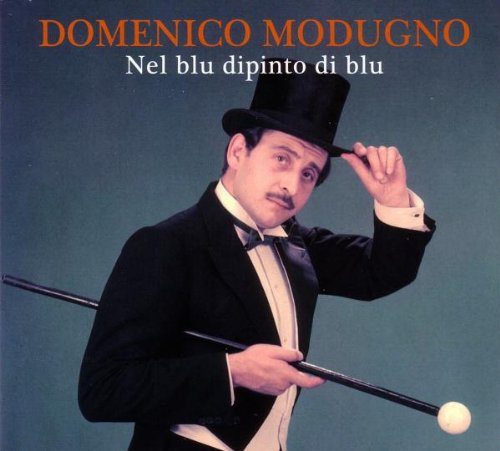
2) Domenico Modugno, 'Nel blu dipinto di blu (Volare)' (1958)

http://ecx.images-amazon.com/images/I/51gDDUVox8L.jpgA curious thing often happens to foreign language songs that catch on in the English-speaking world - they change titles. Such was the case with Italian crooner Domenico Modugno's 1958 hit 'Nel blu dipinto di blu' ('In the Blue, Painted Blue'), a song that became known outside Italy as 'Volare' ('To Fly'), after the song's famous refrain. Inspired by a pair of paintings by Marc Chagall, the song won third place at the 1958 the Eurovision Song Contest and then spent five weeks atop the Billboard Hot 100. It has since been covered by Dean Martin, Al Martino, David Bowie, Gipsy Kings and Barry White, and also made a memorable appearance in the movie A Fish Called Wanda as part of Kevin Kline's mock-Italian bedroom talk.

3) Ritchie Valens, 'La Bamba' (1958)

The song that put Latin America on the rock 'n' roll map, this classic folk song from Veracruz was immortalized by teenage Chicano rock legend Richard Valenzuela, better known as Ritchie Valens, otherwise best known for his death at age 17 in the 1959 plane crash that also took the lives of Buddy Holly and J.P. 'The Big Bopper' Richardson. The song reached #22 on the US Billboard Pop Singles, an unprecedented feat for a Spanish-language song, and finally reached #1 in 1987 thanks to LA Chicano rock band Los Lobos' cover of it for the eponymous Luis Valdez biopic starring Lou Diamond Phillips. It remains the only non-English-language song on Rolling Stone Magazine's 500 Greatest Songs of All Time list.

4) Kyu Sakamoto, 'Ue o Muite Arukō' aka 'Sukiyaki' (1961)

In 1963, British record executive Louis Benjamin travelled to Japan where he fell under the spell of young crooner Kyu Sakamoto and his sweetly sentimental ballad 'Ue o Muite Arukō' ('Walking While Looking Up'). The song became an overnight sensation in the west under the name 'Sukiyaki' in spite of the exactly zero references to simmered beef in the song. (Benjamin presumably figured it was the only non-militaristic Japanese word his audience knew.) The song sold over one million copies in the US and reached #1 status in June of 1963, and to this day remains the only Japanese song to reach #1 on the US Billboard charts. In an interesting parallel to Valens, 'Kyu-chan' was also killed in a plane crash - in the infamous crash of JAL Flight 123 in 1985 - and was also posthumously immortalized in a motion picture named after his greatest known hit.
 

5) João & Astrud Gilberto, 'Garota de Ipanema (The Girl from Ipanema)' (1964) 

When Brazilian composer Antônio Carlos Jobim and renowned diplomat-poet Vinicius de Moraes sat down to write their now-famous voyeuristic paean about beauty and heartache in Rio de Janeiro's ritziest beachfront neighbourhood (think Gangnam Style on valium), they must have felt fairly assured of a hit. Nothing, however, could have presaged the phenomenal success of 'The Girl from Ipanema', a song that almost singlehandedly popularized bossa nova beyond Brazil thanks the Grammy Award-winning 1965 recording of it starring João and Astrud Gilberto together with American tenor saxophonist Stan Getz. Nearly a half-century old now, it is believed to be the second-most recorded pop song in history after the Beatles' 'Yesterday' and one that, like 'La Vie en rose', has become an unofficial anthem of the country that gave life to it.

6) Serge Gainsbourg & Jane Birkin, 'Je t'aime… moi non plus' (1969)

In addition to being one of the most famous foreign language crossover hits of all time, French bad-boy chansonnier Serge Gainsbourg's ode to...well, fucking holds the distinction of being one of the world's most widely banned songs. Originally written for and sung with actress Brigitte Bardot in 1967 (whose husband refused to allow it to be released), it was re-recorded by Gainsbourg and his then-lover Jane Birkin two years later on the appropriately titled album '69 Année érotique. Chiefly remembered for Birkin's heavy breathing and simulated climaxing, the song was banned in a swath of European countries, with the Vatican allegedly excommunicating the Italian record executive who oversaw its release in Italy. Suffice it to say, the Papal PR campaign on behalf of the song did wonders for it, helping it top the UK charts and sell over 4 million copies by 1986.

7) Falco, 'Rock Me Amadeus' (1985)
 

http://upload.wikimedia.org/wikipedia/en/thumb/e/e9/Amadeus_.jpg/220px-Amadeus_.jpgIf there's one song that truly presaged the arrival of Gangnam Style, it's Johann 'Falco' Hölzel's 1985 rap homage to his country's best-known musical export. Originally a bass player with the late-1970s-early 1980s Austrian hard rock-punk outfit Drahdiwaberl, Falco established himself as a solo artist in 1982 with the rock-rap hit 'Der Kommissar' ('The Inspector') before rocketing to worldwide renown with his campy Mozart-themed hit, accompanied by an over-the-top video that gives PSY a run for his money. Boosted by the success of the 1984 biopic Amadeus, 'Rock Me Amadeus' reached #1 in Canada, the UK and the US, where he was the first German-speaking artist to reach such heights. Largely disappearing from the scene thereafter, Falco died in a car crash in 1998 - supposedly as he was mounting a comeback.

8) Mitsou, 'Bye Bye Mon Cowboy' (1988)
 

http://www.beijingboyce.com/wp-content/uploads/2010/07/mitsou-bye-bye-mon-cowboy--300x296.jpgThe divide between Canada's 'Two Solitudes' is nowhere more pronounced than in popular music. French and English-Canadian music typically occupy very separate spheres and Francophone artists such as Céline Dion and Roch Voisine have had to switch languages to get any success outside Québec. One of the few Québécois artists to breach the language firewall was teen pop star Mitsou Annie Marie Gélinas, the granddaughter of renowned playwright Gratien Gélinas, whose breakthrough hit 'Bye Bye Mon Cowboy' became a rare smash hit across Canada, selling over 100,000 copies. (The fact that the only French word in the title is 'mon' may have helped.) Like Falco, Mitsou had a difficult time replicating her early success, although she continues to be a prominent media personality in La Belle Province.

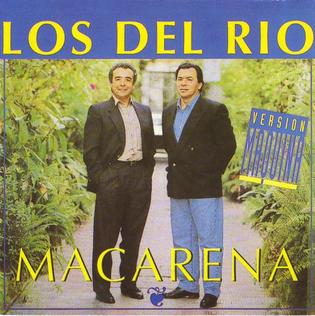
9) Los del Río, 'Macarena' (1995)
 

File:MacarenaLosDelRio.jpgSigh. Anyone who came of age in the 1990s had to endure dance parties wherein, apparently under the spell of some malevolent spirit of the airwaves, otherwise normal people would cease whatever they were doing and perform a mime-dance that could only be likened to a cross between the YMCA and a border-patrol body search. And yet, the song that inflicted this craze on the world really wasn't that bad - at least at the outset. Originally written and recorded by the Seville-based Latin pop duo Los del Río, the original acoustic guitar-based dance number didn't become a craze until the Bayside Boys turned it into a club mix in 1995. The single spent 14 weeks at number one on the U.S. Billboard Hot 100 singles chart, one of the longest runs atop the Hot 100 chart in history, was was ranked the '#1 Greatest One-Hit Wonder of all Time' by VH1 in 2002. And still nobody knows why.

10) Rammstein, 'Du hast' (1997)

http://991.com/newGallery/Rammstein-Du-Hast-115946.jpgThere's something about the German language that seems to lend itself to industrial rock, as exemplied by veteran sonic terrorists like Die Krupps, KMFDM and Einstürzende Neubauten. While little of this has had any mainstream exposure, industrial rock experienced a brief surge in popularity in the mid-1990s thanks to the success of Ministry, Nine Inch Nails and Marilyn Manson, which also opened the door to Berlin-based industrial metalheads Rammstein. The group's 1997 hit 'Du hast' (a play on words meaning both 'You Have' and 'You Hate') gained international prominence thanks to its inclusion on the soundtrack for The Matrix, briefly reaching #2 status on Canada's Alternative Rock charts. At yet we still make fun of the Germans.

Is there anything important I've missed here? I'd love to hear about it.

Sunday, 21 October 2012

Inigo Montoya Teaching Moment #4 - Sexism vs. Misogyny

http://cdn2.spectator.co.uk/files/2012/10/133114867-600x390.jpg

Last week I wrote a post on the Amanda Todd suicide, in which I expressed the opinion that the media ought to be focusing more on the issue of misogyny than that of bullying and the role of social media. 'Misogyny', it turns out, has been a newsworthy word as of late, and as such I think it's worth digging deep into the word itself in the latest of the 'Inigo Montoya Teaching Moment' series of posts on misused - or allegedly misused - words and expressions.

Misogyny and discrimination against women in both the developed and developing world has been in the news a lot in recent weeks. When not making news in Metro Vancouver in the aftermath of the Amanda Todd tragedy it was doing so in Pakistan's beautiful but chronically unstable Swat region, where a 15 girl by the name of Malālah Yūsafzay became an international heroine thanks to a passion for education, a Taliban thug willing to kill in the name of preventing girls from being educated, and by valiant intervention by surgeons in Peshawar, Rawalpindi and Birmingham.

Meanwhile in Australia, the word itself became the centre of a media frenzy following a tirade by Australian Prime Minister Julia Gillard against opposition leader Tony Abbott. Gillard's rant, which quickly went viral over YouTube, was delivered in the Australian parliament two weeks ago following demands from the opposition leader for the firing of House Speaker Peter Slipper, accused of making derogatory comments about women in a series of text messages. The prime minister, while stopping short of defending her colleague's actions, took the opportunity to expose her the famously macho and socially conservative opposition leader's hypocrisy in this 15-minute verbal smackdown. If you haven't seen it yet, it's well worth watching.


Gillard's rant - noteworthy even within Australia's famously bellicose political culture - quickly became international news, winning her praise in many corners both in Australia and overseas for her unapologetic stance against entrenched sexism and - a word she invokes frequently in her rant - misogyny. It also resulted in changed the PM could hardly have expected. Within a week of her 'misogyny' tirade, The Macquarie Dictionary, which bills itself as Australia’s National Online Dictionary, announced that it was changing its definition of misogyny from "a pathological hatred of women” to “entrenched prejudice against women."

This linguistic shuffle prompted a degree of backlash, particularly from Australia's opposition Liberal Party. "Ms. Gillard called Mr. Abbott a misogynist. Mr. Abbott clearly does not hate women," asserted Senator Fiona Nash in the Sydney Morning Herald. "It would seem more logical for the Prime Minister to refine her vocabulary than for the Macquarie Dictionary to keep changing its definitions every time a politician mangles the English language."

Political pleading notwithstanding, the incident begs the question of what precisely misogyny is, and how does it differ (if at all) from garden-variety sexism. In the aftermath of the Gillard attack, The Guardian asked six leading feminists to define the term. In the end, all of the them more or less agreed that 'misogyny' was simply a darker, more malicious form of sexism. British feminist author Rhiannon Lucy Cosslett characterized the difference between the two being akin to the difference between Benny Hill and Rush Limbaugh, noting that "While sexism demonstrates a disregard and disrespect for women, I always have associated misogyny with something darker, angrier, and more cynical."

When a man claims that women are naturally maternal, or are by default, bad drivers, he is a sexist. If he was to add that women are only good for a fuck and should be confined to servicing men and their children, it is misogyny.
- Julie Bindel


American author and renowned Third Waver Naomi Wolf digs deeper, contending that while 'sexism' is the product of unthinking prejudice, 'misogyny' is the product of a deeper, more emotionally charged contempt for women. "A public figure who tolerates the systemic under-prosecuting of rape is guilty of serious and unforgivable sexism," she explains. "Making rape jokes or explaining away the damage of rape in public [see Missouri Congressman Todd Akin] or legislating, as over a dozen US states are now doing, transvaginal probes that are medically unnecessary, simply to sexually punish women for choosing abortion – well, that is misogyny."

abbott new
Note to Tony Abbott: appostrophes are your friend, even if women aren't!
This then begs the question as to whether or not the 'misogynist' tag truly apply to the man at the centre of the controversy, the man who the Australian Prime Minister attacked saying "If [Mr. Abbott] wants to know what misogyny looks like in modern Australia he doesn't need a motion in the house of Representatives; he needs a mirror." What exactly is Tony Abbott's track record for misogyny? Wolf argues that Gillard used the term accurately in her characterization of Abbott's view of abortion as "the easy way out" and his anti-Gillard placard campaign in which he urged Australian voters to "ditch the witch, wherein she was also described as '[Senator] Bob Brown's Bitch'."

Other Abbott classics might be more aptly described as sexist, such as his famously thoughtless on-air remark in 2010 when he referred to "What the housewives of Australia need to understand as they do the ironing," or when he notoriously quipped that mandatory paid maternity leave would happen "over this government’s dead body." Such declarations clearly reveal the opposition leader's adherence to an antediluvian view of the proper place of women in society - unquestionably sexist but not quite misogynistic. The 'Ditch the Witch' campaign and his acerbic and patently untrue dismissal of women seeking safe and legal abortions, on the other hand, betray an active mean spiritedness that can only be described as misogynistic.

Perhaps the most apt characterization of the difference between these two states of mind comes from Julie Bindel, British feminist author, LGBT advocate and co-founder of the group Justice For Women. "When a man claims that women are naturally maternal, or are by default, bad drivers, he is a sexist. If he was to add that women are only good for a fuck and should be confined to servicing men and their children, it is misogyny. Misogynists are always sexist, but sexists are not always misogynists."

Was Australia's leading dictionary right in revising its definition of 'misogyny' from 'a pathological hatred of women' to 'entrenched prejudice against women'? In my opinion, probably not. Moreover, I believe Julia Gillard was bang on in her characterization of her rivals views as being both sexist and misogynist, and that no such dictionary revision was needed in the aftermath of her now legendary knockout round.

Monday, 17 September 2012

Neologism of the Week - Hyphoon

What's with the random comma in there? Unless you're going for Shatnerian inflection.


Back in January of this year I wrote a post on portmanteaus in which I highlighted ten of my favourite compound neologisms. These included such gems as 'momniscience', 'floordrobe' and 'botax', as well as my personal favourite - 'pornado' (the frenzied whirlwind of activity of a person desperately trying to cover up their Internet porn use upon being walked in on). Occasionally, however, I come up with my own gem, one of which I would like to share with you today.

One of my biggest pet peeves as a writer and editor is the misuse of hyphens. Hyphens are a useful form of punctuation, and indeed one that I employ fairly liberally in my own writing. However, they often employed wrongly and excessively, such as in the phrase 'thank-you', 'South-American' and 'badly-punctuated'. I personally think Marvel Comics is at least in part to blame for hyphen overuse. Why exactly does Spider-Man have a hyphen in it when Batman, Superman, Aquaman and Iron Man don't? Never made any sense to me.

Sometimes, however, hyphen misuse goes beyond an inappropriate one here and there are goes to crazytown. Case in point the photo hereabove, taken at one of the Occupy Wall Street protests in New York. There is so much wrong with the punctuation on this sign that it's hard to know where to begin, but certainly the most striking feature of it is the crazed explosion of unnecessary hyphens. Granted American liberalism has a prediliction for hyphen-based inclusivity (i.e. _______-American), but at leasy 'Arab-American' and 'Chinese-American' are correct usages. This, however, is bizarre and perplexing.

Which brings me to my neologism of the week, which is hyphoon. I think this requires little explanation. Moreover, as my good friend Yair Linn pointed out, this also works in French as tirade d'union, which, for the benefit of non-French speakers, is an amalgam of tirade (same as in English) and trait d'union, which means hyphen. Perfect!

I'm always on the lookout for new and interesting phraseologies and neologisms, and cool portmanteaus in particular. Please let me know if you come across any - or come up with a gem of your own.

Saturday, 15 September 2012

6 Reasons Why Everybody Thinks They're A Writer


Writers are an oft-depressed lot. Not only do they tend to spend a lot of time in isolation staring at a screen (and getting little physical activity), but they also have to contend with a world that by and large considers 'writing talent' to be about as rare and prized as right-handedness or an extensive knowledge of Internet porn. Writing, we are told, is not like, say, proficiency in graphic design, cardiology or jazz piano. In other words, it's something that given a high school education we can all do reasonably well.

As a professional writer and editor who has worked as a wordsmith of one sort or another for nearly a decade,I have always resented the notion that writing is somehow less skill-bound than other creative domains. While it is rarely spelled out to me so matter-of-factly as "Oh, anybody can write!" and indeed the praises of 'good writers' are often extolled, when it comes down to meeting production deadlines and cranking out copy, I have more than occasionally found my services bypassed on the pretext that "Well, we needed it done so we got Bob to do it, and you seemed busy. And Bob can do it just fine."

The problem with this rationale, of course, is that often Bob can't do it 'just fine'. Not that Bob is an idiot, or even a bad writer per se, but after eight years of wordcrafting and word-nerdery I am exactly the person you want to get those critical messages fine-tuned and positioned in exactly the right spots in the text, while ensuring that there are no awkward sentences, misplaced commas or references to 'pubic service'. (Trust me - I've seen it happen more than once.) Moreover, as a staff 'writer', it's my job to do this sort of thing, and the fact that I am appearing busy is not a reason to bypass me. After eight years as a professional writer, I work fast - and can get assignments done very quickly.

This is not to say that I'm the king of the written word, nor that I don't make mistakes. I've made more than my fair share in my writing career. I've committed egregious typos and acts of grammatical terrorism that have made it to print and still make me cringe today. (I won't give you specific examples because I hope to continue getting work with the publications in question, who I think haven't noticed yet.) I do go back and correct my blog posts, sometimes on numerous occasions. And even beyond this, I frequently think of better ways I could have phrased something after it's too late. (When it's too late? After it's too late sounds redundant doesn't it?) But I continue to get better with every year I spend doing this. As it is with brain surgery or plumbing, the more mistakes I make, the better I get at avoiding them.

But to return to the original topic, it is true that 'good' writing is often seen as something of a extra - not a frivolity exactly but a bonus that, while desirable, isn't of life-or-death importance. Which, to be fair, I suppose it is. After all, having a burst water main or a listeria outbreak at your airport is significantly worse than having a misplaced semicolon or a dangling modifier on the airport's web copy on shopping and dining offerings. And even if you're sticking to the creative professions, hideous graphic design on a pamphlet is invariably worse than convoluted syntax within the copy, as the graphic design in question will likely prevent readers from picking it up in the first place.

Nevertheless, poorly constructed writing will derail your communications, make your social media communication less effective and generally make your brand less good. And while I'm not saying that writing 'talent' is the exclusive purview of a certain noble breed of elected ones, it is the purview of people who have spent many years playing with words, sweating over syntax and generally fretting over crap that most people rarely think about. Us word people are not normal. Take one of us to a rock concert and our first reaction to the exultation "Rock on!" is to ask "On what?" Yep, we're freaks, but we're the freaks who keep your web and brochure content from going south,

Still, though, everybody on one level or another thinks they're a writer. Here is my personal theory on why that is.

1) We all do it in one form or another.

We write every day. We write grocery lists. We write angry letters to our neighbours for blasting Lynyrd Skynyrd out the window at 11:00 pm on a Tuesday. We help our children with their writing homework. And some of us write obnoxious blog posts purporting to explain why everybody thinks they're a writer. Not everybody fixes their car transmission on their own or designs a book cover. But everyone with a baseline level of literacy writes - and all the more so in the era of social media.

2) It's not generally taught on an extracurricular basis.

Writing isn't seen in the same light as, say, playing the violin or slam-dunking a basketball. And one important reason for this, I believe, is that with the exception of certain really nerdy kids, hardly anybody studies writing as an extracurricular activity - it's seen much more as a core subject that everybody learns. And the kids in writing clubs are probably mostly there to escape bullies; the writing is just a pretext.

3) Bad writing is often less immediately apparent than, say, bad music or bad drawing.

When a singer is hideously off-key or mangling the lyrics to the national anthem or something to that effect, it's generally quite apparent, as is egregiously bad visual design. Bad writing doesn't generally have the same effect. I suspect the reason for this is that at first glance writing on a page simply looks like writing on a page, and any badness therein does not become immediately apparent until you really, really read it. Which brings me to my fourth point, which is....

4) Most people don't really do that much reading.

Now before you protest, let me ask you this question. When was the last time you picked up a travel brochure at a tourist infocentre or on the brochure rack on a ferryboat and actually read the thing from start to finish - or even the lion's share of it? Unless we're actually sitting down to read a novel, most of us (and I don't necessarily exclude myself from this) are terribly lazy when it comes to actually reading and digesting the vast amount of content out there. This, I believe, leads to a devaluing - on some level - of the skills of the people who produce such content. But the fact of the matter is that without good copywriters, the key messages in boldface that you do actually pay attention to won't pop up, much to the detriment of the company in question.

5) Schools reinforce bad writing habits.

 PR Daily ran a great article recently on how schools inculcate really terrible writing habits among pupils. Such habits include shooting for length rather than conciseness, adherence to arcane grammatical rules like not starting sentences with the word 'and' (something I do all the time), and an unhealthy fixation on the introduction-thesis statement-body-conclusion structure. While these quirks in writing education don't necessarily undermine professional writers' respect out in the world, it does contribute to a general overconfidence in regards to writing know-how. "Oh, I know what the rules are." No, you probably don't.

6) Nowadays, everybody truly can be a writer - with a readership.

Thanks to Blogspost and other free blogging programs, anybody can start a blog. And many, many people do - including many who really shouldn't. No....I don't really mean that. In fact I think everybody should blog, because blogging on a regular basis is a great way to build up your writing chops and become the writer you know in your heart you could be. Because anyone can be a good writer. You just have to start out as a mediocre one and plod ahead.

Wednesday, 12 September 2012

Yes We Can ≠ We Built It - Two Slogans Poles Apart


The terms 'liberal' and 'conservative' are bandied about with such gleeful abandon in US political life that they've largely been gutted of meaning. On the political right, the term 'liberal' has since the Clinton administration been employed as a slur, often prefaced by adjectives ranging from 'godless' to 'tax-and-spent' to 'freedom-hating'. Meanwhile, on the leftward end of the spectrum, many erstwhile 'liberals' now eschew the term in favour of 'progressive', while deploying the term 'conservative' in adjectival form accompanied by nouns such as 'theocrat', 'windbag', 'nutjob' and so on.

Given the ubiquitous nature of these terms (and their seemingly arbitrary use), it's worth consulting a dictionary. The term 'conservative' derives from the Latin conservare, which means 'to retain'. Wikipedia defines conservatism as "a political and social philosophy that promotes retaining traditional social institutions" whose advocates tend  to either emphasize stability and continuity or oppose modernism and seek a return to 'the way things were'. Liberalism, on the other hand, is defined as "a political ideology or worldview founded on the ideas of liberty and equality" while progressivism is defined as "a political philosophy advocating or favouring social, political and economic reform."

This guy would have loved the
Romney/Ryan slogan.
While it's debatable how accurately these views characterize the leaders of the US Republican and Democratic Parties respectively, there's no denying than from a branding perspective, these characterizations are bang on. At last week's Republican National Convention in Tampa, the Romney/Ryan team unveiled its official campaign slogan, 'We Built It'. The open-endedness and punchy trisyllabic format of this now-viral catchphrase invariably draws comparisons to Obama's 2008 campaign slogan, 'Yes We Can'. While on the surface these catchphrases are essentially meaningless, these superficially similar campaign slogans both speak volumes to promises espoused by their respective candidates - and the political ideologies they represent.

While the Obama presidency's 'liberalism' or 'progressivism' remains a matter for debate, there's no denying that his 2008 election campaign was rooted in the dictionary definition of progressivism. Not liberalism, but progressivism. (Obama's stance on social issues, particularly LGBT rights, does however fit perfectly with the aforementioned definition of 'liberalism'.) The Obama campaign was all about change, and the catchphrase 'Yes We Can' is perhaps the perfect linguistic distillation of the progressive ethos. It's positive (yes); it's inclusive (we) and it highlights potential (can). It's a slogan that appealed to a belief in a positive future, a future alive with possibility. Nothing short of a call-to-arms for progressives.

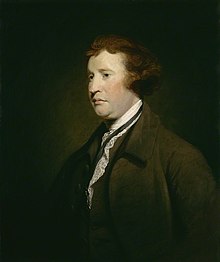
The Romney/Ryan slogan, by contrast, is tautologically, even classically conservative. Not conservative in the modern-day neo-conservative sense or even really in a socially conservative or Tea Party sense. Conservative in the original sense as espoused by the likes of Edmund Burke in the aftermath of the French Revolution. Like the Obama slogan, it the inclusive 'We'. But thereon in it immediately hearkens to the past with the past-tense 'Built'. The nebulous 'It' is the word that has caused much consternation in cyberspace. While Romney and Ryan's business-fixated rhetoric makes the slogan's intended meaning clear (Yes, you the average American voter built this country, not that nasty narcissistic big government that wants to steal your lunch money and take credit for your homework!), some have also suggested that 'it' could refer to a national debt that looks to hit the $16.4 trillion borrowing limit by the end of this year.

Photo: Fellow word geeks: I invite you to deconstruct the slogan in the background. Not only does the 'did' in "We did build it!" seem really awkward, but they've underlined it for what appears to be a strange extra emphasis. With one word and a line they've rendered a meaningless slogan even more meaningless. Your thoughts?
Is that the Nike swoosh under the 'did'?
Ambiguity notwithstanding, though, the 'We Built It' slogan is arguably the most perfect conservative slogan ever devised. It's a slogan that says, "We've built these institutions, and we should keep them in place." Whether true-blue Burkean conservatism will register with the American voting public remains to be seen, but if nothing else it makes for a refreshing departure from the amphetamine-crazed neo-Conservatism of Dick Cheney and Donald Rumsfeld or the cartoonish Tea Party conservatism espoused by the likes of Donald Trump and Sarah Palin - neither of which fit with the encyclopedic definition of the term. As for the Obama team, progressivism continues to define Democratic sloganeering with the party adopting one-word catchphrase 'Forward' for 2012. 'Forward' is a tad more muscular and perhaps even militant sounding than 'Yes We Can', but it's still textbook progressivism.

Which ideology will win the day? While it's still too early to say, the recent appearance of a campaign banner with the curiously overemphatic 'We Did Build It' (with the 'did' underlined no less) suggests that the Romney team is feeling a tad desperate. "No really, we DID build it!! Honest!" I guess we'll see on November 6.

And then there's the issue of the band Jefferson Starship. While the veteran San Francisco psychedelic rock group has yet to weigh in on the issue of the Romney/Ryan campaign slogan, one can't help but wonder if they lifted it from the group's iconic 1985 hit. Then again, at the time when We Built This City hit the airwaves, the group existed only in the form of the Mickey Thomas-led spinoff simply called 'Starship'. Which is fitting given that the current crop of Republicans are not particularly, er, Jeffersonian (sorry).

Wednesday, 5 September 2012

How To Write Gooder - 3 Pages of Longhand At An Ungodly Hour


A number of years ago, my wife introduced me to The Artist's Way by Julia Cameron - the mother of all creative self-help books. To this day it remains the only self-help book I routinely recommend to others and continue to employ myself.

Those of you who read my blog know how much of a fierce skeptic I am, be it about religion, new age trends, politics, marketing or anything else that has yet to prove its mettle in the face of cold, hard investigation. I also tend to be a knee-jerk skeptic when it comes to self-help manuals. I try to keep an open mind about them but I invariably end up getting irritated and putting them back on the shelf, opting instead for one of my usual nerdy history books, an angry screed by Christopher Hitchens or some ridiculous mashup of Jane Austen and zombie apocalyptica.

But not The Artist's Way. This is a book I routinely go back to for inspiration when my creative ideas dry up or I'm otherwise feeling stuck. When I first picked up the book I had just left graduate school with a vague notion of pursuing a career in writing/communications but no real clue what I was doing. Julia Cameron's elegant stepladder-type creative exercises coupled with down-to-earth creative advice not only expanded my notions of what was possible but sharpening my writing skills like nothing else. It got me writing in a far more focused and serious manner, which in turn led to a career as a freelance writer, a sharpshooter editor and a professional communicator. I give Cameron a lot of credit for this.

While this and her follow-up books (which I confess I have yet to work my way through) are replete with excellent advice, her one main tool has done more to hone my writing skills than any other - the 'Morning Pages'. It's very simple really. You get up, you make a pot of tea or coffee or whatever, you sit down and you crank out three pages of longhand. And then you carry on with your day. Not enough time in the morning? Set your alarm 30 minutes earlier than you otherwise would. Distracted by the computer? Turn it off. No distractions. Just you, a caffeinated beverages, a pen and a notebook.

Granted, I would be lying if I said I'd been completely consistent with the Morning Pages over the years. In fact I really fell out of the habit upon moving back to Canada. Since then it's been hit and miss, but in recent months I've put forth a major effort to make sure those pages get done in the morning. And if I don't manage them in the morning, I do three pages in the evening - although 'Evening Pages' really don't pack the same processing punch.

So what, exactly, do the Morning Pages do for you? I can only tell you what they do for me, and why I currently feel compelled to get up at 5:30 in morning to do them.

1) My writing chops improve markedly when I do them.

Not that my mornings scribblings are ever poetic. Far from it - it's pure brain-dump, and brain-dump while my brain is still waking up and often mad at being up at all. I rarely read my old Morning Page notebooks after the fact, and when I do the content is often embarrassing. But being a writer is like being a musician. If you want to get good at it, you have to practice every day.

2) I feel much more organized when I do them.

For me, Morning Pages are more than a writing tool. They're an organizational tool. I have a pretty good memory when it comes to things I have to get done on any given day, but rehashing them in prose form while I'm still waking up tends to make for much more efficient, smoothly flowing workdays. And when you're trying to juggle a full-time job, a part-time study program and other extra-curriculars, this really helps.

3) Writing longhand is a refreshing departure from my usual activities.

Like most 21st-century workers, I spend most of my working life glued to a PC, and the vast majority of the writing I do is on a computer. Putting pen to paper is not only a refreshing departure from having my retinas abused by a flickering monitor but also gives me a fresh perspective on words, how they look, which ones might fit interestingly together and so on.

4) It's a great place to brainstorm.

Remember when your junior high English teacher asked you to write quietly on your own in a notebook for maybe five minutes at the beginning of class as a brainstorming exercise? I always enjoyed that. As a blogger, my best ideas for topics have generally come from three sources: sitting on the toilet, running and doing Morning Pages. And as I'm generally not on the toilet for long enough to fully flesh out an idea, it's mostly the latter two - and more Morning Pages than anywhere else.

5) It helps me wake up.

I've never been a morning person. My Morning Pages sort of act as an extra spike of caffeine in my, er, caffeine. Like a shot of whisky dropped in a pint of beer - except with the reverse effect.

6) It's a very appealing ritual.

If there's one thing I envy about people with religious faith, it's the comfort to be found in ritual - be it the flicking of rosary beads, the unrolling of the prayer mat, the donning of the turban and kirpan at the gurdwara or the waft of incense that greets you at a Buddhist temple. These days the closest I get to religious practice is writing, but I find the same kind of comfort in the laying out of my favourite rollerball pens, my notebook and a piping hot pot of Japanese tea. Granted, there's usually nothing saintly about the contents of my Morning Pages, which are often rife with expletives, but it's a daily ritual that invariably sets me off on the right foot - even when I'm dealing with all kinds of crap in my life.

For more on Julia Cameron and the power of Morning Pages, visit this site.

Monday, 9 July 2012

7 Countries Whose Names Are Wrong


As the country once (and largely still) known as 'Burma' has made its initial tentative steps toward democracy following half a century of harsh military rule, an interesting conflict has emerged between the still-ruling generals and opposition leader Aung San Suu Kyi. The Burmese pro-democracy leader and Nobel Peace Prize winner has up to now stubbornly refused to refer to her home country as 'Myanmar' in spite of the country's official name change in the late 1980s. Now, with Suu Kyi's party negotiating its way into the country's political mainstream, the geriatric generals still in charge have issued a stern warning against referring to the country as 'Burma'.

"When I'm elected president, I'm changing this country's name
to an incomprehensible symbol. That should shut them up!"
The name 'Burma', the pro-Myanmar argument goes, is a vestige of British colonialism, an Anglicization of the name of the country's predominant ethnic group, the Burman (Bamar) people. The name 'Myanmar', by contrast, is an classical literary term for the same group - sort of like the use of the word Yamato for the Japanese nation.

Suu Kyi, by contrast, asserts that the name 'Myanmar' is a product of the massive government crackdown in 1988 and points out that the name change was imposed on the country without the slightest input from the Burmese people. (A whole host of names were changed during the same period - Rangoon to 'Yangon', Pagan to 'Bagan' and so on.)

So who's right in this debate? In a sense, both sides are. Burma/Myanmar (or 'The Country', as Hillary Clinton diplomatically called it on her recent trip there) is a diverse multiethnic society of which the Burmans are but one (albeit predominant) cultural and linguistic group. Suu Kyi further asserts that the government's name-changing campaign also saw a vast number of communities in non-Burman regions changed in ways that rendered them nonsensical in the Shan, Karen, Rohingya and other minority languages. In that sense, neither Burma nor Myanmar is cut out for the job.

But is this a big deal? After all, many countries have names that, when you really dig deep, don't make that much sense. Countries have been named for all sorts of bizarre reasons. Both Japan and Vietnam get their names from their geographical relationship to China. Nippon (日本) means 'Sun-Source' in reference to its easterly position to China, whereas Việt Nam is an inversion of 'Nam Việt' (南越), which refers to its southerly position vis-a-vis the ancient Chinese province of 'Yueh' - the antecedent to present-day Guangdong province.

Further west, the country known as 'Russia' gets its name from the 'Kievan Rus', which was located in present-day Ukraine, as does 'Belarus', while the name 'Ukraine' itself merely means 'borderland'. And then there's 'France', whose name means 'Land of the Franks', a Germanic tribe whose empire centred primarily on present-day Westphalia in Germany. Indeed, it seems that many of the world's most brazenly patriotic countries are named after other places.

Some country's names, however, are flat-out incorrect. However, in none of these cases has there been any move to change said names. For better or for worse, people have come to like their incorrect nomenclature - and in some cases the bizarreness of their names has become a matter of tongue-in-cheek national pride.

1) Canada

Canadians all know this story - at least we all learned it in junior high. 16th century French explorer Jacques Cartier and his scurvy-stricken crew were directed southward along the St. Lawrence River to what the locals referred to as Kanata. The settlement in question was in fact called Stadacona (located where Québec City now stands), what with kanata simply being an Iroquoian word for 'village', but the misunderstanding quickly stuck - and survives to this day.

2) Peru

At least with Canada it was an easy-to-fathom misunderstanding. The naming of the present-day Republic of Peru, on the other hand, was an act of geographical (and cultural) laziness to say the least. The name 'Peru' derives from a mispronunciation of Birú, a chief who ruled over a region near the Bay of San Miguel, Panama, in the early 16th century. For whatever reason, the Spanish conquistadors leapt to the assumption that the guy ruled everything south of what was then known to them, oblivious to the proud denizens of the Inca Empire and their imprint on the place. It certainly wasn't an auspicious start to this relationship.

3) Senegal

The prevailing explanation of the etymology of this west African nation is rather similar to that of Canada. The story goes that the name derived from a miscommunication between local fishermen and the Portuguese explorers who arrived there in the 15th century, who interpreted the Wolof phrase sunu gaal, meaning 'our canoe', as the name of the river - and by proxy the country. While this explanation remains contested, the canoe story has embedded itself into Senegalese cultural lore and is often invoked in calls for national solidarity along the lines of "We're all in the same canoe."

4) Madagascar

Thanks to the DreamWorks film by the same name, many young North Americans are probably oblivious to the fact that Madagascar is an actual country. And of those who are aware of its actual existence off the coast of southeastern Africa, very few probably know that the name is not of local origin but was in fact conferred on it by the 13th century Venetian explorer Marco Polo, who mistook the place for Mogadishu. Granted, this was a more flattering comparison in the 13th century, when Mogadishu was a grant cultural and economic capital of East Africa, but it still a remarkably egregious mistake.

5) Singapore

The modern city state of Singapore was first founded in the 14th century by a Tamil prince named Sang Nila Utama as part of the Srivijayan Empire. The name itself, an Anglization of the Sanskrit Singapura (सिंहपुर) - which means 'Lion City', derives from the prince's alleged spotting of a lion on the shores of where Singapore now stands. While the lion has since become an emblem of the place, unless it escaped from a local zoo it was almost certainly a tiger, as lions have never been an indigenous species to the region.

6) India

The name 'India' derives from the Indus River, which together with the Ganges and the Brahmaputra form the crucible of South Asian civilization. While not incorrect at its origins, the Indus, since 1947, has flowed in its entirety in Pakistan. Interestingly, Pakistan's name is also somewhat suspect - not so much incorrect as a product of wishful thinking, the product of an acronym of Punjab-Afghania-Kashmir-Sindh-Baluchistan. A reaching acronym to say the least, and not wholly accurate given the still disputed nature of Kashmir.

7) Greenland

In a perverse turn of fate, man-made global warming may yet prove Erik Thorvaldsson to be a prophet of sorts. Nevertheless, this now autonomous country within the Kingdom of Denmark is probably the only country whose name was an act of fraud. The murderous 10th century Viking better known as Erik the Red who was exiled from his native Iceland for "some killings" had a great deal invested in attracting settlers to his western discovery, and figured that the name Grønland would do just that. While his ploy may have worked, the early Norse settlement in Greenland never got off to a good start and failed spectacularly in the end. Perhaps a more honest name would have helped.

Monday, 9 April 2012

No More Mixed Tapes For My Girl...

By Pierre Bokor Jr.


In this latest guest post on Brush Talk, it is my great honour to welcome an old friend of mine, Pierre Bokor Jr. Pierre and I were in a great many university drama productions together, including a particularly epic rendition of Eugène Ionesco's La Cantatrice Chauve (The Bald Soprano). He currently languishes in the 'hardship' post of Barcelona where he works as a teacher and translator and has recently launched a superb online project/blog/workshop aimed at helping parents with their kids' education called Inside A Teacher's Mind. You can also see it on the Book of Face here.


Once upon a more miserable time, it was raining and night had come. In a field, awaiting battle, a man sat on a wooden makeshift bench, with a quill in hand. He had a candle to see the paper on which his words and his tears fell and melded into one. The letter finished, he poured a spot of hot wax on the folds, took off his ring, kissed it, and with it, moulded his blazon onto the seal.

He handed it to a messenger and gave the rest of his money to him. The messenger rode through the downpour, forcing his horse through the mud. He kept riding until the sweat of the horse and the rain were one. Together, they rode on through the day, as the sun came up and burned them and scorched their path. The horse’s nostrils bled from the effort, yet they continued on, till they reached the house.

The messenger delivered the letter to the lady’s maid. The maid ran into the field behind the house, to give the letter to the lady. The lady took it, put it to her chest as she let out a sigh that proclaimed the overwhelming joy of receiving a word from her love. She sat down in her chaise and looked up at the sky, wondering if her lover is looking up at that same sky, before opening the letter...

In a much wealthier and more prosperous time, the guy grabbed his iphone out of his pocket. As he stood in line at Starbucks, he tried to decide if he should iMessage, Skype, Viber, Whatsapp, Tango, GoogleChat, SMS, or go formal by emailing his babe. “Whatevs! It’s the thought that counts, right?”

He composes and writes “Yo Bae, luvs ya. Havn a good day? U no I missU2. ♥.” He sends and sees a second check mark appear on his screen, as a sense of chivalry and accomplishment passes over him.

The other day, I spoke to a friend about a picture that I saw on Facebook that said “I wonder how long it will be before people don’t remember why we ‘unroll’ the window.” One conversation led to another and I soon told her that I think it’s tragic that mixed tapes no longer exist. I remember making mixed tapes for the girls I was courting. The entire procedure, the thought, the love, the energy, the feelings, everything that went into it. I don’t even know what the equivalent is today. Perhaps, sending my playlist to someone? I really don’t know.

What I do know is that our methods of communicating are getting more and more advanced, faster and more efficient, all the whilst our abilities, our messages, and our depth of commitment to what we communicate is getting smaller, more feeble and ephemeral.

I don’t know if the solution is to be a ‘throwback’ like me, going around writing with a fountain pen and insisting that people learn the difference between ‘your’ and ‘you’re’. I do know that change is inevitable, technology will push us to communicate ‘bigger, faster, stronger’, but I believe that we can have the fortitude to fight the ease of laziness and to put a little more thought into every message.

Monday, 19 March 2012

Inigo Montoya Teaching Moment #3: Fight the 'Power'

It's been a while since my last post on words and wordcraft, allegedly still the focal point of this blog. Things have taken a decidedly more political and sociological bent on Brush Talk in recent weeks, but now we return to the radix (see IMTM #1).

Those of you who follow this blog are now no doubt familiar with the Inigo Montoya Teaching Moments, which focus on commonly misused words in the English language. In the past I've looked at 'radical' and 'gender', both of which are fairly recent corruptions. Today, however, we examine a word that to my mind has been misused for so long that nothing short of a gargantuan language paradigm shift is likely to change its use. It's still, however, worth examining.

The word in question this time is 'power'. It's a word that appears almost everywhere, in just about every context you can think of. The power of one. Speak truth to power. Female empowerment. Power colour. The power of imagination. Fight the power. The powers that be. It's truly everywhere, and moreover it's something that we're all supposed to want. I mean, don't we all want to be empowered, or at least have a little more power over our own destiny?

I've always been somewhat wary of the word power, and then after a discussion with Dr. Maggie Hodgson, a respected Elder from the Carrier Nation in central BC and a tireless advocate of restorative justice and reconciliation, I realized why that was. Dr. Hodgson talked of the many subtle but telling misunderstandings and miscommunications between Aboriginal and non-Aboriginal stakeholders - and how one particular group of Elders objected to the characterization of a BC land claim settlement as a 'transition of power'. 'Power', in their view, was a colonialist word that implied the subordination of one group by another. When asked what they sought to gain from the land deal with the BC government, the responded with a single-word answer: strength.

So what exactly does the word 'power' mean? In scientific terms, Dr. Hodgson's characterization of it is indeed close to the mark. In physics, power is the rate at which energy is transferred, used or transformed. In the case of electric 'power', it's the rate at which energy is transformed into light or heat, as measured in wattage. In other words, power is not simply a synonym for strength or energy. Power does necessitate application, the degree to which said strength or energy is applied externally, as in 'power of attorney' or 'executive power'. While this isn't necessarily a bad thing, this does make it a more inherently confrontational and frictious word than strength, which is a more defensive and reserved state of being.

Why, then, are we always talking about power in our culture? It could be because we're hyper-sensitive to having power applied to us by the powers that be and that, like Chuck D, Flava Flav and Professor Griff, we do feel compelled to fight the power. Also, references to power abound in our culture, from the Bible (divine power) to Karl Marx (power over the means of production) to our cultural touchstones (the power of the Force). But I can't help but feel that our culture's fixation on power is a major factor in the current state of our planet - both in the cavernous gaps in economic prosperity that plague our society and our rampant destruction of our natural environment.

But can we purge our language of improper usages of the word 'power'? Easier said than done, most likely. I tried this week to find alternative words for power in my own speech and writing - and failed miserably. Is there a good alternative to the word 'empowerment'? I can't really think of one. In our high 'powered' modern world, expressions like 'strength' just sound wimpy. Like a drug, language has a tendency to reach a tolerance level in our society, at which point a stronger, more potent word is needed to replace the old one whose energy is spent. This would probably explain the proliferation of profanity in our culture, and why curse words of old don't have much sting left in them.

It would be ridiculous to advocate a return to the 'correct' use of the word power - if for no other reason because I've seen no indication that this word has ever been used properly. But it might not be a bad idea to reflect on the word, as it is a word that I believe is taken to mean something other than what it actually means. And in the meantime, please enjoy what has to be the funkiest protest song ever recorded courtesy of Public Enemy. And do fight the power. It deserves to be fought.