Showing posts with label Russia. Show all posts

Thursday, 15 May 2014

10 Asian Artists Everyone Should Know - Part 2

Source: scmp.com

My post from last August entitled "10 Asian Bands You Should Know" was one of my most popular - popular enough that I felt compelled to write a follow-up post on the same subject. For one, the research that went into writing it unearthed far more than ten candidates, requiring some culling, and since then I've stumbled over countless others, making the original ten seem like a paltry representation of the musical cream of a continent that's home to over half of humanity. So here we go with Part 2.

Notice the slight change of title. I opted to open things up to include solo artists, as the term 'band' is unnecessarily limiting. I've also done my utmost to cover countries that weren't included in last year's list. Here we go again!

1. Faiza Mujahid

Origin: Lahore, Pakistan
Style: Pop-Rock
Recommended for fans of: Karen Zoid, Lily Allen, Cyndi Lauper, Sarah McLachlan

Source: tribune.com.pk
The emergence of preteen human rights heroine Malala Yousafzai as a global household name following her near-death at the hands of local religious extremists has done much to shed light on the deplorable state of women's rights in the Islamic Republic of Pakistan. While Pakistan was among the earliest countries to elect a woman leader and women have held notable positions of political power, the country ranks near the bottom of virtually every study on the global status of women. Bride murders, acid attacks, child marriage, honour killings and domestic violence remain epidemic in much of the country, but thanks in large part to Malala's remarkable activism, there appears to be slow but tangible progress in pushing back the country's barbaric Hudood Ordinances and combating misogynistic tribal notions of 'justice'.

Paralleling Malala Yousafzai's emergence as a global figure in the fight for women's rights has been the emergence of Pakistan's new leading lady of rock music, Faiza Mujahid. Born and raised in the musical hothouse of Lahore, home to icons such as the late Qawwali singer Nusrat Fateh Ali Khan and Sufi rock legends Junoon (a band often referred to as the U2 of Pakistan), the young star has quickly become a fixture on Pakistani TV and radio thanks to her catchy pop-rock anthems and her promotion of women's rights through her music. Her latest single 'Uth Oye' ("Wake up") was accompanied by a critically acclaimed video by Pakistani filmmaker Fatima Shah, which features literacy crusader Farah Deeba, acid attack victim Sabira Sultana and the members of Pakistan's national women's field hockey team in one of the most triumphant feminist music videos in recent memory.


2. Chthonic

Origin: Taipei, Taiwan
Style: Thrash Metal
Recommended for fans of: Sepultura, Slayer, Lamb of God

Source: 3.bp.blogspot.com
The past few decades have seen the island "nation" of Taiwan emerge as arguably Asia's most vibrant and energetic civil society and liberal democracy. In spite of the country's perpetual geopolitical conundrum vis-à-vis mainland China and ugly political factionalism (or perhaps because of it), the Little Island That Could enjoys, in addition to one of the region's highest standards of living, Asia's highest press freedom rating, a thriving media culture and some of the region's most progressive social attitudes. (Taiwan is set to become the first Asian country to legalize same-sex marriage.)

As I noted in my original Asian band post last summer, Taiwan's complicated and often traumatic history and its present-day crisis of identity have helped engender a diverse and vibrant modern music scene. Of the island's musical exports, none have achieved the notoriety of Taipei's premier thrash-metal hellraisers Chthonic. Founded in 1995, Chthonic combines heavy metal theatrics with lyrics in Mandarin, Japanese and a handful of Aboriginal Taiwanese languages and incendiary political messages and have courted their share of controversy over the years. (Their antics have included burning the Kuomintang (Nationalist Party) flag in commemoration of the 2/28 Massacre of 1947.) Outspoken in their advocacy of Taiwanese independence from China, land rights for Taiwan's Aboriginal tribes, Tibetan and Uyghur liberation, feminism (bassist Doris Yeh is a noted women's rights activist) and animal rights, Chthonic have been banned from mainland China on multiple occasions, while their popularity - in China and elsewhere - continues to rise.

Heavy metal may not be able to bridge one of Asia's most protracted geopolitical impasses, but at least it's worth a try. And given this band's uncanny ability to broach topics that have long been taboo in the region, Chthonic might just be the ones to lead the way.


3. Miila and the Geeks

Origin: Tokyo, Japan
Style: Punk, No-Wave, Riot Grrrl
Recommended for fans of: Bikini Kill, X-Ray Spex, PJ Harvey, Cibo Matto

Source: nohopesofun.blogspot.com
Japan may still be very much a man's world, but when it comes to the country's indie rock scene, it's anything but. In the early nineties as the Riot Grrrl scene was flourishing in the northwestern US, a parallel female-driven rock scene was brewing in basement clubs in places like Shibuya (Tokyo) and Shinsaibashi (Osaka), from which internationally successful girl bands like Cibo Matto, Buffalo Daughter, Shonen Knife and Red Bacteria Vacuum were born. Not that Japan's Riot Grrrl scene was born of a vacuum. Japan is home to a long and under-recognized tradition of female musical experimenters from postwar big band jazz innovator Toshiko Akiyoshi and the future Mrs. Lennon (a lynchpin of the 1960s Fluxus movement) to DNA drummer Ikue Mori and electronic music pioneer Sachiko M. Certainly a far cry from the "good wife, wise mother" stereotype.

The girl-punk scene in Tokyo and Osaka still appears to have plenty of life to it. Among its latest exponents are Shibuya kids Miila and the Geeks, who consist of vocalist-guitarist Moe Wadaka, drummer Kaoru Ajima and saxophonist Ryota Komori. Sound-wise they're an amalgam of Stooges-era garage rock, late-seventies No Wave punk in the spirit of DNA and Teenage Jesus, the Olympia, Washington scene of the early nineties that gave the world Bikini Kill, Bratmobile, Sleater-Kinney and the rest and a dose of Shibuya-kei glam. Komori's sax gives the band a sound akin to vintage X-Ray Spex, while Wadaka's sexy vocals are reminiscent of a young PJ Harvey. A relatively new addition to the Tokyo music scene, Miila and the Geeks have cultivated a strong following in Japan but have yet to branch out overseas. Time will tell if they can follow in Cibo Matto's footsteps.


4. MastaMic

Origin: Hong Kong, China
Style: Hip Hop
Recommended for fans of: Del Tha Funky Homosapien, Kanye West, Eminem

Source: timeout.com.hk
In my previous post on great Asian music acts, there were two notable omissions: hip hop music and the city of Hong Kong. Both have something of a reputation problem within the context of this topic area. Hong Kong, in spite of its outsized presence in the global economy, has long been an underachiever in the arts (with the notable exception of its film industry), owing to a lack of public investment, a dearth of performance venues and, until 1997 at least, political isolation, which until made it difficult for Hong Kong artists to tour in mainland China. Likewise, hip hop music, in spite of its remarkable ubiquitousness across the globe (arguably only heavy metal can match hip hop's track record for travelling well) has long been a hard sell in Asia. While foreign rap artists have long enjoyed popularity in Hong Kong, Tokyo, Seoul and elsewhere, homegrown rappers in these countries have had an uphill battle gaining respectability. And in spite of Psy's recent transpacific success, the notion of Asian rap still elicits snickers in the west.

Tong Sung-ching, aka MastaMic, is a one-man machine dedicated to raising the bar for Cantonese language hip hop and gaining respectability for the Hong Kong scene. Active since 2005, the 28-year-old MC has already been dubbed Hong Kong's "Freestyle King" and is currently the city's best known rapper. In addition to his prodigious rapping talent, MastaMic has also earned recognition for his scene-building activities, namely the establishment of the 'Justice League' - a motley assortment of musicians, break dancers and graffiti artists - and Hong Kong's first hip hop news community at www.urbanation.hk. While rap in Asian languages may not yet have earned respectability outside the region, Cantonese rap is certainly no longer considered a joke in Asia's World City. And much credit is due to this guy for fighting on its behalf.


5. Avial

Origin: Thiruvananthapuram, India
Style: Alt-Rock, Jam Rock
Recommended for fans of: The Police, Phish, Pearl Jam, R.E.M., Asian Dub Foundation

Source: Cochinsquare.com
Cosmopolitan, laid-back and socially progressive, the tiny, densely populated southwestern Indian state of Kerala has long punched above its weight in cultural and artistic terms. Thanks to a long history of cultural cross-pollination, a large diaspora population in the Middle East, East Asia and elsewhere and high levels of literacy and media penetration, Kerala has emerged as something of a powerhouse in literature, film and music, combining a rich tradition of Malayalam-language poetry and Carnatic music with modern influences from around the globe. Kerala's best-known musical export is legendary classical-pop crossover singer K.J. Yesudas, who has recorded over 50,000 songs in a phenomenal 17 different languages over the course of his 50-year career.

Rock music in India has long enjoyed an outsized following in the country's southern states, with prosperous southern cities like Bangalore and Chennai being home to sizeable indie rock scenes. Of Kerala's current crop of bands, the most celebrated has been the Thiruvananthapuram-based band Avial - a name taken from the state's signature spicy vegetable curry dish. Founded in 2003, the quartet of vocalist Tony John, guitarist Rex Vijayan, drummer Mithun Puthanveetil and bassist Binny Isaac stands out among south Indian rock bands for their almost exclusively Malayalam-language material and their infectious blend of traditional melodies, rich politically charged Malayali poetry and hooky jam rock. Their name perfectly captures their sound: rich, complex, sometimes fiery but always delicious.


6. Pesawat

Origin: Ampang, Malaysia
Style: Alt-Rock, Post-Punk
Recommended for fans of: We Are Scientists, The Killers, Deadmau5, Manic Street Preachers

Source: juiceonline.com
Malaysia, like Hong Kong, is something of an underachiever on the international music scene, although for somewhat different reasons. While the country has all the ingredients for a great music scene - cultural diversity, a rich indigenous musical tradition and a growing middle class, social conservatism, authoritarian governance and creeping Islamism have long conspired to make life difficult for homegrown and visiting international artists alike. International stars ranging from Madonna to Linkin Park have felt the sting of Malaysia's censorship laws, and more recently Erykah Badu was banned from performing in Kuala Lumpur because of a tattoo featuring the word 'Allah'. While the current prime minister has called for a retrenchment of the country's censorship regime and recent concert dates by Katy Perry and Adam Lambert have gone ahead in the face of Islamist ire, Malaysians still have a long way to go before they can enjoy the sort of artistic freedom their counterparts in Taipei and Tokyo take for granted.

Censorship notwithstanding, Malaysians are still a musical bunch and there are plenty of bands around, especially in cosmopolitan Kuala Lumpur. Among the most celebrated bands at present is the KL quartet Pesawat ('Airplane'), whose punchy, bilingual (Malay and English) indie rock anthems have gained them a substantial following both at home and in neighbouring Indonesia, and earned them a spot at the 2010 Music Matters festival in Hong Kong alongside Jason Mraz and other international headliners. The band's love of all things aviation-related is a tad awkward in the wake of their country's worst ever air disaster, but their musical chops are undeniable. It will be interesting to see, though, if they lose the aviation fixation in light of the MH370 tragedy.


7. Sliten6ix

Origin: Phnom Penh, Cambodia
Style: Hardcore Punk, Deathcore
Recommended for fans of: Slipknot, Murderdolls, Napalm Death

Source: khtrends.wordpress.com
The demise of Phnom Penh's once vibrant rock 'n' roll scene is one of the most tragic chapters in modern Asian music history. While Cambodia under the rule of King Sihanouk in the 1960s was mostly characterized by poverty, corruption and mismanagement, the country's worldly capital city burgeoned with artistic energy, including what was once Asia's most fertile rock music scenes, a scene that persisted into the early 1970s amid military coups and carpet bombing. Then in 1975 it was completely silenced, obliterated by the Khmer Rouge forces. The vast majority of the country's musicians were physically eliminated by the new regime, either executed or worked to death in rural 're-education' camps. Some pre-revolutionary rock stars amazingly survived the Khmer Rouge nightmare, including 1960s Cambodian rock legend Touch Seang Tana, who succeeded in passing himself off as a peasant in a tale recounted in the recent documentary film Cambodia's Lost Rock 'n' Roll.

While Pol Pot has been dead for a decade and a half now and the Khmer Rouge are long gone, the colossal blow to Cambodia's cultural life that they dealt is one the country is still struggling to bounce back from. Cambodia remains an extremely poor country, and even in Phnom Penh musicians struggle to make ends meet. That said, there are signs of a musical renaissance in the country, particularly within the capital city's hardcore punk scene, with a new crop of fierce young bands like No Forever, the Anti-Fate and Sliten6ix giving voice to some of the country's pent-up anger. Of these, deathcore band Sliten6ix has garnered the most attention for their extreme sounds and confrontational lyrics. If there's any band active in Cambodia today that truly encapsulates this traumatized country's lingering pain and anguish, it's these guys.


8. Rudra

Origin: Singapore
Style: Death Metal, Black/Pagan Metal
Recommended for fans of: Children of Bodom, Burzum, Dimmu Borgir, Tengger Cavalry

Source: citynomads.com
The city-state of Singapore broke away from the Union of Malaysia in 1963 (actually was pushed out - it's a complicated story) but inherited much of the latter's authoritarian governing style and socially conservative temperament, giving the city the unfortunate nickname "Fine City" thanks to its penchant for issuing fines for trivial offences ranging from gum-chewing to not flushing the toilet. Fortunately, southeast Asia's Garden City has loosened up a great deal in recent years, a move that has coincided with a veritable music boom. Things started to get interesting in Singapore in the early 1990s with the birth of the Lion City Hardcore (LCHC) scene, a homegrown hardcore punk scene inspired by the New York Hardcore scene, and one that brought the likes of NOFX, Fugazi and The Oppressed to a town still struggling to overcome its 'No Fun City' reputation.

More recently, Lion City has seen the rise of a small but significant heavy metal scene, spawning a . Singapore's metal community stands out not only for its energy but also for its ethnic diversity, and appears to have an outsized following among the youth in the city's Malay and South Asian minorities. Of Singapore's recent metal exports, the two most electrifying acts are the terrifying grindcore ensemble Wormrot, who have gained substantial international exposure thanks to a recording contract with the British label Earache (of Napalm Death and Carcass fame) and the hypnotic 'Vedic Metal' group Rudra. Originally formed back in the days of LCHC in 1992, the Indo-Singaporean band is the South Asian answer to the Viking Metal of Scandinavia, combining Indian classical sounds with Sanskrit Vedic literature with brutal death metal riffs.

Singapore may be a world away from Oslo or Reykjavik, but the spirit captured by Rudra is much the same as that of their Nordic counterparts. It's as though there's a direct correlation between orderly, law-abiding societies and thriving death metal scenes.


9. Yat-Kha

Origin: Moscow, Russia
Style: Space Rock, Post-Rock
Recommended for fans of: Pink Floyd, Hawkwind, Magma, Mogwai

Source: bbc.co.uk
In 1922, in the wake of Russia's post revolutionary civil war, the People's Republic of Tannu Tuva broke away from Russia to form an independent socialist republic in central Siberia that was recognized by nobody except for the USSR and Mongolia. The country was a total disaster, ruled by a mentally unstable Kremlin stooge named Salchak Toka - a man primarily concerned with suppressing nomadic cattle husbandry and Buddhism (Tuvan society's two most defining pillars), and in 1944 the country was reabsorbed by the Soviet Union. But the Tuvan region's fierce sense of national autonomy never wavered, and in the post-Soviet era this remote corner of the Siberian steppes with longstanding cultural ties to Mongolia and Tibet has experienced a cultural renaissance, all the while avoiding the sort of separatist strife that has plagued Chechnya and other wayward backwaters of the Russian Empire.

In the early 1990s the Tuvan Republic's iconic kargyraa throat singing enjoyed a period of world music cachet thanks to albums by Philip Glass, Kronos Quartet and others. In the meantime, exiled Tuvan folk rocker Albert Kuvezin joined forced with renowned Russian electronic composer Ivan Sokolovsky to form the band Yat-Kha (named after a distinctive Tuvan-style zither), a unit that remains one of the Russian Federation's most innovative rock bands. Combining throat singing with synth and guitar-driven space rock reminiscent of vintage Hawkwind, Yat-Kha has over the past few decades featured a rotating cast of premier musicians from the Tuvan region and elsewhere and earned plaudits from the likes of Brian Eno and Russian music journalist Artemy Troitsky, who famously lauded Kuvezin as one of "two unique voices on earth" together with Luciano Pavarotti.

Unlike Pavarotti, Kuvezin is still around, as is Yat-Kha - still channelling Tuva's ancient traditions into the 21st century.


10. Side Effect

Origin: Yangon, Myanmar
Style: Alt-Rock, Pop Punk
Recommended for fans of: Green Day, Blink 182, Foo Fighters....aw hell, anyone likes to see rock 'n' roll triumph over totalitarianism!

Source: pri.org
Myanmar? Burma? I don't really know which name to use. Burmese pro-democracy icon Aung San Suu Kyi says 'Burma' but atlases say 'Myanmar'. Regardless which name you go with, until very recently this country was about the last place you'd expect to find a thriving rock scene, being home to the most despotic regime in Asia not named North Korea. Yet even through the darkest years of repressive military rule, music had a way of squeezing through the cracks. A curious industry emerged in the Burmese capital during during the junta years known as "copy tracks" wherein 'professional plagiarists' would deliver bang-on renditions of everyone from Metallica to Lady Gaga to cheering throngs. Illegal? Definitely. Necessary for a beleaguered nation's sanity? Almost certainly. And so far Lars Ulrich hasn't kicked up a fuss.

It may well be that a decade of Metallica, Motley Crue and Coldplay knock-offs have paid off in grand style in Myanmar, as the country has seen a veritable explosion of homegrown rock music since its military rulers began loosening their grip in 2012. Myanmar's long deeply underground punk scene is now so prominent that a German film crew recently shot a documentary about the scene, entitled Yangon Calling. Of this new generation of angry young Burmese bands, the one that's garnered the most international attention thus far has been Side Effect, a Yangon-based pop-punk unit who have successfully crowdfunded their way to the 2014 SXSW Festival in Austin, Texas - a triumphant first for a Burmese band. Based on their sound, one can only imagine they've paid their dues in Yangon bars doing Blink 182 and Green Day covers, but their exuberance is that of a country taking its first tentative steps into democracy. Chee kyu ba de, boys - you've made it!


Happy listening!

Saturday, 21 April 2012

PR History - Reputation Management in Stalin's USSR

Nikolai Bukharin (second from left), with Rykov, Kalinin, Uglanov, Stalin and Tomsky
at Lenin's tomb, 1927. (Source: Marxists.org)


It is often said that public relations, as a profession, is a product of the free, democratic and economically advanced world. Certainly the profession as we know it has flourished in countries with a vibrant civil society, societies where the court of public opinion (as measured by votes and retail dollars) matters a great deal. The birth of modern-day PR is generally considered to be early 20th century America, as heralded by two fascinating, if controversial, characters - Ivy Ledbetter Lee and and the notorious 'father of spin' (and nephew to Sigmund Freud) Edward Bernays.

While PR as a formalized profession is relatively new, the tools of the trade have been around a whole lot longer. A convincing argument could be made for the father of public relations (at least in the western world) as being Protagoras, the pre-Socratic sophist who took then (and even now) controversial view "man is the measure of all things". Taking the view that human beings, as opposed to deities, hold the key to human destiny, Protagoras took political rhetoric and key message crafting to a whole new level in his 40 years as Classical Athens' most in-demand political pundit.

Even among absolutist regimes (at least among the more successful ones), there has been some degree of recognition of the importance of reputation management. In ancient China, the philosophical concept of the 'Mandate of Heaven' (天命,Tiānmìng) differed somewhat from the medieval European notion of the divine right of kings in the sense that it was predicated on the conduct of the ruler in question. As such, the concept of the Mandate of Heaven allowed for the removal of incompetent or despotic rulers, and in doing so placed placed the onus on imperial dynasties to demonstrate to their subjects that they still retained the mandate, be it through acts of charity, public works or extracting tributes from neighbouring states. Not exactly the two-way symmetrical model of modern PR, but a start nonetheless.

But what about in truly despotic regimes with effectively zero room for public participation in governance and reign by terror? It's probably safe to say that there is no PR industry to speak of in modern-day North Korea or Turkmenistan or in fast reforming but still destitute Myanmar. Nevertheless, even in most extreme cases of state-sponsored repressiveness reputation management still counts for something. And in such cases, saving your reputation while minimizing harm to yourself - and those close to you - becomes an art form unto itself.

Reputation Management for Beyond the Grave: Bukharin's Final Plea

Soviet Defence Minister Kliment
Voroshilov, as caricatured by
Bukharin (Source: Wikipedia)
Of the cast of characters that made up the Bolshevik Revolution, Nikolai Bukharin stands as one of the most fascinating. A founding Bolshevik party member at age 20, Bukharin was one of the party's most erudite and pragmatic strategists. He frequently clashed with Lenin on theoretical issues pertaining to Marxism and was also largely responsible for elevating a thuggish but politically useful young Georgian Bolshevik by the name of Joseph Stalin and helping him craft several key articles that solidified his presence within the party. He was also a gifted cartoonist and known for being something of a smart-ass within the Bolshevik entourage.

Following the death of Lenin in 1924, Bukharin became a full-fledged member of the Politburo and entrenched himself within the right wing of the party in his advocacy of an extension of the New Economic Policy (which allowed for limited capitalist enterprise within the communist system) and against leading successor candidate Leon Trotsky, who favoured abolishing the system. For those of you who don't remember from Grade 12 history, the NEP was initially implemented to shore up an agricultural economy that had been devastated by the Russian Civil War and alleviate famine and was, in a sense, a precursor to the reforms ushered in by Deng Xiaoping in China some 60 years later.

Those familiar with the early history of the USSR know that Stalin initially favoured extending the NEP together with Bukharin (a purely strategic move aimed at positioning himself as Trotsky's main leadership rival) but then dumped the policy following his formal accension as party leader in 1929, whereupon he launched the first of his Five-Year Plans. In the first few years of Stalin's reign of terror, which saw the purging of Trotsky and all those party members aligned with him, Bukharin appeared to be safe, and in 1934 was appointed to the prestigious position of editor of the newspaper Izvestia, in which capacity he wrote empassioned editorials on the perils of Europe's emergent fascism.

Nevertheless, by 1936 Stalin was determined to purge the party of any potential rivals, which included all of the surviving veterans of the October Revolution. And as a visible symbol of the revolution, Bukharin was an obvious target. Bukharin was arrested in February 1937 on the dubious charge of being member of the 'Bloc of Rightists and Trotskyites'. In his trial, which ran from March 2 to 13, 1938, Bukharin and others were accused of trying to assassinate Lenin and Stalin from 1918, murder Maxim Gorky by poison, partition the Soviet Union and hand out its territories to Germany, Japan and Great Britain.

Consider for a moment what must have been going through Nikolai Bukharin's head as he sat down in his cell to pen his final plea. He knew full well that his verdict was a foregone conclusion, that the penalty would be death by firing squad, and that there was absolutely nothing he could do to save his own life. He also knew that unless he offered up a satisfactorily contrite confession that he would either be subjected to more torture or, more likely under the circumstances, that the NKVD (the precurser to the KGB) would go after his wife and young child. On the other hand, he knew that the international press would be covering the trial and that his last words would long outlive him. In sum, he knew this was his last chance to give anyone a piece of his mind, salvage his reputation and maybe even stick it to his former ally.

What did he do? The greatest communicator among Lenin's top brass delivered what has to be one of the most perplexing 'confessions' in courtroom history. He opened his final plea as follows:


In Court I admitted and still admit my guilt in respect to the crimes which I committed and of which I was accused by Citizen the State Prosecutor at the end of the Court investigation and on the basis of the materials of the investigation in the possession of the Procurator. I declared also in Court, and I stress and repeat it now, that I regard myself politically responsible for the sum total of the crimes committed by the 'bloc of Rights and Trotskyites'. I have merited the most severe punishment, and I agree with Citizen the Procurator, who several times repeated that I stand on the threshold of my hour of death.

This over-the-top genuflection and self-flagellation carries on for some time....until he gets into the specifics of the accusations against him. At this point, Bukharin offers a bit of perspective.

Nevertheless, I consider that I have the right to refute certain charges which were brought: a) in the printed Indictment, b) during the Court investigation, and c) in the speech for the prosecution made by Citizen the Procurator of the U.S.S.R. I consider it necessary to mention that during my interrogation by Citizen the State Prosecutor, the latter declared in a very categorical form that I, as one of the accused, must not admit more than I had admitted and that I must not invent facts that have never happened, and he demanded that this statement of his should be placed on the records.

But then he carries on with the "I've been a bad, bad boy" banter.

I once more repeat that I admit that I am guilty of treason to the socialist fatherland, the most heinous of possible crimes, of the organization of kulak uprisings, of preparations for terrorist acts and of belonging to an underground, anti-Soviet organization. I further admit that I am guilty of organizing a conspiracy for a 'palace coup'.

The entire translated transcript of Bukharin's final plea is available here. It's a fascinating read, if for no other reason because in the midst of all of Bukharin's "I'm a bad, bad communist and a traitor and a terrible person who should be spanked shot" he actually doesn't admit to anything specific. All of his 'confessions' are entirely vague in nature, whereas when it comes to people he supposedly had conversations with or meetings he is accused of having attended, he qualifies his 'confession', stating that while he is indeed guilty of being a traitor, that particular aspect of his being a traitor wasn't true. And so on and so forth.

Lessons for PR Practitioners?

It is often said that a good reputation is great insurance for a company or organization. The same is true for individuals, especially individuals in prominent positions. Moreover, Bukharin's last plea - and the man's subsequent posthumous stature - shows just how much the right messaging and the right type of communication can accomplish in sealing that reputation, even for beyond the grave.

Bukharin's confession did exactly what it was intended to do. In the actual trial, his deftly inserted barbs against the regime went pretty much unnoticed within the morass of self-flagellation and vague admissions of guilt, and in March 1938 he was quietly executed. While his widow Anna Larina (a great communicator in her own right) was briefly dispatched to a labour camp, she was shown relative lenience and her and their son Yuri survived the great terror - and lived to see Bukharin's full rehabillitation by Gorbachev in 1988. She died in 1996, vindicated after a lifetime of fighting to clear her late husband's name.

Were he alive today, Nikolai Bukharin would no doubt have made a formidable PR professional. After all, he accomplished a communications feat that most would have thought unimaginable in one of history's most repressive regimes. By sticking to his messages - both bogus and legit ones - he managed to save his family and make a mockery of the system that did him in. Sad he wasn't around to see the results.

Thursday, 29 March 2012

Россия, мы вас любим! 10 Reasons Why Russia Deserves More Love

weird looking russian matreshkas 1

Brush Talk is now a full five months' old, and as such has been around just long enough to have developed certain viewer trends. This month has been by far the busiest to date, traffic-wise, owing in no small part to a certain ranty post about a certain viral video campaign. Suffice it to say I'll be scouring the intertubes for the next viral video phenomenon lest my readership drop off the face of the earth in the coming months.

Over the first five months of Brush Talk's existence, one of my biggest mysteries has been this blog's apparent small but consistent following in Russia. Canada of course commands the lion's share of this blog's readership, followed by the United States, but Russia has consistently ranked at number three, significantly outranking both the UK, where I have family and friends, and Japan, a country where I lived for six years, have many friends and continue to accord outsized attention on in this blog.

Why this is the case is a mystery to me. I've never been to Russia in my life. I'm not aware of my having any friends or contacts there, although I do have a few expatriate Russian friends in this country. And I've barely written about Russia on this blog, and the few times I have haven't exactly been flattering. I wrote about the Russian government's official web portal in my December post on The Best and Worst of Government Web Design basically to say that I thought it sucked, and then two months later wrote about the Nord-Ost Hostage Crisis within the context of botched crisis communications.

And yet, people in Russia continue to follow my blog. I have no idea why. Perhaps because I've pissed them off (although my Russian following emerged well before the web portal and Ost-Nord posts). Perhaps it's a small group of Russians with a bizarre obsession with Canadian PR students and their travails, much like David Hasselhoff's German followers, only weirder. It has even occurred to me that brushtalk might be an obscene word in Russian, although I've found no indication that this is the case. (I did look it up.)
In Soviet Russia, the space hotel books you!

But whatever the reason, I am touched that I have a following in the land of cosmonauts and vodka shots. After all, these are a people who are tough to impress. As such, I would like to take this opportunity to make clear to any Russians reading this post that while I may have been critical of certain aspects of Russian government communications in the past (which frankly pales in comparison to the things I write on Facebook about our current prime minister here in Canada), I have nothing but total respect and admiration for your country's contributions to our global civilization and culture. When it comes to civilizations that leave me awe-struck, the land of Tolstoy, Tchaikovsky and t.A.T.u. is way up there. I sincerely hope to visit someday, but for now I'll have to content myself with my top ten list of things I love about Russia.


10) The world's sexiest-sounding language


There's a reason why Russians have always made such great movie bad guys and femme fatales. The Russian language - and the Russian accent - just sounds so freakin' bad-ass, the perfect combination of sexy and sinister. Byutiful, dahlink!


9) Baltika Beer


Only sold in one place in Edmonton, to my knowledge - the Liquor Depot on Jasper Avenue. Trust me, it's worth the trip.


8) Dmitri Shostakovich


He suffered for his art like few ever have, penning exploratory music through the horrors of Stalin's purges and the 'Great Patriotic War' with the fear that he could be whisked away to the Gulags at any time for falling foul of the government. His Fifth Symphony, which premiered in 1937, literally saved his ass, and still stands the test of time as a phenomenal work.


7) Excellence in science and academia - against all odds


27 Nobel laureates is nothing to sneeze at, especially for a country whose modern history is one best characterized by catastrophic warfare, tyranny and economic turmoil.


6) Russian Tea


Vodka may be the beverage most closely associated with Russia, but nobody does tea better than the Russians. Steeped in silver samovars, flavoured with lemon and sweetened with jam, Russian tea culture puts the Brits to shame and gives the Japanese a run for their money.


5) Environmental activism - against all odds

Source: Radio Free Europe

The Russian government may not be winning any awards these days for promoting a 'green' agenda, but Russia's grassroots enviro-crusaders, whose causes range from the Siberian tiger to Lake Baikal, are some of the toughest activists you'll find anywhere. The campaign to save the historic Khimki Forest outside Moscow has seen ugly repression in recent years, but tree-loving Muscovites are not backing down.


4) Anton Chekhov


Anyone who believes that the Russians have no sense of humour has evidently never seen The Festivities, Uncle Vanya or, for that matter, George F. Walker's brilliant bastardized riff on The Three Sisters in his early piece of dramaturgical terrorism Beyond Mozambique. A lifelong medical doctor with a penchant for extreme travel and black humour, Chekhov was part Monty Python, part Ernest Hemingway, all classic Russian badass.


3) The only real space program


In spite of the minor inconvenience that their main launch facility is situated in the now independent republic of Kazakhstan, the Russians remain the masters of outer space, or more specifically the masters of putting human beings into outer space. While some have criticized the Russian government for devoting up to 50 percent of the country's space budget to manned space travel, it goes without saying that if the shit really hits the fan on this planet, it's the Russians that will be in charge of transportation to the nearest habitable planet. And in the meantime, the Russians have big plans for space tourism - for those with a hell of a lot of money to burn.


2) Architecture and Design


From St. Basil's Cathedral to the opulent underground passageways of the Moscow Metro to the capital's ultramodern International Business Centre, no country does design to quite the extreme as the Russians do. "We're going to hell in a handbasket but we're looking good doing it" might well be the official design slogan of a country where even the most decrepit Siberian outposts have a certain vintage Star Trek-type charm. And then there's all the cool Soviet-era typefaces. Gotta love it!


1) Resilience, come hell and high water (or some combination thereof)


Far be it for me to trivialize the horrendous ordeals that the Russian people have been forced to endure over the past century-plus. Nevertheless, the fact that theatre troupes remained active amid the wholesale economic collapse of the early 1990s and that composers, choreographers and poets continued to work amid the terrifying climate of Stalin's purges says something about this place. One can only hope that this country's great creative spirit doesn't have to suffer the same tortures in the 21st century that it did in the 20th. And yes, I realize this is an intrinsically paradoxical statement, but in the words of V.I. Lenin, deal with it, comrades!

Saturday, 18 February 2012

When Bad Communication Kills: Remembering Valerie Wolski and the Nord-Ost Tragedy

Valerie Diane Wolski
Valerie Wolski (Source: Edmonton Journal)


Thursday marked the one-year anniversary of the death of Valerie Wolski, the Alberta mental health worker who was strangled to death by her patient, Terrance Saddleback. She was working alone, providing care to Saddleback, an enormous, severely developmentally challenged man who was prone to psychotic rages. Saddleback was initially charged with manslaughter, but the charge was dropped as he was unfit to stand trial.

In a recent op-ed article in the Edmonton Journal, columnist Paula Simons chastized the Alberta government's Persons with Developmental Disabilities (PDD) central region board for failing to inform the Canadian Mental Health Association (the organization responsible for which Wolski worked) of Saddleback’s violent history. The board had previously determined that the man presented an 'extreme' and 'catastrophic' risk and that he should never be left alone with a care worker, especially a woman. Unfortunately, nobody told the Canadian Mental Health Association - and Valerie Wolski paid the ultimate price for bureaucratic secrecy.

You would think that after such an egregious communications failure that the government would have implemented an immediate audit of its communications processes. Shockingly, nothing of the kind happened. In June of this year, Occupational Health and Safety also issued an immediate safety order, compelling the central region of Persons with Developmental Disabilities to change its practices. This week the board announced that it was appealing the findings, with a three-day appeal hearing scheduled to begin on February 28.

The case of Valerie Wolski is a textbook example of how bureaucratic secrecy and poor crisis communications are a ticking time-bomb. While PDD argued that the agency had an obligation to uphold privacy laws, the Wolski tragedy clearly demonstrated gross negliegence on the part of a government agency specifically set up to prevent this sort of tragedy. Moreover, PDD further compounded the situation by obfuscating, deflecting blame and completely disregarding the Canadian Mental Health Association's concerns. These organizations are invariably well staffed with well-trained communications officers. Are these people even being allowed to do their jobs?

The tragedy of Valerie Wolski also reminded me of another upcoming anniversary - of a tragedy that should go down in history as an example of crisis communications gone horribly wrong.

When The Show Didn't 'Go On'

The monument carring names of victims of Moscow theatre siege (AFP Photo / Denis Sinyakov)
Nord-Ost Siege Memorial (Source: RT News)
The date was October 23, 2002 and the scene was the Dubrovka Theatre in central Moscow, located about four kilometers southeast of the Kremlin. The show playing that night was the popular historical musical theatre production Nord-Ost (German for 'North-East'), a play based on the popular novel The Two Captains by Veniamin Kaverin, which tells the story of the 1913 discovery of the arctic archipelago of Severnaya Zemlya in 1913.

Shortly after 9:00 pm as the show was well into Act II, between 40 to 50 heavily armed guerillas identifying their allegiance to the Chechen Republic of Ichkeria stormed the theatre and took 850 spectators and performers hostage. The siege lasted for four days before a squadron of Spetsnaz (Special Forces) under the command of Russia's Federal Security Bureau (FSB) raided the theatre and pumped a mysterious chemical agent into the building's air conditioning system. All of the combatants were killed in the operation, which a spokesperson for the Special Forces lauded as "our first successful operation for years."

The tactic used to bring the siege to an end was unquestionably brilliant - and one that could well have ensured that every single bystander other than the few executed by the Chechen militants survived. Unfortunately, the special forces, whose organizational structure and approach to communications still hearkened back to the Soviet era, refused to disclose the chemical properties of gas in question to the Moscow physicians tasked with reviving the unconscious theatre-goers. In fact, the exact nature of the 'knock-out' gas they used is still unknown, although it is believed to be either fentanyl or 3-methylfentanyl. At least 129 hostages never woke up.

The Nord-Ost hostage crisis is largely remembered as a turning point in Russia's dealing with the ongoing insurgency in Chechnya. The crisis led Putin's government to tighten its grip on the renegade region, a move largely applauded by the Russian people. It also saw increasing repression of Russia's independent media, which had been critical by the government's heavy-handed approach to the situation. Some independent journalists, including the late Anna Politkovskaya, alleged that the FSB itself had been involved in the siege, seeing it as an opportunity for a more hardline approach in Chechnya. Four years later, Politkovskaya was assassinated in her apartment block.

The story that was largely lost, however, was the communication breakdown between the FSB and the Moscow-area medics who were left scratching their heads as to how to revive the unconscious patients being brought to them from the theatre. Had a crisis communications plan been in place (and employed), the special forces would have been able to feed the gas into the theatre, wait for everyone to lose consciousness and then separate the terrorists from the hostages and whisk the latter group off to hospital - giving the doctors ample warning of the situation. As it happened, physicians managed to revive some patients with the drug naloxone, but it was too little, too late.

Communicate, Communicate, Communicate!

The cases of Valerie Wolski and the Nord-Ost hostage crisis are similar in that they both resulted from a failure to communicate vital life-and-death information from one organization to another. And while the breakdown in Moscow in 2002 was unquestionably more egregious, it is at the same time somewhat more understandable given that the organization at the centre of the controversy was a direct descendent of the KGB and was still steeped in Soviet-era paranoia and secrecy. When it comes to the Alberta government of 2012, there's really no excuse.

The anniversary of Valerie Wolski's murder is yet another reminder of the importance of the work I do as a professional communicator. When communications break down, people and organizations get hurt - and sometimes people get killed. In the case of a country like Russia whose bureaucrats and government institutions remain in large part products of an authoritarian political culture, it's understandable that fostering new cultures of communication is a tall order. But in this part of the world we could and should be doing a whole lot better at communications.

In the meantime, the appeal hearing regarding the Canadian Mental Health Association's allegations begins on February 28. If you live in Alberta, I encourage everyone to write to George VanderBurg, the minster in charge of the Persons with Developmental Disabilities program, as well as the Minister of Human Services Dave Hancock, to push the agency to change its communications policies to ensure that nothing like this happens again. Read this blog dedicated to Valerie Wolski for more information - as well as for downloadable letter templates.

Good communicators can do a lot - but bad policy will leave even the most capable and energetic communications officers straightjacketed. For that kind of change it takes action and public engagement. And in a civil society like ours, that's everybody's job.

Friday, 16 December 2011

The Best and Worst of Government Web Design

What government websites tell you about the places they represent

I've long been fascinated by the way in which countries and other jurisdictions market themselves to the outside world, and how certain governments seem to put more effort in putting their best foot out first to the world. As a graduate student at Tokyo University of Foreign Studies a number of years back I took part in several international culture festivals in which I helped man the 'Canada booth', which gave me a glimpse into how certain governments (through their embassies) put forth more of an effort than others in helping their student ambassadors put on a good show.

In one instance, I was seated next to a Kenyan colleague who had been given what seemed to be half a museum full of beautiful posters and artwork, wood crafts, musical instruments, Maasai beadwork and other assorted treasures. (It also helped that he brought homemade Mombasa-style beef samosas, which were amazing!) By contrast, our embassy gave us a pathetic box full of maple leaf pins and cheesy posters of Banff National Park and whatnot. Even a box of Timbits and a Bryan Adams album would have been better. Totally disheartening!

When I asked my Kenyan friend about the glut of schwag he had received from his embassy, he explained that the staff at the Kenyan embassy in Tokyo was largely new following the end of Joseph arap Moi's long authoritarian rule in Kenya and that the new staff were a fired up, ambitious bunch who were keen to make a good impression. And when I asked him what he thought of my embassy's contribution to our pathetic little booth, his response was something like "Canada already has a great reputation in the world. I guess they feel they don't have to try."

This exchange stuck with me long after my time as an overseas scholar and into my current studies of public relations at Grant MacEwan University. Recently, though, I've become very much interested in another aspect of countries' PR armamentarium, namely their websites. Government websites essentially serve two basic purposes - to help deliver information to their own citizens both within the country and abroad and to serve as cyber-embassies to the world. Like embassy collateral marketing, a great national web presences makes a great impression. A crappy one does the opposite.

O hai. I can has usability.

How does Canada measure up in terms of web design? In typical form, it's a pretty middle-of-the-road affair. Usability-wise, the Government of Canada's official website is pretty intuitive and user-friendly. However, there's certainly no sex appeal to it. (See my November 3 post entitled 'Gross National Sexy', which addresses this issue.) There's no real flavour or style to it, anything you could really call distinctively 'Canadian'. As for the Government of Alberta's official web portal, the site works fine but its incessant adulation of the oil sands starts to get pretty tiresome.

So who are the winners and losers in the global contest for usability and cyber-élan supremacy? From what I've seen, the worst offenders in the web butchery department generally fall into two categories: the very poorest places on earth and the very richest. When it comes to the most disadvantaged and dysfunctional places on earth, it's hard to be critical - after all states that can't feed their people can't rightfully be expected to invest in expensive web design. But there are some for whom there is absolutely no excuse for bad design, and the only reasonable explanation is an pervading sense that they don't need it.

On the flipside, the best government websites seem to come from middle-income countries eager to bolster their reputations (much like Kenya) or countries otherwise sensitive to their international image.

Here are five of the very worst:

1. Zimbabwe

Simply awful, and not helped by the fact that the landing page features a particularly Hitlerian headshot of President Robert Mugabe. Retina-scarring flickering, nausea-inducing colours and a mid-1990s-style banner that moves so fast you can barely read it. The news section appears to be little more than the president's to-do list, including ominous references to 'land reform'. At least there's a 'Feedback Form' which seems to work, although who knows who is in charge of receiving said feedback. Possibly Mugabe himself.

2. Afghanistan

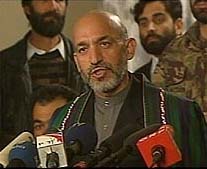
The Taliban may have been removed for power for almost a decade now, but you wouldn't know it from Afghanistan's government website. The harrassed photo of President Karzai with a faceless man in military fatigues standing behind him is not exactly inspiring. The site appears to not have been updated since 2004 with the exception of the 'Afghanistan News' portal, which has the appearance of an entirely different website. (It isn't.) Lastly, what is particularly eyebrow-raising about this site appears to be only available in English. No Dari, Pashtun or Tajik. Remind me again whose government this is. 

3. Tonga

You would think a languid island paradise like Tonga would be able to come up with something better than this nightmare of clashing fonts and colours, cataract-inducing banner displays and dizzying array of indecipherable menus. Definitely the work of a committee, possibly involving the entire population of Tonga. There is some decent photography and design bits here, but the ensemble is so chaotic and so jarring that you can barely tell. With different fonts and an overhauled colour scheme this might actually be a decent website - it's hard to tell - but the designers' total fixation on the national red-and-white colour scheme coupled with the clashing features makes it a total eyesore.

4. Russia

Not the worst offender of all, but a country with this much wealth and clout ought to do better. A bland, dull affair that looks like a relic of the Soviet era (with a particularly nefarious looking Vladimir Putin peering over the banner with a Montgomery Burns-type expression on his face), this site looks like the website equivalent of a regional Russian airline. And yes, it crashes with the same regularity. Add to this the fact that the landing page is basically Putin's filofax and you have a less than inspiring online presence for the government of the Russian Federation.


Really??? Is this the best the terrestrial stand-in for Middle Earth can do? Not an image in sight on the landing page. Nothing whatsoever to rest your eyes on. Just rows and rows of text and links. Extremely disappointing. Mind you, their official tourism website (http://www.newzealand.com/) is much better, but there's no excuse for a web portal this unattractive from a well-to-do beauty queen of a country like this.


And five of the best:

1. Brazil

Ahhhh.....Brasil! The country's official government website is truly a work of arts, a website whose underlying message is "We're still the sexy country we've always been but now we're also getting our sh*t together - developing the economy, reducing poverty and protecting the environment!" Beautiful colours, embedded videos, photo albums and a rotational banner trumpetting the best of the country's scientists, artists, athletes and other beautiful people. A cyber-stroll down Copacabana Beach.

2. Taiwan

It's hardly surprising that a high-tech nation with a perpetual sense of national identity crisis like this one would want to put its best cyber-foot out first. And they succeed with flying colours. With the visual richness of a National Geographic feature and immaculate design, the site makes the island quasi-nation look like the most alluring place on earth. Note the inclusion of images of Aboriginal Taiwanese on the landing page - a feature very much in keeping with recent Taiwanese government attempts to address this community's longstanding marginalization.

3. Costa Rica

Another Latin American standout, this 'presidential' portal of the government of Costa Rica is a delightfully interactive social media-oriented site that seamlessly blends serious policy papers with Flickr components and embedded videos of Costa Rican school children and town hall meetings discussing rainforest preservation and ecotourism. The only detraction to this site is that it appears to only be available in Spanish, but the design is so intuitive that it is navigable even with the most basic udnerstanding of the language. Current President Laura Chinchilla is said to be a social media maven - and it shows.

4. Poland

While much of the former Eastern Bloc remains mired in drab Soviet-style design, Poland's official web portal is an absolute masterpiece. The Polish Ministry of Foreign Affairs website, entitled 'Do You Know Polska?' (http://www.doyouknowpolska.com/), was voted Website of the Year in the 2011 Webstar Festival, and indeed the rest of the government's web network is similarly inspired. From tributes to Polish films to slideshows on traditional glass baubles, every page is a visual feast, and the fact that it's available in nine languages (including Arabic and Mandarin) is quite impressive.

5. Botswana

Zimbabwe and Botswana may be geographic neighbours, but when it comes to web design the two countries couldn't be further apart. While not at all flashy, the Government of Botswana's official web portal is aesthetically pleasing, immaculately organized and easy to navigate. There's no social media optimization here, but when it comes to what a website is above all supposed to do - deliver information as directly and clearly as possible - this site could scarcely be better. And the country's official tourism site (http://www.botswanatourism.co.bw/) is beautiful!