Showing posts with label Religion. Show all posts

Thursday, 1 August 2013

6 PR Copywriting Lessons From Religious Pamphlets

Source: www.jesusisyhwh.blogspot.com
I have a confession to make: I quite enjoy receiving leaflets from religious organizations. As a child growing up in an essentially secular family, I devoured faith-based pamphlets anytime they were dropped off at our house by the Watchtower Society or on the rare occasion I went to church, not really believing in it but bewitched by the clarity and audacity of the claims made therein. My fascination with sectarian propaganda turned into a master's thesis on religious racketeering in 1930s Japan, and my time as a researcher in Japan included zealous collecting of handouts from every two-bit religious sect I could find.

Today as a PR professional, my fascination with religious pamphlets still abides, and while I no longer physically collect them, I always read them from beginning to end when they arrive in the mailbox. Furthermore, in my new professional capacity I have a new-found respect for the people who write these things. Love them or hate them, we could all learn a thing or two about content creation and key messages from the Watchtower people and other religious pamphleteers, and they serve as a great model for students of public relations.

Religion is without a doubt humankind's first attempt at public relations, and all of history's prophetic figures have been PR people of one sort or another. What were Moses' tablets but a Bronze-Age PowerPoint presentation of ten key messages? The Prophet Muhammad, prior to his revelations, was well known for his negotiation and peace-making skills between warring tribes, leading one Muslim PR blogger to describe him as the best PR man who ever lived. And Jesus of Nazareth, if you look past the conjuring tricks and questionable claims, was no less than the greatest ever spokesman for not being a dick.

I don't intend on getting into a Christopher Hitchens-type debate over whether religion is a force of good or evil in the world. Compelling arguments could (and regularly are) made for both, and in any case I don't know how useful a debate this is anyway. But what I think can't be argued is that the communications model that the forces of organized religion have developed and fine-tuned over the course of 5,000 years is nothing short of brilliant, and that anybody planning on a career in communications would be well recommended to take a serious look at the world's religious sects, and specifically their messaging.

And as for those Jehovah's Witnesses pamphlets that occasionally appear at your door, at times presented to you in person, don't turn them down and don't put them straight into the recycling bin. Read them. In addition to being remarkably well written much of the time, they embody many important lessons for today's PR professional. Here are a few takeaways from Watchtower Society collateral.

1. State their mission clearly right off the bat.

As I type I'm staring at a JW brochure that was dropped off at our house the other day. The opening salvo: "Would you like to know the truth?" OK, we're talking about deep, universal truths, and even if the truth they propose turns out to be outlandish and doesn't ring true, it's still an appealing sales pitch. I mean, who doesn't want to know the truth? Granted, we all blanket ourselves in convenient self-deceptive untruths now and then, but at our more calm and meditative moments, we all want to know the truth. And with this as a lead, you're immediately drawn in with the anticipation of some sort of 'eureka' moment.

2. Use clear, simple language.

It goes without saying that religious copywriters write with one purpose in mind: to be understood by as wide a range of people as possible. Mind you, religious leaders can be terribly ambiguous and confusing much of the time, but on a basic level religious propagandists want to convince you that their worldview is the best one out there and you should join them. The pamphlet in front of me moves on to a series of bullets which succinctly capture the big questions that every human being at one point or another has contemplated.

  • Does God really care about us?
  • Will war and suffering ever end?
  • What happens to us when we die?
  • Is there any hope for the dead?
  • How can I pray and be heard by God?
  • How can I find happiness in life?

Writing doesn't get much more crystal-clear than this. It's virtually perfect, and any corporate copywriter producing materials for their employer would be well off taking a page out of the Jehovah's Witnesses' book of message crafting.

3. Know your audience.

When I pick up a religious pamphlet, it's generally not because I'm looking for deep truths about life, the universe and everything. (I'm much more likely to pick up Douglas Adams for this.) However, it's probably safe to say that people like me aren't the intended reader of religious leaflets. The successful public relations campaign attempts to sway the targeted public in one direction or another by appealing to that group's specific needs and circumstances, like promising "more flights to more places" or to "support the growth of open shop construction." Or the promise of eternal life in the presence of a loving God for those who embrace His message.

4. It's all about those key messages.

In a recent TED lecture entitled 'Atheism 2.0' philosopher Alain de Botton noted that while in the secular world we tend to assume people need to hear something once and we've got it, whereas religious leaders recognize that message need to be repeated in order for them to sink in. In public relations we call the former school of thought the "Magic Bullet Theory" and everybody with any experience in the industry knows this never works. The central tenant of the Christian faith, namely that all can be saved through Jesus Christ, punctuates every single piece of literature the church has ever produced, from the New Testament onward, hence why the message has stuck.

5. Provide ample supportive 'evidence'.

I know I'm going to get crucified (put intended) by the Nu-Atheists out there for characterizing scriptural passages as 'evidence', but if your conversational context is indeed religion, then your storehouse of facts and figures is by definition going to be religious scripture. And religious pamphlets always provide an ample volume of this, with every supposition backed up by Biblical, Qur'anic or Sutric passages. Ask a rhetorical question, give the reader and answer and back it up with a quote from the Holy Book. It's the same formula one uses in a business case, except substitute the New Testament for the latest data from Abacus or Statistics Canada.

6. Always end with a call to action... and contact info.

In the end, the purpose of public relations is to persuade people to do something, be that buy a product, use a service, vote for a candidate or protest against something. And for this reason, a PR campaign is useless unless it contains a clearly stated call to action, a "Here's what you can do" section. And on this too, PR pros would be well-advised to look at religious leaflets. Ultimately the purpose of these brochures is to put butts in pews or on prayer mats by giving people a compelling reason to attend church/mosque/whatever, and then giving them info on how to find one near them.

These days, religious pamphlets invariably direct the reader to online resources. The Watchtower Society has - it should be noted - a truly amazing website, one of the best I've ever seen. It's available in virtually every language in existence, from Acholi to Zapoteca, and will locate the nearest JW congregation to you wherever you live (unless you live somewhere like North Korea where their church is banned). I still have no intention of joining their ranks, but I have to hand it to the JW's for being extremely skilled PR people. Their teachings on the cosmos and on blood transfusions may be wacky as hell, but they could all teach us a thing or two about effective communication.

Wednesday, 12 December 2012

The Easy Solution To The 'Holiday' Controversy - Celebrate Everything

twas_the_night

As a professional communicator for a major Canadian airport, the 'holiday' season is the busiest time of year, with the holiday passenger rush soon to be upon us and retail activity ramping up. And with Edmonton International Airport's humungous Expansion 2012 project now completed and a whole new raft of new shopping and dining amenities to show off to the world, this year's Christmas season has been the airport's busiest ever. A fun little tempest for a newly minted airport communicator to be thrown into, that's for sure!

At Edmonton International Airport there has to my knowledge been no discussion of muting explicit mentions of 'Christmas'. While the messaging around the season has consisted of a mix of 'Happy Holidays' and 'Merry Christmas', the overall thrust of the seasonal marketing has been steeped in Yuletide, with Christmas Trees, Santa's Storyland, children's choirs and so on. Moreover, this has taken place without any hint of controversy - at least that I'm aware of - in spite of the fact that EIA possesses a thoroughly multicultural workforce representing all the major world religions. I've asked, and nobody I've spoken to has been even remotely bothered.

Nevertheless, tune into any major conservative-leaning media outlet (especially in the United States but to a lesser degree here) and you would think that Christmas were a small beleaguered Middle Eastern country being bombarded by missiles from irate hostile states. Christmas, we're told, is under attack by the 'liberal' politically correct secular mainstream. I'm beginning to think this is much more an American problem, as I have never in my life heard of a 'Holiday Tree' or any other such nonsense talked about in any seriousness in any of the Canadian workplaces I've been in. Nor have I ever encountered a member of an ethnic or religious minority who has expressed dismay over overt references to Christmas. It's part of life here, and everyone seems to be okay with that.

http://media.salon.com/2011/12/war-on-christmas.png
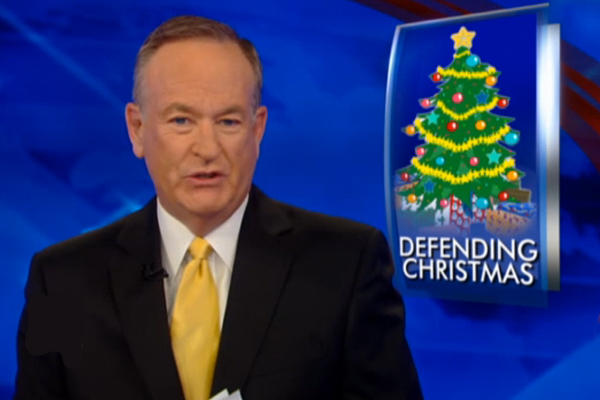
Bill O'Reilly, war correspondent from the Yuletide battlefront
In the US, however, the Christmas controversy appears to be very real indeed, and no 'holiday season' is complete without the latest outrage over nativity scenes and temper tantrums by angry atheists, accompanied by the predictable righteous indignation on the part of Fox News and like-minded outlets. As CNN reporter Timothy Stanley points out, the so-called 'war on Christmas' is bigger than simply partisan tomfoolery and conservative paranoia, and in fact reflects genuine tensions within American politics and society. He cites the example of Santa Monica, California's decision this year to terminate its traditional nativity scenes after this hallowed tradition turned into theatre of the absurd last year when a group of atheists won 11 out of 14 spaces, which they used to erect enormous critiques of Christianity. Clearly it's not just the conservatives making a spectacle of themselves.

While it may well be reflective of a cultural divide, I would argue that it's also a product of ignorance - on both sides. While the movement towards politically correct speech has played an important role in purging our public discourse of offensive and hurtful words, the secularist inclination towards denuding our culture of ritual and tradition is not only sad but also profoundly lazy. It is also entirely counterproductive from the standpoint of fostering genuine multiculturalism. Roughly one third of humanity professes Christianity as their religion. This includes a massive majority of Latin Americans and Sub-Saharan Africans as well as significant populations in South and Southeast Asia (particularly in the overwhelmingly Catholic Philippines). How exactly does purging Christmas from our culture help these large and growing minorities in North American society feel at home?

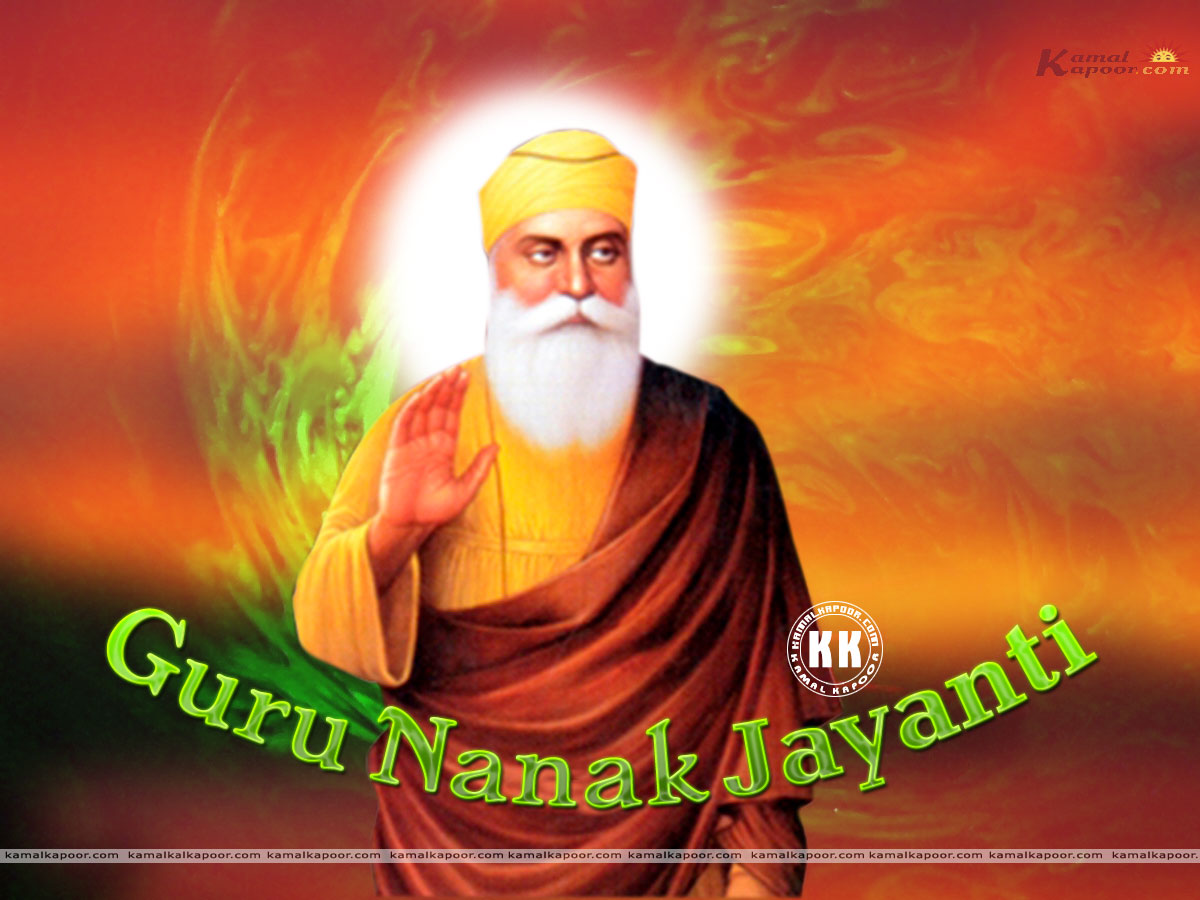
As for the non-Christian minorities in our midst, purging our cultural mainstream of its traditional practices accomplishes nothing - while further highlighting our ignorance. The sad fact of the matter is that most white North Americans, for all of their supposed openness to diversity, are deeply ignorant of other cultures' rituals and celebrations. How many of us, for example, can name a single major Sikh holiday? What does the Muslim celebration of Eid al-Adha mark? Even many Christian holidays are off most Anglo-Saxon North Americans' radar, such as All Saints' Day. For most of us November 1 is Halloween Hangover Recovery Day, but for Mexicans and Filipinos, Día de Todos los Santos or Araw ng mga Santo is a very big deal.

http://www.kamalkapoor.com/images/wallpapers/1200x900/Guru%20Nanak%20Jayanti3588.jpg
Real multiculturalism means having this guy's birthday in your calendar.
My solution to the whole issue? Don't subtract, just add. Celebrate everything. And as a professional communicator, especially for any organization with a multicultural and multi-confessional workforce, it's an easy but hugely impactful step to take. Make a list of all important holidays for staff and stakeholders, create Outlook alerts for each, and have specially crafted social media posts on standby for those occasions. It's really not hard, and most often it's relatively easy to find an appropriate salutation in the relevant languages, even through a casual Google search. Granted it's a good idea to run it past a person from the ethnic or religious minority in question before you use it lest you end up with something embarrassingly inappropriate on your Facebook page, but as internal communications strategies go, this is a pretty easy one.

They needn't be complicated, nor do you need to make a big show of giving Ramadan and Diwali equal stature with Christmas in the building's seasonal decor. In my experience a simple message wishing people well for Diwali, Ramadan, Yom Kippur, Guru Nanak Jayanti or Tết Nguyên Đán goes a long way in generating goodwill and fostering engagement. And a basic level, it's also much more to celebrate more things than less. And as for Christmas, the way December 25 is celebrated in North American culture, at least by the vast majority of companies and public organizations, barely has any religion in it anyway. From a societal harmony standpoint, that's probably for the best. Keep the message about Santa, the Grinch and Tiny Tim and feathers will probably remain unruffled.

In the meantime EIA's corporate communications team will continue to give out cookies and other seasonal gifts to lucky passengers and wish them Merry Christmas and Happy Holidays. So far not a single airline passenger has complained about this.

Thursday, 21 June 2012

Yahwehpedia - The Bible as Precursor to Wikipedia

One of my most memorable undergrad courses was an introductory Old Testament/Hebrew Bible course I took as an extra credit course. The instructor - who introduced himself as a 'recovered fundamentalist' - introduced the topic thusly. He entered the classroom with a tape recorder, placed it on his desk and asked for a show of hands from the students assembled.

"How many of you believe in the Bible literally?" he asked. There was a peppering of hands. He then responded, "Okay, here it is." He pressed play and on came Genesis, Chapter One, Verse One - in the original Ancient Hebrew. He let it play for approximately 30 seconds and then paused the tape. "How many of you understood that?" he inquired. Not surprisingly nobody raised their hand. "Well, in that case I guess you can't take the Bible literally. And that's why you're in my class."

For those reading this post who do not adhere to literalist views of the Old and New Testament (and I'm guessing that's most of you), your response to this anecdote is probably one of "Duh, no kidding!" But it does beg the question of how one is supposed to grapple with what is indisputably the single most influential written work in the history of humanity. If not as literal truth, which it could not possibly be, how is one to approach the Bible? As a heavily sensationalized and politically biased history tome? As a work of historical fiction centred on a capricious, volatile-tempered supreme being? A chaotic amalgam of texts assembled by committee? None of these approaches seems quite satisfying.

A better analogy for the Bible, in my opinion, is the modern-day Wiki. In my previous post on children's fable, I refer to Jonathan Salem Baskin's wonderful book Histories of Social Media: 2,000 Years of Do's and Don'ts, in which he likens Wikis to premodern oral narratives, created by way of layer upon layer of input on the part of the storyteller. I would further argue that the Wiki concept applies perfectly to the creation of the Bible. This is particularly true of the oldest books in the Old Testament, which comprise the Jewish Torah, which are comprised of four distinct narrative layers - the Yahwist, the Elohist, the Deutoronomist and the Priestly strands - which together span three centuries of user contribution.

The Bible is of course not alone in this format. Most if not all major religious doctrines were created in this manner, through a layering of narratives over the course of centuries. But the Bible, as a result of its size and magnitude, must be considered the mother of all premodern Wikis - and therefore the Wikipedia of the ancient world. Consider that the Old and New Testament were created by multiple authors for the purpose of creating a one-stop compendium of everything these authors knew and believed to be true at that time. It covers a vast swath of topic areas, from law and order to farming techniques to poetry to pure adventure stories, centred of course on the primary focal point of the civilization in question - belief in Yahweh.

The New Testament retains the same format, focusing instead on one very big topic - the persona of Jesus of Nazareth. By this point, you basically only have four contributors left, although each may have been a committee of writers and editors under a single name. But still, there seems to be no shortage of competing views? Was Jesus actually the Son of God, as the Gospel of John clearly states, or is the Son of Man - whatever that means - a more accurate characterization, as the Gospel of Mark states. Was he the stern lawgiver as portrayed by Matthew or the gentle healer of Luke - or a combination of both? Unfortunately we have no real way of knowing because, unlike with Wikipedia, Christ's disciples weren't required to provide footnotes.

And then it all came to an end. Fearing that disputes within the new Christian faith would undermine the stability of the Roman Empire, the Christianized Roman Emperor Constantine summoned the Council of Nicea in 325 C.E. for the purpose of nailing down the Biblical canon once and for all. A decision was finally reached in 397 in Carthage, a full sixty years after Constantine's death. This brought to an end the open-source nature of the Bible in what would be the modern-day equivalent of shutting down Wikipedia from any further constribution and treating it as an online authority not to be tampered with.

Of course not everybody went along with this, and four centuries later Yahwehpedia 2.0 (also known as the Qur'an) was launched. While the Qur'an itself was not open-source, the innumerable Hadiths and other religious texts followed that very same Wiki-type format for several centuries thereafter and in a different form persists to this day in the form of the various fatwas issued by Islamic scholars throughout the Muslim world.

What does this mean? The Wikipedia model is, to my mind, a useful lens for examining the world's most important and controversial tome. Written over the course of centuries by a plethora of authors, each with their own particular slant but all striving for what they perceived to be accurate, the Bible is exactly what an ancient Middle Eastern version of Wikipedia would have looked like, grounded in contemporary understandings of how the world worked. Yes, much of it seems ridiculous to 21st century secular readers, but then again much of our present-day Wikipedia content will invariably look hopelessly ill-informed two millenia from now - should our species still be around at that time.

As for whether any or all of it was 'divinely inspired', I'll leave that hornet's nest alone. I will say, though, that if I were of a more religious disposition, I would be the first to champion the creation of a true open-source, democratic holy book for the 21st century built along the lines of Wikipedia. In sum, a true non-prophet organization.