Saturday, 21 April 2012

PR History - Reputation Management in Stalin's USSR

Nikolai Bukharin (second from left), with Rykov, Kalinin, Uglanov, Stalin and Tomsky
at Lenin's tomb, 1927. (Source: Marxists.org)


It is often said that public relations, as a profession, is a product of the free, democratic and economically advanced world. Certainly the profession as we know it has flourished in countries with a vibrant civil society, societies where the court of public opinion (as measured by votes and retail dollars) matters a great deal. The birth of modern-day PR is generally considered to be early 20th century America, as heralded by two fascinating, if controversial, characters - Ivy Ledbetter Lee and and the notorious 'father of spin' (and nephew to Sigmund Freud) Edward Bernays.

While PR as a formalized profession is relatively new, the tools of the trade have been around a whole lot longer. A convincing argument could be made for the father of public relations (at least in the western world) as being Protagoras, the pre-Socratic sophist who took then (and even now) controversial view "man is the measure of all things". Taking the view that human beings, as opposed to deities, hold the key to human destiny, Protagoras took political rhetoric and key message crafting to a whole new level in his 40 years as Classical Athens' most in-demand political pundit.

Even among absolutist regimes (at least among the more successful ones), there has been some degree of recognition of the importance of reputation management. In ancient China, the philosophical concept of the 'Mandate of Heaven' (天命,Tiānmìng) differed somewhat from the medieval European notion of the divine right of kings in the sense that it was predicated on the conduct of the ruler in question. As such, the concept of the Mandate of Heaven allowed for the removal of incompetent or despotic rulers, and in doing so placed placed the onus on imperial dynasties to demonstrate to their subjects that they still retained the mandate, be it through acts of charity, public works or extracting tributes from neighbouring states. Not exactly the two-way symmetrical model of modern PR, but a start nonetheless.

But what about in truly despotic regimes with effectively zero room for public participation in governance and reign by terror? It's probably safe to say that there is no PR industry to speak of in modern-day North Korea or Turkmenistan or in fast reforming but still destitute Myanmar. Nevertheless, even in most extreme cases of state-sponsored repressiveness reputation management still counts for something. And in such cases, saving your reputation while minimizing harm to yourself - and those close to you - becomes an art form unto itself.

Reputation Management for Beyond the Grave: Bukharin's Final Plea

Soviet Defence Minister Kliment
Voroshilov, as caricatured by
Bukharin (Source: Wikipedia)
Of the cast of characters that made up the Bolshevik Revolution, Nikolai Bukharin stands as one of the most fascinating. A founding Bolshevik party member at age 20, Bukharin was one of the party's most erudite and pragmatic strategists. He frequently clashed with Lenin on theoretical issues pertaining to Marxism and was also largely responsible for elevating a thuggish but politically useful young Georgian Bolshevik by the name of Joseph Stalin and helping him craft several key articles that solidified his presence within the party. He was also a gifted cartoonist and known for being something of a smart-ass within the Bolshevik entourage.

Following the death of Lenin in 1924, Bukharin became a full-fledged member of the Politburo and entrenched himself within the right wing of the party in his advocacy of an extension of the New Economic Policy (which allowed for limited capitalist enterprise within the communist system) and against leading successor candidate Leon Trotsky, who favoured abolishing the system. For those of you who don't remember from Grade 12 history, the NEP was initially implemented to shore up an agricultural economy that had been devastated by the Russian Civil War and alleviate famine and was, in a sense, a precursor to the reforms ushered in by Deng Xiaoping in China some 60 years later.

Those familiar with the early history of the USSR know that Stalin initially favoured extending the NEP together with Bukharin (a purely strategic move aimed at positioning himself as Trotsky's main leadership rival) but then dumped the policy following his formal accension as party leader in 1929, whereupon he launched the first of his Five-Year Plans. In the first few years of Stalin's reign of terror, which saw the purging of Trotsky and all those party members aligned with him, Bukharin appeared to be safe, and in 1934 was appointed to the prestigious position of editor of the newspaper Izvestia, in which capacity he wrote empassioned editorials on the perils of Europe's emergent fascism.

Nevertheless, by 1936 Stalin was determined to purge the party of any potential rivals, which included all of the surviving veterans of the October Revolution. And as a visible symbol of the revolution, Bukharin was an obvious target. Bukharin was arrested in February 1937 on the dubious charge of being member of the 'Bloc of Rightists and Trotskyites'. In his trial, which ran from March 2 to 13, 1938, Bukharin and others were accused of trying to assassinate Lenin and Stalin from 1918, murder Maxim Gorky by poison, partition the Soviet Union and hand out its territories to Germany, Japan and Great Britain.

Consider for a moment what must have been going through Nikolai Bukharin's head as he sat down in his cell to pen his final plea. He knew full well that his verdict was a foregone conclusion, that the penalty would be death by firing squad, and that there was absolutely nothing he could do to save his own life. He also knew that unless he offered up a satisfactorily contrite confession that he would either be subjected to more torture or, more likely under the circumstances, that the NKVD (the precurser to the KGB) would go after his wife and young child. On the other hand, he knew that the international press would be covering the trial and that his last words would long outlive him. In sum, he knew this was his last chance to give anyone a piece of his mind, salvage his reputation and maybe even stick it to his former ally.

What did he do? The greatest communicator among Lenin's top brass delivered what has to be one of the most perplexing 'confessions' in courtroom history. He opened his final plea as follows:


In Court I admitted and still admit my guilt in respect to the crimes which I committed and of which I was accused by Citizen the State Prosecutor at the end of the Court investigation and on the basis of the materials of the investigation in the possession of the Procurator. I declared also in Court, and I stress and repeat it now, that I regard myself politically responsible for the sum total of the crimes committed by the 'bloc of Rights and Trotskyites'. I have merited the most severe punishment, and I agree with Citizen the Procurator, who several times repeated that I stand on the threshold of my hour of death.

This over-the-top genuflection and self-flagellation carries on for some time....until he gets into the specifics of the accusations against him. At this point, Bukharin offers a bit of perspective.

Nevertheless, I consider that I have the right to refute certain charges which were brought: a) in the printed Indictment, b) during the Court investigation, and c) in the speech for the prosecution made by Citizen the Procurator of the U.S.S.R. I consider it necessary to mention that during my interrogation by Citizen the State Prosecutor, the latter declared in a very categorical form that I, as one of the accused, must not admit more than I had admitted and that I must not invent facts that have never happened, and he demanded that this statement of his should be placed on the records.

But then he carries on with the "I've been a bad, bad boy" banter.

I once more repeat that I admit that I am guilty of treason to the socialist fatherland, the most heinous of possible crimes, of the organization of kulak uprisings, of preparations for terrorist acts and of belonging to an underground, anti-Soviet organization. I further admit that I am guilty of organizing a conspiracy for a 'palace coup'.

The entire translated transcript of Bukharin's final plea is available here. It's a fascinating read, if for no other reason because in the midst of all of Bukharin's "I'm a bad, bad communist and a traitor and a terrible person who should be spanked shot" he actually doesn't admit to anything specific. All of his 'confessions' are entirely vague in nature, whereas when it comes to people he supposedly had conversations with or meetings he is accused of having attended, he qualifies his 'confession', stating that while he is indeed guilty of being a traitor, that particular aspect of his being a traitor wasn't true. And so on and so forth.

Lessons for PR Practitioners?

It is often said that a good reputation is great insurance for a company or organization. The same is true for individuals, especially individuals in prominent positions. Moreover, Bukharin's last plea - and the man's subsequent posthumous stature - shows just how much the right messaging and the right type of communication can accomplish in sealing that reputation, even for beyond the grave.

Bukharin's confession did exactly what it was intended to do. In the actual trial, his deftly inserted barbs against the regime went pretty much unnoticed within the morass of self-flagellation and vague admissions of guilt, and in March 1938 he was quietly executed. While his widow Anna Larina (a great communicator in her own right) was briefly dispatched to a labour camp, she was shown relative lenience and her and their son Yuri survived the great terror - and lived to see Bukharin's full rehabillitation by Gorbachev in 1988. She died in 1996, vindicated after a lifetime of fighting to clear her late husband's name.

Were he alive today, Nikolai Bukharin would no doubt have made a formidable PR professional. After all, he accomplished a communications feat that most would have thought unimaginable in one of history's most repressive regimes. By sticking to his messages - both bogus and legit ones - he managed to save his family and make a mockery of the system that did him in. Sad he wasn't around to see the results.

Monday, 16 April 2012

Jock Talk: Don Carman's List of 37 Annoying Baseball Clichés

PHILADELPHIA PHILLIES - Don Carman #396 DONRUSS 1989 MLB Baseball Trading Card
"I'd rather be lucky than good." - D.C.
Professional athletes aren't generally known for being the world's most skilled communicators. Sports interviews tend to be mind-numbing affairs along the lines "Well, uh, we've got a lot of momentum going, and we just need to keep it together as a team and go out there and score lots of goals and hopefully come out on top." There you go: 34 words (35 if you count 'uh') which said absolutely nothing. Why sportscasters even bother interviewing a lot of these guys is frankly beyond me.

It would, however, be unfair to blame the intelligence of these highly paid athletes for the vapidity of most sports interviews. A great many athletes, particularly in the football, baseball and basketball worlds, are college-educated and far from unintelligent. Even professional hockey players are today a far cry from the toothless Big Bobby Clobber stereotype of yesteryear. However, the absurd amounts of money invested in today's professional sports leagues make sports communications a very sensitive, risk-averse business. In this world nobody wants to rattle the hornet's nests. Even the mildest of taunts (as was evident in the recent LA Kings Twitter controversy) has the capacity to cause fallout.

The upshot of this hyper-sensitive communications landscape is that most athletes don't dare say anything even remotely controversial, hence the proliferation of tired sports clichés. (It doesn't help either that sports journalists tend to ask the same tired old questions.) But this hasn't prevented some of sports world's smarter and more sarcastic standouts from making jock talk work for them - and even making a mockery of such banter. And nobody did this better than former Major League pitcher Don Carman - a man who, in my opinion, deserves to be inducted into baseball's Hall of Fame for excellence in sports smart-assery.

Don Carman was a lefty who enjoyed a moderately successful career between 1983 and 1992, mostly with the Philadelphia Phillies as well as briefly with the Cincinnati Reds and the Texas Rangers. He had occasional flashes of brilliance on the mound, with four complete-game shutouts and once taking a perfect game into the ninth inning before giving up a single hit. He was also a famously smart guy who ended up becoming a sports psychologist in his post-baseball life, and was renowned for his dry sense of humour. His wit became legendary following a particularly bad outing in 1990 when he posted this list of quintessential baseball clichés on his locker in anticipation of a round of vapid sporting press interrogation.

"You saw the game. Take what you need.”

  1. I’m just glad to be here. I just want to help the club any way I can.
  2. Baseball’s a funny game.
  3. I’d rather be lucky than good.
  4. We’re going to take the season one game at a time.
  5. You’re only as good as your last game (last at-bat).
  6. This game has really changed.
  7. If we stay healthy we should be right there.
  8. It takes 24 (25) players.
  9. We need two more players to take us over the top: Babe Ruth and Lou Gehrig.
  10. We have a different hero every day.
  11. We’ll get ‘em tomorrow.
  12. This team seems ready to gel.
  13. With a couple breaks, we win that game.
  14. That All-Star voting is a joke.
  15. The catcher and I were on the same wavelength.
  16. I just went right at ‘em.
  17. I did my best, and that’s all I can do.
  18. You just can’t pitch behind.
  19. That’s the name of the game.
  20. We’ve got to have fun.
  21. I didn’t have my good stuff, but I battled ‘em.
  22. Give the guy some credit; he hit a good pitch.
  23. Hey, we were due to catch a break or two.
  24. Yes.
  25. No.
  26. That’s why they pay him _____ million dollars.
  27. Even I could have hit that pitch.
  28. I know you are, but what am I?
  29. I was getting my off-speed stuff over so they couldn’t sit on the fastball.
  30. I had my at ‘em ball going today.
  31. I had some great plays made behind me tonight.
  32. I couldn’t have done it without my teammates.
  33. You saw it … write it.
  34. I just wanted to go as hard as I could as long as I could.
  35. I’m seeing the ball real good.
  36. I hit that ball good.
  37. I don’t get paid to hit.
We miss you, Don!

Saturday, 14 April 2012

Apology Accepted, Captain Needa

When public opinion strikes back
In one of the most darkly humourous scenes in the film The Empire Strikes Back, the ill-fated Captain Needa, the commander of the imperial warship in hot pursuit of Han Solo and his Millennium Falcon, loses track of his quarry (which is in fact clinging to the side of Needa's own ship) and is forced to apologize to Darth Vader for his screw-up. Moments later, the captain is lying dead from telekinetic asphyxiation, whereupon the Sith Lord dryly quips, "Apology accepted, Captain Needa."

While this scene tells us a lot about the HR dynamics of the Galactic Empire, what you don't see in this scene is what Captain Needa's apology actually entailed. While Vader's response clearly indicates that he wasn't impressed by his subordinate's attempt at contrition, it would be interesting to know what the captain actually said. Did he explain the situation in adequate detail? Did he try to deflect blame on his own subordinates or his equipment, or say something like "Boba Fett made me do it"? Furthermore, we know nothing about Captain Needa's prior reputation, whether this was his first such screw-up or if this was a pattern for this guy. Given Vader's reaction, it's likely that the latter was the case, but with the empire dead and buried and Darth Vader long gone, we'll never know for sure.

The art of the well-crafted apology is an essential component of public relations, and of crisis communications in particular. It is often said that that in the corporate world, PR professional and lawyers exist on opposite ends of the communications spectrum. At the heart of bipolarity is the contrast between the court of law, wherein the accused person is considered innocent until proven guilty, and the court of public opinion, wherein an accused person (or organization) is generally guilty until proven innocent - and even then not necessarily safe from reputational damage.

At the onset of a crisis, the first order of business for a crisis communicator is to tell the truth and tell it fast, even when it hurts - in fact especially when it hurts. The crisis communicator is accutely aware that not being forthcoming with information is not only delaying the inevitable, but also results in a loss of control. This is especially true when the crisis at hand really is your fault. If you don't tell your own bad news, you can be sure somebody else will - and it's pretty much guaranteed it'll sound a hell of a lot worse coming out of their mouths than your own.

Once you've done your homework and come to the conclusion that you or your organization are clearly to blame for a crisis, then what?  While the obvious answer is apologize, it is worth bearing in mind that not all apologies are created equal. A well thought out apology is far more likely to be well received than a poorly executed one. When formulating an official apology, it's worth considering that virtually all news media inquiries boil down to a set of nine basic questions that everybody wants to know about a crisis situation. As such, to make your apology count, it needs to answer the following:

  • What happened?
  • How/why did it happen?
  • Were there any deaths or injuries?
  • What is the extent of the damage?
  • Who or what is responsible?
  • Were there any warning signs?
  • Has it happened before?
  • When will the crisis be over?
  • What is being done to fix the situation and ensure that it doesn't happen again?

A textbook apology is the one made by Maple Leaf Foods CEO Michael McCain following the listeriosis outbreak in 2008, an outbreak linked to Maple Leaf's meat products. It was a serious crisis, which resulted in 57 confirmed cases of listeriosis and 22 deaths in various Canadian provinces. In sum, it was a crisis that could easily have resulted in a total business disaster for one of Canada's largest food processing companies. However, the CEO's now-legendary apology, which in addition to being broadcast on TV also made the rounds on YouTube, did much to save the company. See for yourself.


Consider again that list of questions. McCain touches on every single one of them, either directly or indirectly. What happened? A listeriosis outbreak. How did it happen? A failure at a Maple Leaf plant. Were there deaths or injuries? Yes. Who is responsible? The company. Were there any warning signs? No, or at least that's the implication. Has it happened before? Again, it's implied that it hasn't given his remark that this is "the toughest situation we've faced in 100 years." When will it be over? The products have already been pulled off the shelves nationwide and the plant where it came from has been shut down.

Add to that the fact that the CEO personally apologized, immediately offered his condolences to the victims, kept the emphasis of the message on the affected party (the customers). It also helped matters that he was dressed appropriately for it - smartly but casually and without a tie - and that he frankly comes off as a sincere and thoughtful guy. Moreover, Maple Leaf followed this message with a similar TV spot a month or so later, in which the CEO appeared again, this time highlighting the changes that had been made by the company in their pledge to improve safety and regain consumer trust.

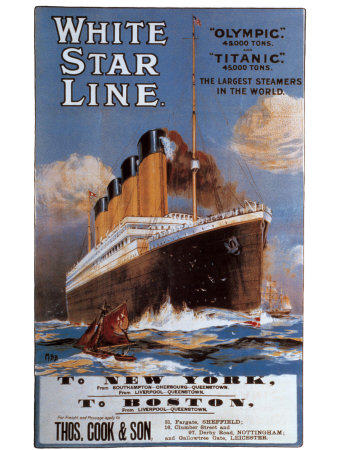
The result? Maple Leaf Foods recovered quite quickly from the disaster and remains one of Canada's leading food processing companies four years later. Unfortunately, not all companies spokespersons have shown such empathy and contriteness in their responses to crises for which blame clearly rested. Consider the statement drafted by J. Bruce Ismay, Managing Director of White Star Line, following the 1912 sinking of the company's flagship vessel, the HMS Titanic. Suffice it to say, the company's 'apology' left a lot to be desired.

A PR disaster of 'titanic' proportions
In the presence and under the shadow of a catastrophe so overwhelming, my feelings are too deep for expression in words. I can only say that the White Star Line, its offices and employees will do everything humanly possible to alleviate the suffering and sorrow of the survivors and of the relatives and friends of those who perished.

The Titanic was the last word in shipbuilding. Every regulation prescribed by the British Board of Trade had been strictly complied with, the masters, officers and crew were the most experienced and skillful in the British service.

I am informed that a committee of the United States had been appointed to investigate the circumstances of the accident. I heartily welcome the most complete and exhaustice inquiry and any aid that I or my associates or our builders or navigators can render is at the service of the public and the governments of both the United States and Great Britain. Under the circumstances, I must respectfully defer making any further statement at this time.

Reading this statement, it is worth bearing in mind that 1) it had already been established that the ship's striking of an iceberg in the North Atlantic was the result of errors made by crew employed by White Star; and 2) it was also clear that the ship had been woefully underequipped with lifeboats, resulting in the loss of life of roughly three quarters of the passengers and crew. Moreover, this non-apology answers virtually none of the above-listed questions. Even Ismay's attempt at empathy with the victims manages to come off as self-centred.

The result? Although Ismay was cleared of any wrongdoing by both British and US authorities, he was pilloried in the press and to this day is remembered as a villain (right up to his portrayal as a callous reptile by actor Jonathan Hyde in the 1997 James Cameron blockbuster). White Star Line became synonymous with bad management and never recovered. The company struggled on for two decades before it was swallowed up by its chief rival, Cunard Line. Apology accepted, Captain Needa.

The moral? If you're going to apologize - especially for something truly egregious, make it a good apology. Good apologies do actually save companies and organizations. Bad apologies send them to the ocean floor. Of course, even the best, most heartfelt apologies are no guarantee of foregiveness or that you won't be strangled to death by a telekinetic force choke. It's generally best not to screw up in the first place.

Friday, 13 April 2012

Facebook: Helping People Feel Inadequate Since 2004

I like having Facebook in my life - for the most part. It's a useful tool for a lot of things and I would say that, on the whole, my life is better with it than without it. Nevertheless, there are days where I'm forced to wonder if Zuckerberg and Co. are deliberately trying to undermine humanity's sense of self-worth.
In particular, I wonder sometimes if Facebook app designers specifically set out to find new and ingenious ways to make us feel inadequate.

Consider, if you will, the 'My Friends Map' app. For those of you who don't know it, this is an app that allows you to produce a map of where all your Facebook friends live, which you're expected to then post to your wall. For the sake of reference, here's what mine came out looking like:


This is meant as an example, not to make me look cool. Trust me, the 'international-ness' of my friends is the least interesting thing about me.

As a geography geek, I can appreciate this sort of thing, and it's certainly an interesting visualization. Nevertheless, it bothers me that the intended purpose of this app is to publish such maps on your wall to show off to your friends not only how many friends you have but also how international your group of friends. It's easy to say "Who frickin' cares if Jessica has three friends in Istanbul and five dots in what looks like Belarus?", but in the end we all care how we look to our friends - and apps like this are pretty much guaranteed to make us feel less cool, less sophisticated, less worldly and, well, simply less than.

(Note: this tool could have potential unintended consequences. For example, if the lion's share of your overseas friends are located in Yemen, Sudan and northern Pakistan, you probably want to avoid advertising that fact on your wall - unless you want to have CIA operatives with binoculars crouching behind your rose bushes.)

But My Friends Map isn't the worst of the self-esteem-undermining tools that the Book of Face has to offer. Consider this lovely app. This takes international one-upmanship a step further, whereby you get to advertise to everyone in your Facebook network how awesome you are based on the number of countries you've visited.

Oh yeah? Betcha you haven't been to Antarctica and Andorra!

There you have it. Now not only can you take that whirlwind European tour you went on when you were 21 and make yourself out to be a globetrotter comparable to Kofi Annan or Hillary Clinton, but you can also turn that four-hour layover you once had in Addis Ababa into a bona-fide travel experience that you can brag about to your friends. Does anyone really care? Of course they do - it's on Facebook!

What is this app trying to say? From the standpoint of this app, the six years I spent living and working in Japan, learning the language and absorbing the culture is no different from the seven hours I once spent in the terminal building in Kuwait City. It's a country. It goes on the list. This is to say nothing of the fact that some of the most worldly and globally aware people I've met are not particularly well travelled and that a great many self-proclaimed globetrotters that I've met are, frankly, closed-minded and blinkered by their own cultural conditioning. It's all about the points you rack up in life. That is all.

Numerous studies have pointed to Facebook and other social networks having a negative effect on people's self-esteem. Furthermore, the great paradox of Facebook is that the more friends you have, the greater the negative impact on your sense of self worth you're likely to suffer. A recent article in Men's Health on the subject notes that the more 'friends' a person has, the more likely they are to be spending their day enviously reading about someone else’s paradise vacation, new girlfriend or job promotion.

Given the fact that FB already puts us in a precarious position vis-à-vis our own self-esteem, is it really necessary for app designers to keep coming up with new ways for us to feel inferior? I would like to issue a challenge to whoever the people are who design these things to actually create something that will foster people's sense of self-worth rather than perpetuating this endless cycle of social media one-upmanship.

In the meantime, I'm keeping my Friends Map hidden. Whoops, I just posted it. Guess I'm just as guilty as the rest of y'all.

Thursday, 12 April 2012

The Tweet Heard Round the Hockey World


It doesn't take much to start a fight in the game of hockey. In this electrifying, fast-paced sport, sticks fly, gloves come off and blows are exchanged with startling regularity and among the game's 'enforcers' penalty minutes earned are as much of a status symbol as goals scored.

However, in the opening game of the Western Conference quarter-final series between the Los Angeles Kings and the Vancouver Canucks, the on-ice spectacle paled in comparison to the social media theatrics that went on immediately after the game. Following the Kings' 4-2 defeat of the heavily favoured Canucks on Wednesday, the following tweet appeared in the LA team's Twitter feed, prompting an angry backlash from Vancouver fans - and a flurry of media coverage and SM activity by hockey fans everywhere:

"To everybody in Canada outside of BC, you're welcome."

For any Canadian who hasn't been living in a cave for the past year, this message requires no explanation. For the benefit of international readers, however, here's a bit of background. The last game of the 2011 Stanley Cup Finals, in which Vancouver suffered a heartbreaking loss to the Boston Bruins, was followed by the worst riot in the city's history. In spite of the best-laid plans by Vancouver police (who were prepared for unrest following similar riot in 1994), the June 15 riot quickly consumed the city's downtown core. In the end, some 140 people were injured (including nine police officers), at least four people were stabbed and 117 arrests were made. Property damage was estimated at around CA$4.2 million.

The riot - and the subsequent international media coverage of it - was a colossal black eye for a city that had previously been basking in the afterglow of the 2010 Winter Olympics. It also proved to be a reputational liability for Canada as a whole, a country that generally enjoys a worldwide reputation for being a peaceful society with a high level of public safety. Not surprisingly, this tweet provoked an immediate angry backlash from Vancouver fans, as well as a flurry of discussion in print media and SM networks over whether the LA Kings' social media team had crossed the line.

In the end, the winning team's head office issued an apology for the inflammatory tweet. "We encourage our digital team to be creative, interactive and to apply a sense of humour whenever possible. To anyone who found it offensive we sincerely apologize,” said Kings' vice-president Mike Altieri in an email earlier today. However, some hockey fans defended the tweet, saying that this social media jab simply added to the tension of the series and was part and parcel of the team rivalry culture that has long defined the NHL. Others contended that the fans in Vancouver frankly deserved it.

One wonders why a sport that celebrates on-ice pugilism and venerates the game's greatest goons would be so sensitive to social media barbs like this one. Moreover, shouldn't the Kings be saying "you're welcome" to Vancouverites, who would be the ones to bear the biggest brunt should history repeat itself in its streets this year?

Monday, 9 April 2012

No More Mixed Tapes For My Girl...

By Pierre Bokor Jr.


In this latest guest post on Brush Talk, it is my great honour to welcome an old friend of mine, Pierre Bokor Jr. Pierre and I were in a great many university drama productions together, including a particularly epic rendition of Eugène Ionesco's La Cantatrice Chauve (The Bald Soprano). He currently languishes in the 'hardship' post of Barcelona where he works as a teacher and translator and has recently launched a superb online project/blog/workshop aimed at helping parents with their kids' education called Inside A Teacher's Mind. You can also see it on the Book of Face here.


Once upon a more miserable time, it was raining and night had come. In a field, awaiting battle, a man sat on a wooden makeshift bench, with a quill in hand. He had a candle to see the paper on which his words and his tears fell and melded into one. The letter finished, he poured a spot of hot wax on the folds, took off his ring, kissed it, and with it, moulded his blazon onto the seal.

He handed it to a messenger and gave the rest of his money to him. The messenger rode through the downpour, forcing his horse through the mud. He kept riding until the sweat of the horse and the rain were one. Together, they rode on through the day, as the sun came up and burned them and scorched their path. The horse’s nostrils bled from the effort, yet they continued on, till they reached the house.

The messenger delivered the letter to the lady’s maid. The maid ran into the field behind the house, to give the letter to the lady. The lady took it, put it to her chest as she let out a sigh that proclaimed the overwhelming joy of receiving a word from her love. She sat down in her chaise and looked up at the sky, wondering if her lover is looking up at that same sky, before opening the letter...

In a much wealthier and more prosperous time, the guy grabbed his iphone out of his pocket. As he stood in line at Starbucks, he tried to decide if he should iMessage, Skype, Viber, Whatsapp, Tango, GoogleChat, SMS, or go formal by emailing his babe. “Whatevs! It’s the thought that counts, right?”

He composes and writes “Yo Bae, luvs ya. Havn a good day? U no I missU2. ♥.” He sends and sees a second check mark appear on his screen, as a sense of chivalry and accomplishment passes over him.

The other day, I spoke to a friend about a picture that I saw on Facebook that said “I wonder how long it will be before people don’t remember why we ‘unroll’ the window.” One conversation led to another and I soon told her that I think it’s tragic that mixed tapes no longer exist. I remember making mixed tapes for the girls I was courting. The entire procedure, the thought, the love, the energy, the feelings, everything that went into it. I don’t even know what the equivalent is today. Perhaps, sending my playlist to someone? I really don’t know.

What I do know is that our methods of communicating are getting more and more advanced, faster and more efficient, all the whilst our abilities, our messages, and our depth of commitment to what we communicate is getting smaller, more feeble and ephemeral.

I don’t know if the solution is to be a ‘throwback’ like me, going around writing with a fountain pen and insisting that people learn the difference between ‘your’ and ‘you’re’. I do know that change is inevitable, technology will push us to communicate ‘bigger, faster, stronger’, but I believe that we can have the fortitude to fight the ease of laziness and to put a little more thought into every message.

Thursday, 5 April 2012

Twung Fu: Why Microblogs Work Better in Asian Languages


I confess to being a relative latecomer to the world of Twitter, having joined it less than a year ago. Nevertheless, I am now a full-fledged convert, or Twaddict, as such people are known in the Twitter universe. As a fan of punchy, concise text, I find the 140-character format absolutely brilliant. Not only is it a great way to disseminate and find information, by the microblogging format saves you the trouble of sifting through irrelevant and excessively wordy text on your way to the information you're looking for.

My embrace of the Twittersphere has also more or less coincided with my return to studying Japanese. My search for good, east-to-digest and relevant reading material in Japanese not surprisingly led me to Twitter, and I currently follow a number of Japanese tweeters of various descriptions. Whereas Facebook was slow to gain currency in Japan, Twitter took the country by storm very early on. Today roughly 30 million Japanese are on Twitter, putting the country in third place in the Twittersphere behind the United States and Brazil.

The prevalence of Twitter use in Japan was graphically illustrated in the aftermath of the 3.11 earthquake and tsunami. As Twitter was one of the few reliable communication tools still working in the affected areas, it proved to be instrumental in disaster monitoring and delivering rescue operations, as well as in the government's own communications efforts. Then Cabinet Secretary and government spokesman Yukio Edano became something of a Twitter celebrity in the weeks following the disaster through his ceaseless stream of tweets and the now-legendary hashtag #edano_nero (Edano, go to sleep).

After a while of following and reading Japanese tweets, I began to realize why this tool had become so popular in Japan - and how Japanese and other Asian languages have a systematic advantage over the likes of English in this digital domain. It's simple arithmetic. Spell out 'Shanghai' or 'Guangzhou' like this and that's eight or nine characters respectively, as opposed to two Chinese characters (上海 and 广州). In Japanese, the word niwatori (chicken) is eight characters in Roman script, as opposed to a single kanji (鶏). Even Korean, which uses a phonetic rather than a pictographic writing system, enjoys the same compactness. Type 'Pyongyang' in English and you've used nine characters. In hangul it takes two (평양).

The upshot of this, of course, is that in Asian languages, tweets often amount ot full-fledged blog posts. Consider the following tweet, which was translated by an anonymous tweeter in the aftermath of the Fukushima meltdown. Compare and contrast the original Japanese with the English translation:

基準の16倍って凄そうにいってるわりには、まだPET/CTスキャン1回分程度じゃ…と原発入口正面に立ちっぱなしは止めましょうって程度じゃん??近づくのを止めればいいだけでは?

And in English....

The media is making a fuss about the radiation level, loudly saying it's 16 times the standard, but you would be exposed to the same level from a single PET/CT scan at a hospital. Isn't it enough to tell us not to stand for long periods in front of nuclear power plants? Just staying away from them is enough to be safe, isn't it?
The original tweet runs 87 characters, including punctuation, well below the 140 character cutoff. That same tweet translated into English, including spaces (of which Japanese conveniently has none), consumes 330 characters, more than twice the limit for a tweet. In terms of Twitter-ficiency, there's no contest between the two languages - it's Japanese hands down. And in a country long synonymous with pithy, compact wordcraft as best exemplified by haiku poetry, it's not hard to see why Twitter is the social media vehicle of choice.

And it's not just Japan that's embracing microblogging with aplomb in East Asia. Since the launch of the Korean language version of Twitter in early 2010, Twitter use in South Korea has grown to 3.34 million users, with the country tweeting at twice the global rate. While South Korea's embrace of Twitter has not been without controversy, as seen in criminal cases involving allegedly pro-DPRK tweets, officials in Asia's fourth largest economy appear to be adopting a more relaxed attitude to the tool, as the recent overturning of a ban on Twitter use during national elections demonstrates.

Meanwhile, Twitter launched a Chinese language interface in September 2011. Although the service has been blocked in the People's Republic of China since 2009, Twitter is hoping to increase usership in Taiwan and Hong Kong (which have no such restrictions) as well as among overseas Chinese in Southest Asia and in the western world. Meanwhile, China's Twitter ban has resulted in a proliferation of homegrown microblogging services. Of these, by far the most popular is Sina Weibo (新浪微博, literally 'Sina Microblog'), a service whose prevalence in both Hong Kong and Taiwan presents a formidable challenge to Twitter.

The People's Republic vs. the Weibo Dynasty

In spite of the popularity of Sina Weibo and other microblogs, life for China's tweeters remains uneasy. China recently launched its toughest censorship move since the rise of social media, with Sina Corp and fellow microblogging platform Tencent temporarily barring users from commenting on other posts. The move came after an announcement that six people had been detained and 16 websites closed for spreading rumours about a military coup in Beijing, rumours allegedly circulated via China's domestic microblogs.

Web censorship in the PRC is, of course, nothing new. The Chinese Communist Party has long censored Internet content that it deems to be too politically sensitive, namely anything to do with the Tiananmen Massacre, Tibetan or Uygur independence movements, Taiwanese independence and political protests in general. Beijing officials also apply pressure on SM providers like Sina Weibo to do their own censorship. While the Chinese government doesn't make its blocked words public, Sina does - and currently has a list of 378 banned words. Here are a few examples:

  • 丹增嘉措 (Tenzig Gyatso, the 7th and current Dalai Lama)
  • 藏独 (Tibetan separatist)
  • 东突 (East Turkestan, the ethnic Uygur name for their homeland in Xinjiang province)
  • 一党专制 (One-party dictatorship)
  • 台湾独立 (Taiwan independence)
  • 天安门 (Tiananmen Square)
  • 法輪 (Falun (Gong))
  • 快闪党 (Flash mob)
  • 大麻 (Marijuana)
  • 维基揭密 (Wikileaks)
  • GFW (Great Firewall)
  • 做爱 (Sex)

In spite of the Chinese government's best efforts, however, censoring the microblogosphere is easier said that done - even in China. Moreover, here too Asian languages like Chinese present a distinct advantage (or disadvantage, depending on which side you're on) when it comes to communicating via Twitter and other Twitter-like tools - and skirting the censors while doing it. Chinese phonetics are such that many characters may share the same sound with a different tone (and a different character), making it relatively easy to disguise politically sensitive language. The censors eventually catch on, but the nature of the language makes it easier for dissidents to stay ahead of the authorities.

Finally, enforcement of the 'Great Firewall of China' has never been entirely consistent. Cracks in the wall  occasionally appear (followed by heightened suppression), during which time dissidents and ordinary Chinese netizens have been able to gain access to Twitter and other platforms for brief periods, and armed with a language crammed with pithy meaning-laden phrases that can fit within the character count of LMFAO, a flurry of well-crafted tweets can pack quite a punch before the fissure in the wall is sealed shut once again. Others, like famous dissident artist Ai Weiwei (@aiww), have parlayed their overseas renown into steady Twitter presences housed outside the country.

Currently, the crackdown against Sina Weibo and other microblogging platforms is at a fever pitch. All evidence points to a Chinese government in a state of panic over its perceived loss of control over its citizens' online communication.

Twitter and Kanji - A Return to Beautiful Language?

While Chinese government officials may be bemoaning the proliferation of microblogging in their country, in Japan, one group of people that is surely applauding it is language arts instructors. Since the advent of text messaging a decade ago, older Japanese, and language arts teachers in particular, have complained about its perceived detrimental effect on the younger generation's use of kanji characters. The youth, they argue, have become increasingly sloppy in their writing, opting for trendy hiragana or katakana (phonetic) spellings of words rather than proper characters.

Twitter stands to reverse this trend - at least potentially. Consider a word like samazama ('various'), which in modern Japanese is typically written phonetically as さまざま. By writing it in the traditional kanji as 様々, you save yourself two characters. I have yet to speak to any Japanese language instructors about Twitter as an incentive for using well-crafted language, but I would be curious to know if Twitter's new-found ubiquity in Japan has had, from their perspective, a beneficial effect on the Japanese language. I suspect it's good news for the language of haiku.

Incidentally, a good number of contemporary haiku poets are now on Twitter. Among them is renowned haijin and Tenrikyo priest Kuniharu Shimizu, who composes poetry (and tweets) in both Japanese and English. You can follow him at @seehaikuhere.