Sunday, 4 August 2013

BREAK SOMETHING EDMONTON (A Punk DIY Approach to Civic Discourse)

 
Happy Heritage Weekend, everyone! For those of you not from here, the Heritage Day long weekend is the apogee of Edmonton's glorious but cruelly short summer, that time of the year when Edmontonians are at their happiest and energetic, each one trying to outdo one another in having a "Really Good Time." As such, I couldn't think of a better time to launch my own grassroots campaign aimed at kicking civic discourse in this city up a notch. Here we go.

For those new to this blog, I've been an Edmonton resident since November of 2008 and I've somewhat grudgingly come to love the place. I say 'grudgingly' not because of any ill feeling towards the city, but because I really never had any intention of ending up here. Having grown up Victoria, B.C. I always identified myself as a west coast kid, and certainly never imagined I'd end up building a life here in central Alberta. And yet here I am, far away from granola-munchin', dope-smokin', pipeline-protestin' Van Isle with a career stretched ahead of me here. I'm an Edmontonian now. Curse you Edmonton!

But that said, I really do like my adopted hometown. As Canada's fastest-growing urban centre at the heart of Canada's biggest growth engine, there's an energy here that you don't see in many places. There's a palpable sense of optimism that big things are possible. The city's political culture is complex, defying normal left/right characterizations, and above all else pragmatic. And the arts scene here trumps experienced anywhere else in the country. The grassroots support for the arts is phenomenal, and unlike in larger centres like New York, Montreal and Vancouver, artists here actually seem to help each other rather than stick to their own factions. And as for the climate, well, it's a great place to be a creative person. As a modern dance colleague of mine aptly put it, "In winter we huddle indoors and create projects, and in summer we bring them out for the festivals." Makes perfect sense to me.

Todd Babiak, Edmonton man-crush #1
As a professional communicator in the city, I've found the PR/marketing/communications community here in Edmonton to be genuinely warm and supportive, and I've succeeded in making many friends within it, within a very short period. And this same sort of collaborative energy is very apparent within this professional community as well. The "Make Something Edmonton" campaign is a clear example of this. The campaign, for those of you unfamiliar with it, was launched by author, bad-boy journalist and quintessential Edmontonian Todd Babiak who sought to supplant the city's parade of underwhelming slogans like "City of Champions" and "Gateway to the North" with something more genuine. He coined the phrase "Make Something Edmonton," citing the city's enduring creativity and can-do spirit.

"People who are from here love the city but have a hard time explaining why," said Babiak at the IABC Edmonton "Dare To Lead" conference in May of this year. "And everyone else thinks it's a shithole." He then went on to explain that this is a city populated largely by people like me, people who never really intended to be here but ended up carving out a beguiling life in this deceptively pretty and enchanting city on the U-bend of the North Saskatchewan River. I consider that I've accomplished more professionally in my four and a half years here than I have in all of my professional career, and I very much credit the energy, openness and connectivity of the people in the Edmonton communications community who have supported me. I still dearly miss the coast, but I'm not about to move back there anytime soon.

But that doesn't mean I'm going to give Edmonton a free pass. After all, civil society, with which Edmonton is replete, is all for naught if you don't try to tackle a community's warts. And in homage to Todd Babiak and the Make Something Edmonton campaign, I would like to take this opportunity to launch my own corollary campaign entitled "Break Something Edmonton."

Now before you start sending me hate mail for inciting vandalism and wanton property damage, when I say "Break Something Edmonton" I of course don't mean that literally. The name is merely meant as a cheeky slogan that hearkens to the old punk DIY spirit as a means of breaking through a community's Gordian knots with radical, outside-the-box solutions. Everybody living anywhere has their own big pet peeves about their community, things they would desperately like to change. We all have our own personal axes to grind, be it institutionalized sexism, racism, poverty, anti-intellectualism, rampant bureaucracy, cultural elitism, potholes, dangerous driving etc. #BreakSomethingYEG is intended as a forum for such discussion as well as a space for formulating creative, DIY solutions that can help alleviate these problems.

There are only two rules to the #BreakSomethingYEG campaign. Firstly, you have to bring forward an existing problem and explain how it hinders civic live here in this city. And secondly, you have to propose a solution achievable both through lobbying and through individual actions. This is about grassroots solutions to complicated problems, so please don't bitch for its own sake without offering solutions. We're all good at complaining, but usually not as good at offering alternatives.

The river valley is very pretty. If you can get to it, that is.
With that, I'll start with my own personal Edmonton peeve, which is public transportation. To preface, this is not intended as a criticism of the Edmonton Transit System (ETS); in fact I've found the buses here to be remarkably punctual and the drivers extremely courteous. But as a system, ETS is woefully inadequate for a city of over 1 million people spread over a geographical area larger than Toronto. Unless you work in Edmonton's downtown core and live along either the very limited north-south axis of the LRT system or in the vicinity of West Edmonton Mall, with access to express buses, public transit is a time-consuming and frustrating way to get to and from work, especially in roughly 13-month period of the year when you're huddled in an unheated bus shelter in approximately 16 layers of clothing, shuffling from one foot to the other while your breath freezes and shatters at your feet.

But in actual fact my bone to pick with transit in Edmonton isn't just about inadequate service, it's about the overall public attitude towards it. In Edmonton people talk about improving public transit, but when it comes down to it it's not a priority for most, or at least among the economically privileged adults whose voices tend to dominate civic conversations. I'll never forget attending a talk by Dr. Ted Morton, who at the time was running for leadership of the Alberta Progressive Conservatives, and hearing him talk about public transit in Edmonton. "We need to make sure we provide good transit service for those students and young people who don't have cars." To me this entirely missed the point. A "good" transit system is one that everybody uses, from 21-year-old interns to 60-year-old company directors. What about trying to actually get people out of their cars?

I'll readily admit I'm part of the problem. In my four-plus years as a working professional in Edmonton, I've mostly used public transit to commute to and from work. When I worked at Native Counselling Services on 124 Street it was pretty straightforward, but significantly less so at Merit Contractors Association out in the city's northern industrial asteroid belt. And now working at Edmonton International Airport, getting to and from work has become such a production, involving a combination of transit buses and the Edmonton Skyshuttle service (free for staff, which is nice) that I finally broke down and opted for a second car for our two-person household. So now I'm among the ranks of Edmonton's single-occupancy car army, after swearing I never would be, clogging the roads and burning fossil fuel, because the alternative is spending an hour and a half commuting to work each day in a crowded shuttle.

Every problem has a solution. (source: pcl.com)
To give you an idea of the problem, imagine you live in Edmonton's relatively low-income northeast and are contemplating taking a job in one of the new developments in the west of the city, say in the new Acheson Industrial Area in Parkland County, outside Edmonton's western boundary. By car the trip would take you about 20 minutes. By bus? Try over two hours, if you can even are get a bus connection. Not only is this a colossal obstacle for low-income people who can't afford a vehicle, but it's also a hindrance to business development on the city's energetic periphery. How much more commercial activity would you have if, for example, people had easy access to these areas from the city, and felt inclined to go for drinks in local pubs after work knowing they could stumble onto a comfortable bus thereafter? The area around Southgate Mall has boomed since the lengthening of the LRT line and the creation of a Japanese-style station/mall agglomeration there. You could have a dozen such developments around the city.

So why does the city of Edmonton, a city with one of the highest GDPs on the planet, continue to put up with a public transit system that many developing world cities would be embarrassed by? My feeling has always been that most Edmontonians don't think about it because they've never experienced what it's like to have a really good system. Many people in this city have visited London, Paris or Tokyo as tourists, but very few have actually lived and worked jobs in these places. I lived and worked in Tokyo for four and a half years, first as student and then  as a communications professional, and in all that time the thought of buying a car never even occurred to me. Mind you, Tokyo's daunting traffic and exorbitant parking fees were a factor, but the quality and quantity of subways and overground commuter trains made it totally unnecessary. And in Tokyo, everybody rides the train.

Public transit is often characterized as a liberal, left-wing issue, but pro-business fiscal conservatives also need to be concerned about Edmonton's sub-par transit system and low 11-percent rider rate (compared to 20 percent in Ottawa and 16 percent in Calgary). Already there are signs that the city's lack of user-friendly public transit is having a negative economic impact. In a recent conversation with Tom Koep, Manager of Economic Development and Tourism for Parkland County, he cited the Edmonton region's sub-par transit system as a major threat to economic growth in the city's currently thriving periphery by making it difficult for such areas to attract low-income workers.

“We need a regional transit plan,” says Koep. “So far we’ve seen a scotch tape approach, with St. Albert, Strathcona County, Leduc and Spruce Grove all developing their own systems. There are real transportation issues that need to be addressed. They're talking about building an overpass here which would cost three quarters of a billion dollars. That would pay for a hell of a lot of buses.”

TransMilenio BRT system in Bogota, Colombia (source: railforthevalley.com)
To its credit, Edmonton's municipal government under the leadership of outgoing mayor Stephen Mandel has truly walked the talk when it comes to public transit, with LRT expansion not just on the books but under construction. But there's much more that could be done in the city to encourage transit use, and at significantly lower cost than building expensive rapid transit lines. What about a Bus Rapid Transit system like that originally developed in the Brazilian city of Curitiba and now ubiquitous across South America and many other developing world cities like Istanbul, Jakarta and Ahmedabad, India? Articulated buses running on dedicated lanes along major arteries like St. Albert Trail, the Anthony Henday Highway, Stony Plain Road and so on would provide the same level of efficient service as a train system at a fraction of the cost. Ottawa has this system, with Saskatoon now set to introduce BRTs.

An even more straightforward answer would be a regional carpooling program. Why do we not have dedicated carpool lanes on the QEII and St. Albert Trail, like they do in cities like Vancouver? Carpool lanes coupled with a social media-driven carpooling program could, if done properly, significantly reduce the number of single-occupancy cars on the road. How about a social networking site dedicated to carpooling, giving Edmontonians the opportunity to both save a bit of money and do some good for the environment but also make new acquaintances and forge new business partnerships (and have good conversations) to and from work? It would strike me as fairly easy: you sign up, plug in your commute route, and meet up with people who live in your area and commute to roughly the same area you do. Besides, us grown ups are often complaining about how hard it is to meet new people. Why not do this?

Various carpooling apps, primarily aimed at parents driving kids to school, already exist, and most of which are free.The Carpool School Edition allows you to find out who lives near you and invite them to form a carpool group. You can add members of your group manually or import them from your contacts. The app allows you to manually create a schedule or generate one automatically based on your preferences. If you have a note or update for the group, you can add it in and everyone will be notified. How handy would it be to have an Edmonton-centred carpooling app designed around the needs of working professionals, drawing on your Facebook or LinkedIn contacts? Drop off your kids at school or your dog at the local Stay-n-Play, pick up a colleague at a designated point along the way, and voilà: one less car on the road.

How hard would this be? (source: beyond.ca)
So this is my #BreakSomethingYEG challenge: get out of your damn car, or find a carpooling partner. I realize this is easier said than done, but it takes a decisive shift to change deep-seeded attitudes. I will start with a call-out to anybody living in Edmonton's west end who commutes to the Nisku area near the airport. Want a carpooling buddy? I'm your man. And to anybody reading this post, I challenge you to do three things. Firstly, try taking the bus to work at least once a week. Secondly, try finding a carpooling counterpart, thereby making your trip to work (at least occasionally) a two-occupancy car deal. And thirdly, with a municipal election in Edmonton coming up shortly, press Councillors Leibovici, Iveson and Diotte on these issues - and remind them that this is not simply an issue for the city's students and "young people who don't have cars."

We may live in an oil and gas-rich region, but we all know we can't live like this forever, both for the sake of the planet and our regional economy. Let's put that #MakeSomethingYEG can-do ethos to the test and really start prioritizing public transportation, and reducing our enslavement to the single-occupancy car. We have tremendous civic energy here, as well as access to our leaders, especially now in the era of social media. If anybody can do it, it's us.

So what's your beef about this city, and your proposed remedy? Every problem has a solution, so let's hear yours!

Thursday, 1 August 2013

6 PR Copywriting Lessons From Religious Pamphlets

Source: www.jesusisyhwh.blogspot.com
I have a confession to make: I quite enjoy receiving leaflets from religious organizations. As a child growing up in an essentially secular family, I devoured faith-based pamphlets anytime they were dropped off at our house by the Watchtower Society or on the rare occasion I went to church, not really believing in it but bewitched by the clarity and audacity of the claims made therein. My fascination with sectarian propaganda turned into a master's thesis on religious racketeering in 1930s Japan, and my time as a researcher in Japan included zealous collecting of handouts from every two-bit religious sect I could find.

Today as a PR professional, my fascination with religious pamphlets still abides, and while I no longer physically collect them, I always read them from beginning to end when they arrive in the mailbox. Furthermore, in my new professional capacity I have a new-found respect for the people who write these things. Love them or hate them, we could all learn a thing or two about content creation and key messages from the Watchtower people and other religious pamphleteers, and they serve as a great model for students of public relations.

Religion is without a doubt humankind's first attempt at public relations, and all of history's prophetic figures have been PR people of one sort or another. What were Moses' tablets but a Bronze-Age PowerPoint presentation of ten key messages? The Prophet Muhammad, prior to his revelations, was well known for his negotiation and peace-making skills between warring tribes, leading one Muslim PR blogger to describe him as the best PR man who ever lived. And Jesus of Nazareth, if you look past the conjuring tricks and questionable claims, was no less than the greatest ever spokesman for not being a dick.

I don't intend on getting into a Christopher Hitchens-type debate over whether religion is a force of good or evil in the world. Compelling arguments could (and regularly are) made for both, and in any case I don't know how useful a debate this is anyway. But what I think can't be argued is that the communications model that the forces of organized religion have developed and fine-tuned over the course of 5,000 years is nothing short of brilliant, and that anybody planning on a career in communications would be well recommended to take a serious look at the world's religious sects, and specifically their messaging.

And as for those Jehovah's Witnesses pamphlets that occasionally appear at your door, at times presented to you in person, don't turn them down and don't put them straight into the recycling bin. Read them. In addition to being remarkably well written much of the time, they embody many important lessons for today's PR professional. Here are a few takeaways from Watchtower Society collateral.

1. State their mission clearly right off the bat.

As I type I'm staring at a JW brochure that was dropped off at our house the other day. The opening salvo: "Would you like to know the truth?" OK, we're talking about deep, universal truths, and even if the truth they propose turns out to be outlandish and doesn't ring true, it's still an appealing sales pitch. I mean, who doesn't want to know the truth? Granted, we all blanket ourselves in convenient self-deceptive untruths now and then, but at our more calm and meditative moments, we all want to know the truth. And with this as a lead, you're immediately drawn in with the anticipation of some sort of 'eureka' moment.

2. Use clear, simple language.

It goes without saying that religious copywriters write with one purpose in mind: to be understood by as wide a range of people as possible. Mind you, religious leaders can be terribly ambiguous and confusing much of the time, but on a basic level religious propagandists want to convince you that their worldview is the best one out there and you should join them. The pamphlet in front of me moves on to a series of bullets which succinctly capture the big questions that every human being at one point or another has contemplated.

  • Does God really care about us?
  • Will war and suffering ever end?
  • What happens to us when we die?
  • Is there any hope for the dead?
  • How can I pray and be heard by God?
  • How can I find happiness in life?

Writing doesn't get much more crystal-clear than this. It's virtually perfect, and any corporate copywriter producing materials for their employer would be well off taking a page out of the Jehovah's Witnesses' book of message crafting.

3. Know your audience.

When I pick up a religious pamphlet, it's generally not because I'm looking for deep truths about life, the universe and everything. (I'm much more likely to pick up Douglas Adams for this.) However, it's probably safe to say that people like me aren't the intended reader of religious leaflets. The successful public relations campaign attempts to sway the targeted public in one direction or another by appealing to that group's specific needs and circumstances, like promising "more flights to more places" or to "support the growth of open shop construction." Or the promise of eternal life in the presence of a loving God for those who embrace His message.

4. It's all about those key messages.

In a recent TED lecture entitled 'Atheism 2.0' philosopher Alain de Botton noted that while in the secular world we tend to assume people need to hear something once and we've got it, whereas religious leaders recognize that message need to be repeated in order for them to sink in. In public relations we call the former school of thought the "Magic Bullet Theory" and everybody with any experience in the industry knows this never works. The central tenant of the Christian faith, namely that all can be saved through Jesus Christ, punctuates every single piece of literature the church has ever produced, from the New Testament onward, hence why the message has stuck.

5. Provide ample supportive 'evidence'.

I know I'm going to get crucified (put intended) by the Nu-Atheists out there for characterizing scriptural passages as 'evidence', but if your conversational context is indeed religion, then your storehouse of facts and figures is by definition going to be religious scripture. And religious pamphlets always provide an ample volume of this, with every supposition backed up by Biblical, Qur'anic or Sutric passages. Ask a rhetorical question, give the reader and answer and back it up with a quote from the Holy Book. It's the same formula one uses in a business case, except substitute the New Testament for the latest data from Abacus or Statistics Canada.

6. Always end with a call to action... and contact info.

In the end, the purpose of public relations is to persuade people to do something, be that buy a product, use a service, vote for a candidate or protest against something. And for this reason, a PR campaign is useless unless it contains a clearly stated call to action, a "Here's what you can do" section. And on this too, PR pros would be well-advised to look at religious leaflets. Ultimately the purpose of these brochures is to put butts in pews or on prayer mats by giving people a compelling reason to attend church/mosque/whatever, and then giving them info on how to find one near them.

These days, religious pamphlets invariably direct the reader to online resources. The Watchtower Society has - it should be noted - a truly amazing website, one of the best I've ever seen. It's available in virtually every language in existence, from Acholi to Zapoteca, and will locate the nearest JW congregation to you wherever you live (unless you live somewhere like North Korea where their church is banned). I still have no intention of joining their ranks, but I have to hand it to the JW's for being extremely skilled PR people. Their teachings on the cosmos and on blood transfusions may be wacky as hell, but they could all teach us a thing or two about effective communication.

Wednesday, 24 July 2013

In honour of Anthony Weiner, I'm changing my name to Osvaldo Furtive

Source: wonkette.com
Whoops, he did it again! In case you haven't already heard, former New York congressman Anthony Weiner's much vaunted political comeback attempt has taken a turn for the, well, not that unexpected. Yesterday word got out that the New York City mayoral candidate has once again been engaging in lewd behaviour on the Internet, including sexually explicit messages and X-rated photos sent to various women.
 
Among the more amusing allegations by the gossip magazine The Dirty (which broke the story) is that Weiner used a Yahoo account with the sexting pseudonym “Carlos Danger” to email photos of his penis. While Weiner has yet to confirm or deny this particular allegation, the ever-cheeky folks at Slate have wasted no time in creating a "Carlos Danger Name Generator" in honour of NYC's naughtiest politico.
 
Looking for an appropriately pervy name for illicit online conversations and perhaps a bit of digital exhibitionism? Look no further!
 
 
Try it out; it's lots of fun. And in the meantime, from this day forth I will only answer to the name 'Osvaldo Furtive' - both at work and at play.

Friday, 12 July 2013

Korea's Air Safety Saga Revisited

Source: airlinereporter.com
About a year ago I wrote a post about communication culture and air safety within the context of Korean Air's attempt to improve its formerly woeful safety record. I had more or less forgotten about the post until last weekend, when its hits shot through the roof following the crash of Asiana Airlines Flight 214 in San Francisco on Saturday. One reader responded with the following comment:
"Whew, this article helped calm my nerves immensely as my 14 year old gets ready to fly out on Korean Air after today's crash in San Francisco with Asiana. Thanks!"

As of today, the investigation into the crash of the Asiana 214 on landing at San Francisco International Airport, which killed two passengers and injured 182, is ongoing and the cause of the disaster has yet to be identified. What is known is that for whatever reason the Boeing 777's descent into SFO was too low and too slow and that the plane struck the sea wall at the end of the runway before losing the tail section of the plane and spinning out of control on the runway.

Thus far the most disturbing finding has been that of the two Chinese adolescents who died in the disaster, one was actually struck by an airport firetruck rushing to the scene, although it is not yet known if she was alive at the time. Other reporters have questioned why there was an apparent delay in the evacuation of the plane following the crash. The latest findings suggest there were no mechanical problems with the plane, putting the putting the focus of the safety probe squarely on the two pilots, of whom one was landing the 777 for the first time at SFO and the other was a relatively inexperienced training captain.

While it's still to early to say for sure, for the time being it appears likely that pilot error of one sort or another is the primary cause of the crash. Not surprisingly, the advent of the Asiana 214 disaster led some commentators familiar with South Korea's checkered air safety history to wonder aloud if this latest disaster represents a re-emergence of an old problem of fatal cockpit communication breakdowns rooted in an authoritarian aviation culture. As I outlined in my August 2012 post about Korean Air, it was the deadly crash of Korean Air Cargo Flight 8509 outside London that precipitated vast, sweeping changes to the airline's training practices.

Since the advent of Korean Air's human resource management reforms, South Korea's flagship airline has enjoyed a virtually spotless safety record - and a vastly improved reputation. Meanwhile, its main rival and the country's second-largest carrier Asiana (which also had its safety rating briefly downgraded by the FAA in 1999 together with KAL) has also enjoyed a growing reputation for both customer service and safety over the same period. Between 1999 and 2013, Asiana has experienced only two serious incidents - a near-miss over Los Angeles due to an ATC error and a crash of a cargo 747 off Jeju Island resultant from a cargo fire - neither of which were the result of pilot error.

While NTSB Chairman Deborah Hersman has stated that she intends to look into communication between the pilot and co-pilot during the flight, thus far there appears to be no evidence that the crash of Asiana 214 was the result of poor cockpit communication. A Washington Post article suggests the two men were indeed communicating effectively and had decided to abort the landing within seconds of the warning bells sounding. Meanwhile, the US media's quickness to question whether Korea's traditionally hierarchical culture was to blame for the crash drew ire from many Koreans. One unidentified airline pilot was quoted in South Korea's Chosun Ilbo daily as follows:

"It's true that captains acted in an authoritarian way in the cockpit in the past, but that's almost nonexistent now. It's unimaginable for a captain to ignore the first officer in an emergency."

Regardless of how the Asiana 214 inquiry turns out, it appears that South Korea's much-vaunted air safety culture reforms of the late-nineties have indeed proven to be the "real deal" and that bad communication was not the killer in the case of Flight 214 to San Francisco. And while it may well turn out that Captain Lee Kang-kook and First Officer Lee Jeong-min (who was flying the plane at the time) made mistakes that caused one of the worst passenger air disaster in recent memory, it would appear that there was nothing intrisically Korean (or Asian) about their errors.

Saturday, 6 July 2013

Social Media and Profanity - Does anyone give a f*ck anymore?

Warning: This post contains language that some readers may find offensive. Reader discretion is advised.

https://skitch-img.s3.amazonaws.com/20090329-eby5k3dpdb988egktrdpe57x3w.png
Source: www.tisdelstirades.blogspot.ca
I've been meaning to write a post about social media and profanity for quite some time? Why has it taken me this long? To be honest, it's taken me a while to figure out what my views on the topic actually are. Even as I type here I'm not quite sure, but hopefully by the end I will have it figured out.

When it comes to dropping f-bombs and uttering other expletives online, I'm of two very different minds. On the one hand I'm very much a product of my generation in my views on freedom of speech. As a nineties kid who came of age on a diet of expletive-laden grunge rock, punk poets like Henry Rollins and potty-mouthed shock-masters like Marilyn Manson, Trent Reznor and Ministry's Al Jourgensen, swearing is in my DNA and I still find myself swerving into sailor talk when I'm either angry or past the three-pint mark at the pub. I can't help it. Nor do I particularly want to. It's in my bones, and when interjected at the right time, a well-placed "fuck" or even a "What the fucking fuck?" does wonders for getting a point across.

On the other hand, I still contend that there's a place for f-bombs and a place for cleaner, classier language and I tend to think that the 21st century commons that is social media is the latter. But even as I type these words I can easily recount expletive-laden Facebook posts with my name next to them. That said, I've always been discriminating in my use of profanity online. I will occasionally drop a four-letter word on Facebook, but I have never once done so on Twitter, and suffice it to say never on LinkedIn. For me it's a matter of business versus private life, and as Twitter very much overlaps the two worlds, I err on the side of business.

But what about this blog? Those of you inclined to comb through my back posts for colourful language (i.e. those with a lot more time on their hands than I have) will find the odd one here and there, but they're certainly the exception rather than the rule. But I don't eschew this vocabulary completely, and unlike in the title of this post, I don't asterisk it. If you're going to use the word "fuck" in a post, there's no point in pretending you're not using it. Moreover, the word "shit" has become so mainstream anymore that using an asterisk in the place of the 'i' just looks silly. Most other profanity I could use in this blog is either directly pertinent to sex (which isn't really the focus of this blog), or misogynistic (which I hope never to be), or within the context of a quote, which should be self-evident - and therefore totally inocuous.

http://userserve-ak.last.fm/serve/_/10630465/Nine+Inch+Nails+105.jpg
Like an animal? Really, Trent? Ahhh... the nineties!
Then there's the issue of abbreviated profanity. While it's safe to say that most of us would refrain from responding to an amusing cat video posted on Facebook with "I laughed my fucking ass off watching that!" but wouldn't think twice about tapping out the abbreviation LMFAO, which means exactly the same thing. Likewise, most of us avoid telling people to "Shut the fuck up" in any sort of public domain, but still wield the STFU abbreviation with reckless abandon. And while I find myself employing an at-the-ready arsenal of WTFs and LMFAOs on Facebook, part of me can't help but feel that this drains the colour from our more colourful epithets. Would the likes of George Carlin or Margaret Cho stoop so low as to reduce their colourful language to cute little abbreviations? I cheapens it for the real artists, IMHO.

In a recent article in the Huffington Post, columnist Ann Brenoff laments the mainstreaming of the f-word. As she eloquently puts it, "Saying "fuck" used to be like eating caviar -- a rare experience indulged in so infrequently that the occasion itself became memorable. Instead, "fuck" has become just another word, as in "Can you please change the fucking lightbulb?"" I couldn't agree more. I like my profanity, but I also like it to have an impact, and if you're wielding it all the fucking time, these wonderful words lose any sting they ever had. Furthermore, I would like to see an overall reduction in the faux-fanity represented by the aforementioned popular SM abbreviations. If you're going to swear, just swear. If not, you have access to a rich and wonderful language full of great words that can get the point across just as well as an WTF.

As for whether or not to use expletives in a public forum like a blog, it's entirely a matter of personal taste. It's about knowing yourself and your own comfort zone, with the knowledge that whatever you put out there becomes part of your brand persona. As Randy Brososky, Edmonton-based marketing a communications guru and founder of the Group of Rogues put it when I asked him, "If you want the world to know you're willing to swear in totally mixed company, then it can definitely work, but it will become a very noticeable, indelible part of your personal brand. Make the choice and be okay with it, 'cus it sticks. If you're not okay with that, or people you are aiming to connect with won't be okay with it, then steer the *%#¥ clear."

We live in a complicated era, where boundaries between business and personal lives have become more blurred than ever, and where any and all content we create and commit to the public sphere contributes to shaping our personal brands. This means we need to draw our own lines. For me that line exists somewhere between Facebook and Twitter, with my airport and freelance work (i.e. anything I get paid to do) unquestionably on the 'business' side, and Brush Talk straddling somewhere in between. This is where I get to test the water, give the gods of communication a little jostle, and drop the occasional f-bomb - but only occasionally enough for it to retain its sting. That aside, I prefer to stick to classy language.

Where is your line in the sand vis-à-vis profanity and social media? I'd love to hear your thoughts.

Sunday, 30 June 2013

How much social media is too much?

http://www.reconnections.net/exhaustion.jpg
Source: reconnections.net
Last week I posted a Facebook status in which I confessed to having a "social media problem." Which is a bit of an exaggeration, but not wholly untrue. I do have interests other than social media, including some which I consciously engage in on my own without any digital engagement with the outside world. Nevertheless, both my professional and social lives float on a sea of digital communication, and as anyone who reads this blog is doubtless aware, I have a deep abiding interest in social media and its influence on culture, human communication and psychology, as well as a knee-jerk desire to be 'ahead of the curve' with the stuff. In other words, I'm capable of dispensing with it but it seems I have to work at it.

Those of you familiar with my blog and what I do for a living might be surprised to find out I was not an early adopter of social media. I didn't even join Facebook until 2010, having resisted the dreaded F-word for many years. For the longest time I dismissed social media as communication for people too lazy to write an email or pick up the phone, as well as a sordid incubator for bad writing. I finally broke down, and in a sort of online Damascene conversion I took up social media with a vengeance. Today I'm subscribed to no less than nine social media platforms, and (to varying degrees) manage four Twitter accounts and three Facebook pages. In all, 14 accounts.

When I say I'm subscribed to nine different platforms, that's not to say I use them all on a regular basis. In fact some I simply signed up with to test-drive them, including for my post last week on new social media trends to watch for. But even at that it's a hell of a lot of digital media. (Come to think of it I should probably unsubscribe to some of this stuff, as it's still my name floating out there in cyberspace.) And much of the time I find that when I open my laptop and click on the browser, I instinctively go straight for Twitter or Facebook rather than something interesting to read, and thanks to the smartphone, it's easy to get into the habit of obsessively tapping on those SM apps. They're just so....there!

So how much social media is too much? There's really no straightforward answer to this. Evidently if you're regularly up until 4:30 in the morning arguing on Facebook over an obscure grammar point or 1980s film quotes, or regularly spending six consecutive hours on Twitter in any context other than post-tsunami crisis communications, you might have a social media problem. Most of us don't take it to such extremes, but at the same time it's worth taking the following realities to heart:

1) Unless you're on the clock, you don't have to be on social media.

A love of social media coupled with a gung-ho disposition and a lack of time management is a surefire recipe for burnout. Social media monitoring, especially for a major company or organization, is really a 24-7 job, which means that no single human being could ever possibly be expected to do it single-handedly. If your organization doesn't have the money or the inclination to hire more than one person to do the job, that's not your problem. And if your day job is social media coordinator, it's all the more important that your day include down time from the stuff.

2) It's OK to quit a tool that isn't working for you.

All too many SM nuts seem to take the mountaineer's adage "Because it's there" to heart when it comes to social media. But unlike Everest and Annapurna, social media is a capricious, constantly shifting landscape with only a nebulous concept of 'there'. When it comes to Pheed, Path or whatever other Flayvr of the month, by all means visit Base Camp but if the climb is proving more arduous than beneficial, nobody cares if you head back to Kathmandu.

3) Being an 'early adopter' isn't itself an accomplishment.

Many of us (myself included) have succumbed to the (imagined) pressure to be an early adopter of social media. And while there's nothing wrong with the desire to be ahead of the curve with digital innovations, not all such innovations are worth taking on board with full aplomb. In fact some are downright bad. Again, see Point #2 about it being OK to just visit and then say, "Meh, not for me."

4) It's OK to be an expert.

In his book The Cult of the Amateur, author and tech entrepreneur Andrew Keen upbraids Web 2.0 for undermining the authority of learned experts and the work of professionals by creating a culture of dilettantism. While I have my disagreements with his assertions, it is true that our current obsession with being on trend with every single online innovation is anathema to developing expertise. In a recent social media conference I attended, one SM 'guru' urged his audience to experiment, asserting "There's no shame in being a rookie." I agree, but I also believe there's a tremendous amount to be gained from being an expert at something, and this requires some focus.

5) It's OK to take a break from social media and blogging.

In February of this year I reached the end of my tether. I quit blogging for a couple of months and reduced my non-work-related social media output. And I'm glad I did. I'm now back at it, but without putting pressure on myself to produce X number of blog posts every month and whatnot. If for no other reason, social media without content to communicate is a complete waste of time (yours and other people's), and we all have a finite amount of content to disseminate before we need to step back and go into recharge mode, be that reading, making music or walking through the woods deep in thought. In the end you're only competing with yourself, so the best result you can ever expect is a draw.

6) Let your elves do their share of the work.

About a year ago I wrote a post on 'digital media rules as told by children's fables'. In this I referenced the tale of the poor shoemaker and the elves as an example of taking successful advantage of your networks, thereby relieving your own social media monitoring burden. If you've invested enough time building up your SM presence, it's hardly going to collapse in ruin if you take a week-long (or even a month-long) sabbatical. And if a question in left unanswered on a thread on your timeline, if you've got enough people you routinely engage with, someone else will fill in the blanks if you decide to call it a night.

On that note, I'm taking the rest of today off.

Sunday, 23 June 2013

Quitting Facebook? Here are 6 alternatives.

http://turbo.fortytwotimes.com/wp-content/uploads/2012/02/facebook-murder-tennessee.jpg
Source: fortytwotimes.com
Rumours of the death of Facebook, to paraphrase Mark Twain, have indeed been greatly exaggerated. While much has been made of statistics showing declines in Facebook use among youths in the Anglo-American world, the Coca Cola of social networking sites continues to grow precipitously across the globe, particularly in the developing world. By the end of the first quarter of 2013, Facebook's total population exceeded 1.1 billion, a population roughly on par with India and one out of seven human beings. And at its current rate of growth, it will exceed China's population sometime in 2014.

But while we're still a ways away from Peak Facebook, it is true that the world's largest social media network is in decline in certain quarters, most notably among adolescents and young people in the industrialized English-speaking world. This is not a new phenomenon, having been identified as early as mid-2011, but one that recently has become more pronounced. A recent Guardian article stated that  Facebook has lost 10 million visitors in the US and seen no growth in monthly visitors in the UK over the past year. While accurate data is hard to come by, anecdotal research suggests that the lion's share of this decline is among adolescents and twenty-somethings.

The reasons behind this decline amongst the youths isn't difficult to fathom. Facebook has long lost its coolness cachet, and now that most kids' parents are now on Facebook, it has now officially become the social networking equivalent of Dockers pants and minivans. Moreover, the past couple of years have seen a plethora of new social media compete for the kids' attention. The era of the big, all-encompassing social media networks like Myspace, Facebook and Twitter has given way to the era of niche tools like Pinterest, Vine and others - boutique tools that eschew the path of trying to be everything for everyone. Facebook already has that market cornered anyway.

So where are the kids going? According to Denise Rowden in her article in Empowering Parents, the under-15 crowd is migrating to photo-sharing networks like Instagram and Snapchat, as well as to Kik, a messaging app that offers greater anonymity than standard text messaging because there’s no specific number linked to the text. Meanwhile the young and hip are moving onto niche platforms like the monosyllabic trio Vine, Chirp and Pheed. At least they were last month. Who knows now?

Source: murraythenut.com
That said, there's a lot to be said for keeping at least a foothold in Facebookistan, at least if you're 30 or older and you care about being connected with people. From my own standpoint, Facebook, in spite of its imperfections, has gotten me back in touch with a hell of a lot of people I had previously fallen out of touch with. Many of these are old university pals I met in Tokyo who live in an assortment of non-English-speaking countries, including big fast-developing places like India and Indonesia where the almighty Book of Face continues to scale new heights. J'y suis, j'y reste....pour le moment.

But at the same time I still have an insatiable desire to be ahead of the curve (which is just grownup-speak for wanting to be cooler than thou). That and being a social media "guru" (as one person actually had the audacity to call me recently) at my place of business, it's my job to stay on top of this stuff. It's also my hobby, although at times I think I'd be better served taking up something more useful like knitting or carpentry. In the advent of the collapse of civilization as we know it, my LinkedIn endorsements for SEO copywriting and social media marketing will be worth less than a Zimbabwean banknote. Oh well, it's what I do.

Here are the most interesting alternatives to Facebook out there. As a caveat, I don't actually use all of these. That's why I don't like the 'guru' description - we're all just trying to figure this stuff out.

1. Pheed

Of all the new social media platforms on the block, none have generated as much online buzz as this one. Launched in October 2012, Pheed combines the basic microblogging format with a unified platform for sharing all forms of digital content, including photos, audio clips, voice notes, video, and live broadcasts. Users can subscribe to other users' channels and view their subscribed channels' content in real time and can can 'love' or 'heartache' specific pheeds, hashtags and 'pheedback' as well as 'remix' content in a fashion similar to a retweet. It also allows users to directly sell their creative work, making it a sort of amalgam of Twitter, Instagram, Tumblr and Etsy.

In less than a year of existence, Pheed is considered by many to be the 'next big thing' in social media. Described by Forbes as "Twitter with a business plan," Pheed was ranked the #1 app in the Apple Top Charts social category in February 2013, above both Twitter and Facebook. Thus far it has made inroads into a predominantly US youth market, boosted by celebrity endorsements by the likes of Chris Brown, David Guetta and Miley Cyrus and finding a huge following amongst the skateboarding community. Some commentators have expressed skepticism over this much-ballyhooed new tool, dismissing it as a copycat app with a lot of hype and little substance. But if coolness cred is what you're after, Pheed is the place to be.

2. Path
http://www.digitaltrends.com/wp-content/uploads/2011/11/path-1.png
Path is a photo sharing and messaging service for mobile devices touted by many as a potential Facebook-slayer. Launched in 2010 by Shawn Fanning and former Facebook executive Dave Morin, Path passed the 10 million user mark in May of this year. The network's sales pitch is a clever one, going for the jugular of its superpower rival. "Tired of managing 'friendships' with people you've never met?" its tagline asks. "Then come to us. You can only have 150 friends, making this the network you'll use to speak to people you actually like." An aesthetically pleasing app with a pithy focus, the site also functions well as a companion to Facebook and other social network platforms.

While Path's growth has been impressive, the now three-year-old platform has not been without controversy. In February 2012, the company landed in hot water for accessing and storing member phone contacts without their knowledge or permission, earning them an $800,000 fine from the US Federal Trade Commission. More controversy has followed this year when Path was caught spamming contacts without permission. (Guardian tech commentator Alex Hern quipped that CEO Morin, as an alum of both Apple and Facebook, has "inherited some of the worst traits of his old bosses.") But PR debacles aside, Path has an excellent project that continues to garner positive reviews. We'll see if it can stay out of trouble.

3. Medium and Branch

No it shouldn't.
The dynamic duo of Ev Williams and Biz Stone revolutionized the world of self-publishing with Blogger and were part of the team that recast the globe into 140-character Haiku format with Twitter. And now they've given us two new social networks, Medium and Branch. Launched in the summer of 2012, Medium is touted as a new approach to online publishing, described as an amalgam of the best elements of Pinterest, Twitter, Instagram and Tumblr. Branch, meanwhile, is touted as a sort of extension to Twitter, allowing Twitter users to have more in-depth topic-centred conversations than the usual 140 character format will permit similar to the format provided by Quora.

http://afblog.pl/wp-content/uploads/2012/08/medium.com_.pngUnlike Pheed or Path, these two platforms aim to complement existing systems rather than compete with them (not surprising considering that Williams and Stone are still Twitter directors). Medium remains an invitation-only platform whose calling card appears to be quality control (some might say exclusivity), while Branch is open to anyone with a Twitter account. But both appear to be positioning themselves as grown-up, intellectually-oriented alternatives to the social media mainstream, offering, in Stone's words, "high quality public discourse [in which] curated groups of people are invited to engage around issues in which they are knowledge[able]." Not exactly the universal sales pitch of Pheed or Path, but an intriguing alternative.

4. Yammer

https://ifttt.com/images/channels/yammer_lrg.pngThose of you who work for a large company or organization have doubtless at least heard of this one, if not used it. Touted as Twitter for internal corporate communications,  Yammer is an old fart in social media terms, having been established in 2008 and sold to Microsoft in 2012. By late-2010, the service was being used by more than three million users and 80,000 companies worldwide, including 80 percent of Fortune 500 companies, and it continues to grow. While mainly focused on internal communication for businesses, Yammer can, in theory, be used by any collective, although groups are limited to members with the same email domain name. But this could just as easily apply to an artists' collective as a multinational corporation.

In addition to serving as a creative convection space where people chime in on projects they're working on, Yammer also serves as a release valve for company employees, giving them  a sheltered space to gripe about annoying clients behind their back and start sub-groups on topics (or grievances) of interest to them. It's also a great way to solicit feedback and forge connections with collaborators on the other side of the globe, without all the noise barriers presented by Twitter. While limited in its scope, Yammer is arguably the best possible digital tool for the world's introverts - a quiet, non-intrusive way of sharing projects and building connections. But not the sort of thing you can simply 'join' on your own.

5. Flayvr

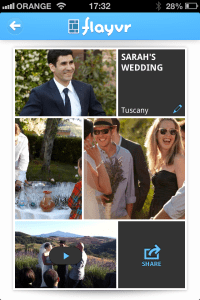
http://tctechcrunch2011.files.wordpress.com/2012/10/flayvr-player.png?w=200Do we really need another photo-sharing app - especially one with such a nauseatingly cutesy misspelled name as this? The reviewers of this new platform seem to think so. Launched in Israel in 2012, Flayvr takes a new and welcome approach to organizing and making sense of mobile device-based digital photo and video collections and sharing them among friends, something that many have identified as a shortcoming of both Instagram and Flickr. Co-founder and CEO Ron Levy explains that he was inspired to create Flayvr because it was something he needed himself. "I found myself trying to capture [family] moments with my iPhone but I found myself stuck in these endless camera rolls."

While not the first such application (Everpix, KeepsySnapjoy, and Batch have all attempted the same thing), Flayvr takes it a step further with a slick, user-friendly platform focused on grouping photos for the user's own benefit and ease-of-access. As an organizational tool, Flayvr has garnered rave reviews in the tech community, particularly for its ability to show videos playing in real-time in thumbnails along with your pictures. Still a newcomer on the scene, it remains to be seen whether this new mobile photo album-creating app will be able rise above its competition, but it appears to be gaining considerable momentum.

6. Create your own SM network

Phuck you Pheed! I'm starting a Wiki!
Say what? Remarkably not as far-fetched an idea as one might think thanks to DIY platforms like mixxt and Ning, which seek to do for social networking what Blogger and Wordpress did for online content. The results won't be as fancy as that offered elsewhere in the social media universe, but they're nothing of not authentic. Ning, relatively ancient at eight years old, offers customers the ability to create community websites with blogging, discussion forum and video functionality with its own 'like' function, although it's not free. mixxt, a DIY social media company founded in Germany in 2007 (with a foothold in Poland, Turkey and the UK), offers similar capacity on a 'freemium' basis.

And of course there's always the grand-daddy of them all: the wiki, a concept that dates back to the earliest days of the Internet. Want to create an open-source repository of information open to as many (or as few) people as you deem fit to, at no cost? The old-fashion low-tech wiki might be what you need. And thanks to the exploits of Julian Assange and others like it, there's something positively punk about the wiki, as it allows people with minimal SM expertise to swap information on everything from strategic planning to death metal lyrics to egregious violations of international law by governments who would rather not have said information made public. What's not to love about that?